
If you want to be more valuable at work, the real challenge is usually not working harder. It is learning how to contribute in ways that matter: clearer communication, better judgment, stronger collaboration, steadier performance, and the ability to add value without creating extra friction for other people. That is why the best books on this topic do not all say the same thing. Some focus on productivity and energy. Others sharpen how you write and speak. A few help with leadership, team culture, or resilience under pressure. The right choice depends on where you are trying to improve.
Quick Answer
If you want the strongest books for becoming more valuable at work, start with Smart Brevity for clearer communication, Work Stronger for sustainable performance, Alive at Work for understanding motivation and engagement, Belonging At Work for improving team culture, and Leading at The Edge if you want a more durable leadership mindset.
Comparison Table
| Book | Best For | Why It Stands Out |
|---|---|---|
| Smart Brevity: The Power of Saying More with Less | Professionals who want to sound clearer, more concise, and more executive in day-to-day communication. | Compared with broader communication books, this one is unusually direct and operational. It does not just encourage clarity in the abstract. It gives readers a model for trimming clutter, leading with the point, and making work… |
| Work Stronger: Habits for More Energy, Less Stress, and Higher Performance at Work | Readers who want to perform better consistently, especially if stress or fatigue has started to limit their effectiveness. | Many workplace books promise productivity but ignore the fact that exhausted people do worse work. What makes Work Stronger useful is that it treats performance as something you can support through daily habits, not just willpower. That… |
| Alive at Work: The Neuroscience of Helping Your People Love What They Do | Leaders who want to make their teams more effective without relying on pressure or guesswork. | This is one of the better choices for managers because it connects motivation to real workplace behavior instead of relying on motivational language. If you supervise others, lead projects, or influence a team without having formal… |
| Belonging At Work: Everyday Actions You Can Take to Cultivate an Inclusive Organization | Readers who want to contribute to a healthier, more effective workplace culture. | Many books on inclusion stay at the level of principles. This one is more useful because it points readers toward daily actions. That makes it easier to apply in meetings, team norms, hiring conversations, and leadership habits. For… |
| Leading at The Edge: Leadership Lessons from the Extraordinary Saga of Shackleton’s Antarctic Expedition | Managers and aspiring leaders who want a stronger sense of how to guide people through hard situations. | What makes this book different is the combination of story and leadership lesson. It is easier to remember than a purely abstract management manual, but it still has serious practical value. Readers who lead through uncertainty, change,… |
| How to Fail at Almost Everything and Still Win Big: Kind of the Story of My Life | Readers who want a more flexible, experiment-driven approach to career improvement. | Among workplace books, this one is especially good at challenging the assumption that every effective person follows the same path. It encourages readers to think in terms of repeatable advantages, not heroic effort. That makes it a… |
| So Good They Can’t Ignore You: Why Skills Trump Passion in the Quest for Work You Love | Readers who want a practical, focused resource on valuable skills, career capital, and professional growth. | This recommendation adds a distinct framework instead of repeating a generic introduction. It helps readers move from recognizing the issue to understanding the patterns, choices, or skills involved in valuable skills, career capital, and… |
| Deep Work: Rules for Focused Success in a Distracted World | Readers who want a practical, focused resource on focus, high-value work, and professional contribution. | This recommendation adds a distinct framework instead of repeating a generic introduction. It helps readers move from recognizing the issue to understanding the patterns, choices, or skills involved in focus, high-value work, and… |
How We Chose These Recommendations
For this topic, usefulness matters more than buzz. The strongest books are the ones that help readers become more effective in realistic workplace situations, not the ones that simply sound ambitious. That means looking for books with practical advice, strong reputations, and a clear connection to the everyday skills that make someone more helpful to a manager, team, or client.
This list also aims for range. Being more valuable at work can mean writing more clearly, managing your energy, leading people well, improving team culture, or making better decisions under pressure. A good recommendation list should reflect those different paths rather than treating workplace value as one narrow skill.
Recommended Books
Smart Brevity: The Power of Saying More with Less

Overview: Smart Brevity focuses on one of the most underrated workplace skills: saying what matters without burying the point. It is built around communication that respects other people’s time, which is exactly why it belongs on a list about being more valuable at work. The book is especially useful for people who write a lot of emails, status updates, proposals, or internal summaries and want their message to land faster.
Why it stands out: Compared with broader communication books, this one is unusually direct and operational. It does not just encourage clarity in the abstract. It gives readers a model for trimming clutter, leading with the point, and making work communication easier to act on. That makes it especially useful in fast-moving environments where clear writing has real professional value.
Strengths:
- Helps you write with greater clarity and speed
- Useful for emails, Slack messages, memos, and presentations
- Reinforces communication habits that save time for everyone involved
Best for: Professionals who want to sound clearer, more concise, and more executive in day-to-day communication.
Potential limitations: Readers looking for a deep theory of communication may find it more tactical than academic.
View price, available formats, and reader reviews.
Work Stronger: Habits for More Energy, Less Stress, and Higher Performance at Work

Overview: This book is about the habits that let people stay effective without constantly feeling depleted. Rather than treating work performance as a matter of motivation alone, it focuses on energy, stress, and practical routines that support better output over time. That makes it a strong fit for readers who want to become more valuable at work in a sustainable way.
Why it stands out: Many workplace books promise productivity but ignore the fact that exhausted people do worse work. What makes Work Stronger useful is that it treats performance as something you can support through daily habits, not just willpower. That perspective is especially helpful for mid-career professionals, managers, and anyone who feels capable but stretched too thin.
Strengths:
- Centers on energy management, not just time management
- Offers practical changes rather than vague inspiration
- Helpful for reducing preventable stress at work
Best for: Readers who want to perform better consistently, especially if stress or fatigue has started to limit their effectiveness.
Potential limitations: Some readers may want a more specialized focus on leadership, communication, or teamwork.
View price, available formats, and reader reviews.
Alive at Work: The Neuroscience of Helping Your People Love What They Do

Overview: Alive at Work looks at what actually helps people feel engaged, energized, and willing to do their best work. Its emphasis on neuroscience gives the book a more structured and practical frame than many generic leadership titles. The central value here is not just making work feel better. It is learning how to create conditions where people contribute more fully.
Why it stands out: This is one of the better choices for managers because it connects motivation to real workplace behavior instead of relying on motivational language. If you supervise others, lead projects, or influence a team without having formal authority, the book helps explain why some environments bring out effort while others suppress it. That makes it useful for readers who want to improve the quality of work around them, not only their own output.
Strengths:
- Explains engagement through a practical neuroscience lens
- Useful for managers, team leads, and HR-minded readers
- Focuses on conditions that improve performance over time
Best for: Leaders who want to make their teams more effective without relying on pressure or guesswork.
Potential limitations: Readers looking for a light, quick-read business book may find the ideas more substantive than breezy.
View price, available formats, and reader reviews.
Belonging At Work: Everyday Actions You Can Take to Cultivate an Inclusive Organization

Overview: This book is about the everyday behavior that shapes whether people feel included, respected, and able to contribute. It is a strong recommendation for anyone who recognizes that workplace value is not only about individual output. In many organizations, the ability to help others feel heard and able to do their best work is a major part of being effective.
Why it stands out: Many books on inclusion stay at the level of principles. This one is more useful because it points readers toward daily actions. That makes it easier to apply in meetings, team norms, hiring conversations, and leadership habits. For readers who want to become more valuable by improving the environment around them, it offers a concrete angle that is often missing from general career advice.
Strengths:
- Focuses on practical actions, not abstract ideals
- Useful for managers and individual contributors alike
- Connects inclusion to real organizational performance
Best for: Readers who want to contribute to a healthier, more effective workplace culture.
Potential limitations: The topic is specific, so readers seeking broad career strategy may want to pair it with a more general workplace book.
View price, available formats, and reader reviews.
Leading at The Edge: Leadership Lessons from the Extraordinary Saga of Shackleton’s Antarctic Expedition

Overview: Leading at The Edge uses Shackleton’s Antarctic expedition to explore leadership under extreme pressure. The book is not about trendy management language. It is about endurance, morale, judgment, and the kind of leadership that keeps people moving when conditions are difficult. For readers trying to become more valuable at work, that perspective can be surprisingly useful.
Why it stands out: What makes this book different is the combination of story and leadership lesson. It is easier to remember than a purely abstract management manual, but it still has serious practical value. Readers who lead through uncertainty, change, or crisis often find that lessons from difficult expeditions translate well to workplace situations where confidence and steadiness matter as much as technical skill.
Strengths:
- Memorable leadership lessons grounded in a real story
- Helpful in uncertain, high-pressure work environments
- Focuses on morale, resilience, and judgment
Best for: Managers and aspiring leaders who want a stronger sense of how to guide people through hard situations.
Potential limitations: The historical framing is compelling, but readers wanting a modern workplace playbook may prefer a more direct business book.
View price, available formats, and reader reviews.
How to Fail at Almost Everything and Still Win Big: Kind of the Story of My Life

Overview: This book takes a more unconventional route to professional value. Rather than offering a fixed formula for success, it looks at experimentation, systems, and learning from failure. That is useful for readers who feel stuck in overly rigid ideas about productivity or career growth and want a more flexible way to think about making progress.
Why it stands out: Among workplace books, this one is especially good at challenging the assumption that every effective person follows the same path. It encourages readers to think in terms of repeatable advantages, not heroic effort. That makes it a strong fit for people who want a more thoughtful and adaptable approach to becoming valuable at work, especially if they have already read the usual productivity advice.
Strengths:
- Encourages systems thinking instead of perfectionism
- Useful for readers who learn from personal stories and practical framing
- Offers a different angle from standard self-help advice
Best for: Readers who want a more flexible, experiment-driven approach to career improvement.
Potential limitations: The style is more personal and informal than a structured business manual.
View price, available formats, and reader reviews.
So Good They Can’t Ignore You: Why Skills Trump Passion in the Quest for Work You Love

Overview: So Good They Can’t Ignore You: Why Skills Trump Passion in the Quest for Work You Love gives readers a clearer, more established way to explore valuable skills, career capital, and professional growth. It is a stronger fit for this list because its main ideas connect directly to the practical questions readers bring to this topic.
Why it stands out: This recommendation adds a distinct framework instead of repeating a generic introduction. It helps readers move from recognizing the issue to understanding the patterns, choices, or skills involved in valuable skills, career capital, and professional growth.
Strengths:
- Directly connected to valuable skills, career capital, and professional growth
- Offers a clear framework readers can return to
- More focused than a general-purpose self-help choice
- Works well alongside the other recommendations on this list
Best for: Readers who want a practical, focused resource on valuable skills, career capital, and professional growth.
Potential limitations: It works best as a focused resource for this topic, so readers may want to pair it with a broader foundational book.
View price, available formats, and reader reviews.
Deep Work: Rules for Focused Success in a Distracted World
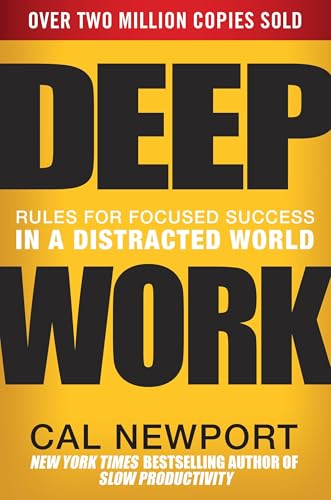
Overview: Deep Work: Rules for Focused Success in a Distracted World gives readers a clearer, more established way to explore focus, high-value work, and professional contribution. It is a stronger fit for this list because its main ideas connect directly to the practical questions readers bring to this topic.
Why it stands out: This recommendation adds a distinct framework instead of repeating a generic introduction. It helps readers move from recognizing the issue to understanding the patterns, choices, or skills involved in focus, high-value work, and professional contribution.
Strengths:
- Directly connected to focus, high-value work, and professional contribution
- Offers a clear framework readers can return to
- More focused than a general-purpose self-help choice
- Works well alongside the other recommendations on this list
Best for: Readers who want a practical, focused resource on focus, high-value work, and professional contribution.
Potential limitations: It works best as a focused resource for this topic, so readers may want to pair it with a broader foundational book.
View price, available formats, and reader reviews.
Who This List Is Best For
This list is best for professionals who want to become more useful, reliable, and respected at work without chasing empty productivity language. It will help:
- Individual contributors who want to communicate more clearly and create more impact
- Managers and team leads who need to improve engagement, culture, and trust
- Healthcare and caregiving professionals who need judgment as well as competence
- People under stress who want to work better without burning out
- Readers in career transition who want a more thoughtful way to grow professionally
Final Thoughts
If your biggest need is to be understood quickly and clearly, start with Smart Brevity. If your energy and stress are getting in the way of good work, Work Stronger is the better first choice. For managers, Alive at Work and Belonging At Work are the strongest books on this list because they focus on the conditions that help people contribute more fully.
If your work involves leading through uncertainty, Leading at The Edge offers a durable model of leadership under pressure. And if you want a broader, more reflective view of professional effectiveness, How to Fail at Almost Everything and Still Win Big, Being Mortal, and Living the Good Long Life each show that being valuable at work is about more than output. It is also about judgment, care, and staying effective over time.
FAQ
Which book is best for beginners?
Smart Brevity is the easiest starting point for many readers because it addresses a simple, concrete skill: communicating more clearly and efficiently.
Which book is most practical for everyday work?
Work Stronger is one of the most practical choices if your goal is to improve day-to-day performance without adding more pressure to your schedule.
Which book is best for managers?
Alive at Work is the strongest option for managers who want to understand how to bring out better work in other people.
Which book helps most with leadership?
Leading at The Edge is the best leadership-oriented pick on this list, especially in difficult or uncertain situations.
Which book offers the best long-term value?
Belonging At Work and Work Stronger both offer durable value because they improve how you work with others and how well you sustain your own performance.
Can I use these books to self-study workplace skills?
Yes. These books work well for self-study because they focus on habits, communication, leadership, and judgment in ways that are easy to apply gradually.




