
Start With Why argues that people do not follow a product description or a list of features; they follow a reason for doing something. Simon Sinek’s model moves from why to how to what, but the enduring business question is broader: how does an organization turn an abstract purpose into decisions, language, culture, and trust? A mission that never changes behavior is only decoration. Readers comparing books like Start With Why will find that the most useful match depends on which part of the seed book created the strongest attachment: its voice, argument, setting, characters, problem, or promise of change.
The best books like Start With Why should examine purpose in action. They need to address leadership, motivation, culture, customer trust, strategic choices, innovation, or the tension between a public mission and an organization’s real incentives. Each recommendation below shares several qualities with Sinek’s work while adding evidence, operating detail, or a useful challenge to purpose-centered rhetoric.
A Mission Is Only Useful If People Can Feel It in the Work
Choose Find Your Why for a practical companion exercise, Leaders Eat Last for trust and safety, or The Infinite Game for long-term strategy. Drive explains autonomy and motivation; Good to Great and Built to Last explore durable organizations; while Dare to Lead, The Culture Code, and Made to Stick connect purpose with courage, belonging, and memorable communication.
At-a-Glance Comparison
| Book | Best for | Major qualities shared with Start With Why |
|---|---|---|
| Find Your Why | Readers who want a practical process for discovering and expressing purpose | Purpose, values, origin stories, interviews, organizational language, consistency, and turning personal or team experience into a motivating reason |
| Leaders Eat Last | Readers who want purpose connected to trust and team safety | Leadership, trust, safety, belonging, service, cooperation, stress, and the social conditions that allow people to contribute |
| The Infinite Game | Readers who want purpose expressed through long-term strategy | Finite and infinite games, vision, resilience, ethical competition, adaptability, leadership, and building organizations that outlast individual wins |
| Drive | Readers who want a research-based account of motivation | Autonomy, mastery, purpose, intrinsic motivation, work design, education, and the limits of rewards and punishment |
| Good to Great | Readers who want disciplined organizations and durable strategic focus | Purpose, disciplined leadership, focus, culture, long-term improvement, evidence, and moving from inspiring ambition to consistent execution |
| Built to Last | Readers who want purpose, principles, and organizations that endure | Core values, visionary companies, continuity, change, long-term culture, experimentation, and the relationship between stable principles and flexible practice |
| Dare to Lead | Readers who want purpose translated into courage and difficult conversations | Courage, vulnerability, trust, values, accountability, leadership language, emotional skills, and creating cultures where people can speak honestly |
| The Culture Code | Readers who want to understand how belonging and cooperation are built | Belonging cues, safety, cooperation, group identity, leadership behavior, trust, and the small signals that shape a team’s culture |
| Made to Stick | Readers who want ideas and missions people can remember | Memorable communication, simplicity, stories, concreteness, credibility, emotion, and making an abstract purpose understandable |
What Makes a Strong Start With Why Companion?
Each book had to connect meaning with organizational behavior. I looked for clear treatment of purpose, leadership, intrinsic motivation, trust, culture, long-term thinking, strategic focus, or communication. A good companion should help readers test a mission against hiring, incentives, products, customer promises, and daily decisions rather than leaving it at the level of an inspiring speech.
The 9 Recommended Books
Find Your Why
Overview: Simon Sinek, David Mead, and Peter Docker offer exercises for identifying the patterns in experiences that give work meaning. The book is designed to help individuals and teams articulate a why that can guide decisions.
Why it belongs on this list: The connection is strongest through purpose, values, origin stories, interviews, organizational language, consistency, and turning personal or team experience into a motivating reason. Find Your Why approaches the seed’s concerns from a different angle, adding its own evidence, examples, and limits instead of repeating a familiar list of advice. It is especially useful for readers who want a practical process for discovering and expressing purpose because it makes the underlying choice more visible: what to protect, what to question, and what may not be under personal control.
Reading experience: This is the most direct companion because it answers the question the original framework raises: how can a group discover language that is more than a generic value statement? It is practical, workshop-like, and best used with real examples rather than abstract brainstorming.
Best for: Readers who want a practical process for discovering and expressing purpose.
Keep in mind: Structured and facilitation-oriented, with exercises that can oversimplify a purpose if the conversation is not honest about power, money, and trade-offs.
What to notice: The right reading pace for Find Your Why depends on what the reader needs from readers who want a practical process for discovering and expressing purpose. Its discussion of purpose, values, origin stories, interviews, organizational language, consistency, and turning personal or team experience into a motivating reason is clear enough to revisit, but it also benefits from pausing over examples and disagreements. Give the author room to make a case before deciding whether the ideas fit your work, health, relationships, and available freedom.
View available editions and reader reviews.
Leaders Eat Last

Overview: Sinek examines organizations where leaders protect the team and where people feel safe enough to cooperate, take responsibility, and solve problems. Stories from the military, business, and biology support an argument about service-oriented leadership.
Why it belongs on this list: The connection is strongest through leadership, trust, safety, belonging, service, cooperation, stress, and the social conditions that allow people to contribute. Leaders Eat Last approaches the seed’s concerns from a different angle, adding its own evidence, examples, and limits instead of repeating a familiar list of advice. It is especially useful for readers who want purpose connected to trust and team safety because it makes the underlying choice more visible: what to protect, what to question, and what may not be under personal control.
Reading experience: The book adds the human environment that a why requires. A purpose may be clear, but people cannot act on it when fear, arbitrary punishment, or internal competition consumes attention.
Best for: Readers who want purpose connected to trust and team safety.
Keep in mind: Warm, story-driven, and persuasive, though some biological and organizational claims should be read as illustrative rather than final science.
What to notice: Read Leaders Eat Last as a companion rather than a replacement. Its treatment of leadership, trust, safety, belonging, service, cooperation, stress, and the social conditions that allow people to contribute will feel familiar at first, but its evidence, vocabulary, and assumptions lead somewhere different. The contrast is valuable: it shows what the seed explains especially well and what this recommendation adds about context, trade-offs, relationships, or the cost of turning a good idea into a private obligation.
View available editions and reader reviews.
The Infinite Game

Overview: Sinek distinguishes finite goals with known rules from an infinite game in which the aim is to keep playing and improve the conditions for the future. The framework encourages leaders to think beyond quarterly victories and immediate rivals.
Why it belongs on this list: The connection is strongest through finite and infinite games, vision, resilience, ethical competition, adaptability, leadership, and building organizations that outlast individual wins. The Infinite Game approaches the seed’s concerns from a different angle, adding its own evidence, examples, and limits instead of repeating a familiar list of advice. It is especially useful for readers who want purpose expressed through long-term strategy because it makes the underlying choice more visible: what to protect, what to question, and what may not be under personal control.
Reading experience: This book extends the seed’s why into time. Purpose is not only the reason an organization began; it is the principle that helps it choose when a short-term win would damage its ability to continue.
Best for: Readers who want purpose expressed through long-term strategy.
Keep in mind: Conceptual and leadership-oriented, with useful reframing but fewer detailed operating tools than a management manual.
What to notice: A strong reason to include The Infinite Game is that finite and infinite games, vision, resilience, ethical competition, adaptability, leadership, and building organizations that outlast individual wins are treated as lived conditions, not just slogans. The book is most rewarding when readers compare its account of readers who want purpose expressed through long-term strategy with their own circumstances. Some of its suggestions will be immediately usable; others are better read as questions that expose what a productivity or personal-growth promise leaves out.
View available editions and reader reviews.
Drive

Overview: Daniel Pink argues that people are often motivated by autonomy, mastery, and purpose rather than by external incentives alone. He applies the idea to workplaces, classrooms, and personal projects.
Why it belongs on this list: The connection is strongest through autonomy, mastery, purpose, intrinsic motivation, work design, education, and the limits of rewards and punishment. Drive approaches the seed’s concerns from a different angle, adding its own evidence, examples, and limits instead of repeating a familiar list of advice. It is especially useful for readers who want a research-based account of motivation because it makes the underlying choice more visible: what to protect, what to question, and what may not be under personal control.
Reading experience: The book gives psychological depth to the seed’s claim that purpose matters. It asks what organizational systems do to motivation after the inspiring presentation ends, and whether control-heavy management contradicts the reason people were invited to care.
Best for: Readers who want a research-based account of motivation.
Keep in mind: Accessible, research-driven, and practical, though motivation is shaped by pay, security, identity, and culture as well as the three central concepts.
What to notice: The most useful thing to watch in Drive is how autonomy, mastery, purpose, intrinsic motivation, work design, education, and the limits of rewards and punishment moves from an attractive idea into a question about ordinary decisions. The book earns its place beside the seed because it gives readers who want a research-based account of motivation a different emotional and intellectual texture. Notice which examples carry the argument, where the author admits a limit, and which ideas remain useful after the initial enthusiasm fades.
View available editions and reader reviews.
Good to Great

Overview: Jim Collins studies companies that made a sustained transition from good performance to exceptional performance and identifies patterns involving leadership, people, discipline, and strategic focus.
Why it belongs on this list: The connection is strongest through purpose, disciplined leadership, focus, culture, long-term improvement, evidence, and moving from inspiring ambition to consistent execution. Good to Great approaches the seed’s concerns from a different angle, adding its own evidence, examples, and limits instead of repeating a familiar list of advice. It is especially useful for readers who want disciplined organizations and durable strategic focus because it makes the underlying choice more visible: what to protect, what to question, and what may not be under personal control.
Reading experience: It is a useful counterweight to purpose rhetoric because it asks what disciplined behavior keeps a mission alive. The book is more operational and comparative than Sinek, though readers should treat its historical claims cautiously and consider survivor bias.
Best for: Readers who want disciplined organizations and durable strategic focus.
Keep in mind: Structured and business-focused, with memorable concepts and examples but debates about method, selection, and causal certainty.
What to notice: The right reading pace for Good to Great depends on what the reader needs from readers who want disciplined organizations and durable strategic focus. Its discussion of purpose, disciplined leadership, focus, culture, long-term improvement, evidence, and moving from inspiring ambition to consistent execution is clear enough to revisit, but it also benefits from pausing over examples and disagreements. Give the author room to make a case before deciding whether the ideas fit your work, health, relationships, and available freedom.
View available editions and reader reviews.
Built to Last
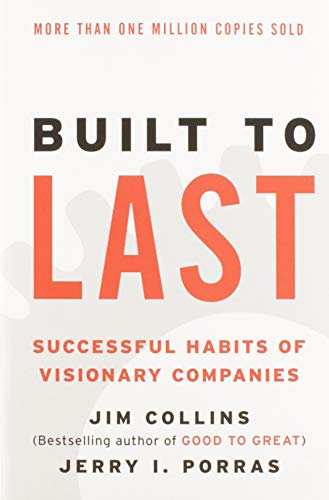
Overview: Jim Collins and Jerry Porras examine companies that endured across decades and argue that a strong core ideology can coexist with experimentation and change. The book emphasizes preserving purpose while changing products and methods.
Why it belongs on this list: The connection is strongest through core values, visionary companies, continuity, change, long-term culture, experimentation, and the relationship between stable principles and flexible practice. Built to Last approaches the seed’s concerns from a different angle, adding its own evidence, examples, and limits instead of repeating a familiar list of advice. It is especially useful for readers who want purpose, principles, and organizations that endure because it makes the underlying choice more visible: what to protect, what to question, and what may not be under personal control.
Reading experience: The match is the distinction between why an organization exists and what it currently sells. It makes the seed’s central idea more durable by showing how a purpose can guide change without turning into a rigid operational formula.
Best for: Readers who want purpose, principles, and organizations that endure.
Keep in mind: Historical and comparative, with useful concepts but the same need for caution about survivorship and changing business conditions.
What to notice: The right reading pace for Built to Last depends on what the reader needs from readers who want purpose, principles, and organizations that endure. Its discussion of core values, visionary companies, continuity, change, long-term culture, experimentation, and the relationship between stable principles and flexible practice is clear enough to revisit, but it also benefits from pausing over examples and disagreements. Give the author room to make a case before deciding whether the ideas fit your work, health, relationships, and available freedom.
View available editions and reader reviews.
Dare to Lead

Overview: Brené Brown draws on research and leadership practice to discuss rumbling with vulnerability, clarifying values, building trust, and taking responsibility. The book offers language for the human work beneath a mission statement.
Why it belongs on this list: The connection is strongest through courage, vulnerability, trust, values, accountability, leadership language, emotional skills, and creating cultures where people can speak honestly. Dare to Lead approaches the seed’s concerns from a different angle, adding its own evidence, examples, and limits instead of repeating a familiar list of advice. It is especially useful for readers who want purpose translated into courage and difficult conversations because it makes the underlying choice more visible: what to protect, what to question, and what may not be under personal control.
Reading experience: Purpose cannot guide a team when people are afraid to surface problems or disagree. This book adds the emotional and conversational skills that allow a why to become a living standard rather than an executive slogan.
Best for: Readers who want purpose translated into courage and difficult conversations.
Keep in mind: Reflective, practical, and workshop-friendly, with a warmer interpersonal focus than Sinek’s systems-level examples.
What to notice: A strong reason to include Dare to Lead is that courage, vulnerability, trust, values, accountability, leadership language, emotional skills, and creating cultures where people can speak honestly are treated as lived conditions, not just slogans. The book is most rewarding when readers compare its account of readers who want purpose translated into courage and difficult conversations with their own circumstances. Some of its suggestions will be immediately usable; others are better read as questions that expose what a productivity or personal-growth promise leaves out.
View available editions and reader reviews.
The Culture Code

Overview: Daniel Coyle studies groups that cooperate unusually well and identifies behaviors that communicate belonging, share vulnerability, and create a sense of shared responsibility. Examples range from sports teams to creative and emergency organizations.
Why it belongs on this list: The connection is strongest through belonging cues, safety, cooperation, group identity, leadership behavior, trust, and the small signals that shape a team’s culture. The Culture Code approaches the seed’s concerns from a different angle, adding its own evidence, examples, and limits instead of repeating a familiar list of advice. It is especially useful for readers who want to understand how belonging and cooperation are built because it makes the underlying choice more visible: what to protect, what to question, and what may not be under personal control.
Reading experience: The book shows what a purpose sounds like in ordinary interaction. A team may repeat a why, but culture determines whether people believe it, share information, and protect the group’s long-term interests.
Best for: Readers who want to understand how belonging and cooperation are built.
Keep in mind: Readable and example-rich, with practical observations that work best when paired with attention to hierarchy and incentives.
What to notice: Read The Culture Code as a companion rather than a replacement. Its treatment of belonging cues, safety, cooperation, group identity, leadership behavior, trust, and the small signals that shape a team’s culture will feel familiar at first, but its evidence, vocabulary, and assumptions lead somewhere different. The contrast is valuable: it shows what the seed explains especially well and what this recommendation adds about context, trade-offs, relationships, or the cost of turning a good idea into a private obligation.
View available editions and reader reviews.
Made to Stick

Overview: Chip Heath and Dan Heath explain why some ideas remain in memory while others disappear. Their framework emphasizes simplicity, unexpectedness, concreteness, credibility, emotion, and stories.
Why it belongs on this list: The connection is strongest through memorable communication, simplicity, stories, concreteness, credibility, emotion, and making an abstract purpose understandable. Made to Stick approaches the seed’s concerns from a different angle, adding its own evidence, examples, and limits instead of repeating a familiar list of advice. It is especially useful for readers who want ideas and missions people can remember because it makes the underlying choice more visible: what to protect, what to question, and what may not be under personal control.
Reading experience: A why is not useful if people cannot remember or translate it. This book adds communication craft to Sinek’s model, helping leaders move from a meaningful idea to language that survives a meeting, a product decision, or a customer’s attention.
Best for: Readers who want ideas and missions people can remember.
Keep in mind: Practical and memorable, though a sticky message still needs truthful evidence and organizational behavior behind it.
What to notice: The right reading pace for Made to Stick depends on what the reader needs from readers who want ideas and missions people can remember. Its discussion of memorable communication, simplicity, stories, concreteness, credibility, emotion, and making an abstract purpose understandable is clear enough to revisit, but it also benefits from pausing over examples and disagreements. Give the author room to make a case before deciding whether the ideas fit your work, health, relationships, and available freedom.
View available editions and reader reviews.
Choose by Purpose, Motivation, Culture, or Long-Term Strategy
Start with Find Your Why if you want to operationalize the Golden Circle, or Drive for autonomy, mastery, and motivation. Leaders Eat Last, Dare to Lead, and The Culture Code focus on trust and belonging. Choose The Infinite Game for long horizons, Good to Great for disciplined organizations, Built to Last for enduring principles, and Made to Stick for communicating ideas people remember.
Who This List Is Best For
This list is for founders, managers, marketers, nonprofit leaders, consultants, students, and teams trying to make purpose more than a slogan. The books vary in research depth and business context. Use their models as prompts for inquiry, not as universal laws, and check whether the organization’s incentives match the values it communicates.
FAQ
What is the closest book to Start With Why?
Find Your Why is the most direct companion because it turns the Golden Circle into a workshop and interview process. The Infinite Game is the best next read when the reader wants to connect purpose with long-term strategy.
Which book helps define a team or company purpose?
Find Your Why offers the clearest process, while Built to Last and Good to Great help connect purpose with organizational habits and long-term decisions.
Which recommendation focuses on employee motivation?
Drive explains autonomy, mastery, and purpose in a more psychological way. Leaders Eat Last focuses on trust, safety, and the social environment in which motivation can survive.
How do I know if a mission statement is real?
Compare the stated purpose with incentives, hiring, budgets, product decisions, customer treatment, and what leaders do under pressure. The Culture Code is useful for examining whether daily interaction supports the values a mission claims.
Which book is best for communicating a purpose?
Made to Stick focuses on making ideas memorable and understandable. Dare to Lead helps when the communication also requires vulnerability, accountability, and difficult conversations.
Purpose Becomes Credible When It Costs Something
Start With Why is strongest when “why” is treated as a standard for choices rather than a decorative origin story. The companion books show how purpose is shaped by autonomy, trust, courage, culture, focus, and memory. A mission can inspire attention, but it earns belief through what the organization funds, protects, measures, and refuses to do.