
Digital Minimalism asks a more demanding question than whether a person uses technology “too much.” Cal Newport asks what a tool is for, what it displaces, and whether convenience has quietly decided how attention, friendship, leisure, and work should feel. The book’s thirty-day reset is memorable, but its deeper argument is about values: technology should serve a life chosen on purpose rather than fill every empty space by default. Readers comparing books like Digital Minimalism will find that the most useful match depends on which part of the seed book created the strongest attachment: its voice, argument, setting, characters, problem, or promise of change.
Strong books like Digital Minimalism must address attention as a cultural and emotional resource, not only offer a screen-time trick. These recommendations examine focus, distraction, solitude, rest, habits, consumer technology, and the incentives built into modern work. Each overlaps with Newport’s central concerns while changing the evidence, tone, or practical emphasis. They also acknowledge that digital access may be necessary for work, family, disability, safety, and community, so minimalism is not treated as a purity test.
A Phone Is a Small Object with a Large Philosophy
Choose Deep Work for protected concentration, Indistractable for internal and external triggers, or Make Time for flexible daily experiments. Stolen Focus examines the social causes of distraction, while Rest, Four Thousand Weeks, Essentialism, The Shallows, and Do Nothing explore recovery, limits, selective attention, reading, and resistance to productivity culture.
At-a-Glance Comparison
| Book | Best for | Major qualities shared with Digital Minimalism |
|---|---|---|
| Deep Work | Readers who want protected concentration for demanding work | Focused attention, distraction resistance, scheduling, meaningful output, technology boundaries, and the value of cognitively demanding work |
| Indistractable | Readers who want to understand internal and external distraction triggers | Attention, habits, technology, emotion, planning, notifications, and the difference between intention and behavior |
| Make Time | Readers who want flexible daily experiments rather than a strict system | Attention, daily priorities, distraction reduction, energy, technology boundaries, and small choices that shape a day |
| Stolen Focus | Readers who want the social and commercial causes of distraction | Attention, technology platforms, stress, sleep, reading, childhood, work culture, and the forces that fragment concentration |
| Rest | Readers who want recovery treated as part of serious work and life | Attention, energy, rest, creativity, performance, boundaries, and resistance to constant availability |
| Four Thousand Weeks | Readers who want to accept finite time instead of optimizing it | Finitude, attention, technology, choice, unfinished work, patience, and the limits of total control |
| Essentialism | Readers who need to choose fewer commitments before reducing digital noise | Selective attention, trade-offs, boundaries, priorities, saying no, and protecting a smaller number of meaningful commitments |
| The Shallows | Readers who want to examine how the internet changes reading and thinking | Digital media, attention, reading depth, information overload, cognition, and the cultural history of technology |
| Do Nothing | Readers who want to challenge productivity culture and reclaim unmeasured time | Attention, leisure, work culture, urgency, digital distraction, rest, and resistance to treating human value as output |
How These Digital Minimalism Companions Differ
A book qualified when it treated attention, technology, or leisure as connected to values and environments. I looked for accounts of distraction, notification design, concentrated work, solitude, rest, reading, boundaries, and the social incentives that make constant availability feel normal. The list includes practical books, cultural criticism, and philosophical challenges so that readers can choose whether they need a routine, a diagnosis, or permission to want a different pace.
The 9 Recommended Books
Deep Work
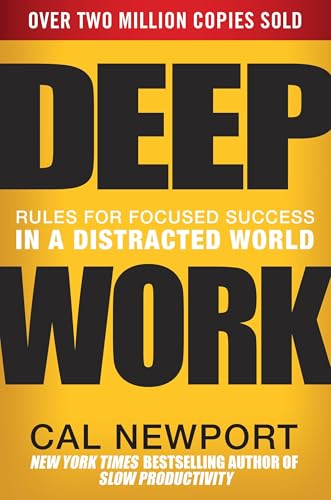
Overview: Cal Newport distinguishes deep work from shallow communication and argues that concentrated effort is becoming more valuable as it becomes harder to protect. He describes rituals, time blocks, shutdown routines, and workplace choices that make focus more likely.
Why it belongs on this list: The connection is strongest through focused attention, distraction resistance, scheduling, meaningful output, technology boundaries, and the value of cognitively demanding work. Deep Work approaches the seed’s concerns from a different angle, adding its own evidence, examples, and limits instead of repeating a familiar list of advice. It is especially useful for readers who want protected concentration for demanding work because it makes the underlying choice more visible: what to protect, what to question, and what may not be under personal control.
Reading experience: The two books are companion arguments about attention at different scales. Digital Minimalism asks which technologies deserve a role in life; Deep Work asks what to do with attention once it is protected, especially when the work requires sustained thought.
Best for: Readers who want protected concentration for demanding work.
Keep in mind: Structured, professional, and example-driven, with a stronger emphasis on output and career value.
What to notice: Readers may arrive at Deep Work because of focused attention, distraction resistance, scheduling, meaningful output, technology boundaries, and the value of cognitively demanding work, yet its lasting value lies in the complications attached to that promise. The book asks what happens when a desirable change meets fatigue, unequal resources, competing duties, or an imperfect environment. That makes it a genuine next read: related enough to satisfy the original interest, but independent enough to widen it.
View available editions and reader reviews.
Indistractable

Overview: Nir Eyal examines why people drift toward distraction and offers a model involving internal triggers, time planning, pacts, and environmental design. The book treats distraction as more than a moral weakness and asks what discomfort a person may be trying to escape.
Why it belongs on this list: The connection is strongest through attention, habits, technology, emotion, planning, notifications, and the difference between intention and behavior. Indistractable approaches the seed’s concerns from a different angle, adding its own evidence, examples, and limits instead of repeating a familiar list of advice. It is especially useful for readers who want to understand internal and external distraction triggers because it makes the underlying choice more visible: what to protect, what to question, and what may not be under personal control.
Reading experience: It provides the behavioral detail that Newport’s philosophy sometimes leaves open. Readers learn to inspect the moment before checking a device, while still keeping the larger question of whether the device supports a chosen value.
Best for: Readers who want to understand internal and external distraction triggers.
Keep in mind: Practical, conversational, and organized around examples and experiments.
What to notice: Readers may arrive at Indistractable because of attention, habits, technology, emotion, planning, notifications, and the difference between intention and behavior, yet its lasting value lies in the complications attached to that promise. The book asks what happens when a desirable change meets fatigue, unequal resources, competing duties, or an imperfect environment. That makes it a genuine next read: related enough to satisfy the original interest, but independent enough to widen it.
View available editions and reader reviews.
Make Time

Overview: Jake Knapp and John Zeratsky offer a menu of tactics for choosing a daily highlight, adjusting the environment, protecting energy, and ending the day with a small review. The method is deliberately modular rather than a single lifestyle overhaul.
Why it belongs on this list: The connection is strongest through attention, daily priorities, distraction reduction, energy, technology boundaries, and small choices that shape a day. Make Time approaches the seed’s concerns from a different angle, adding its own evidence, examples, and limits instead of repeating a familiar list of advice. It is especially useful for readers who want flexible daily experiments rather than a strict system because it makes the underlying choice more visible: what to protect, what to question, and what may not be under personal control.
Reading experience: This is the most approachable companion when a complete digital reset feels unrealistic. It shares the seed book’s desire for intentional attention but allows readers to test one change at a time around work, family, and fluctuating energy.
Best for: Readers who want flexible daily experiments rather than a strict system.
Keep in mind: Friendly, visual, and experiment-oriented, with many short suggestions.
What to notice: Readers may arrive at Make Time because of attention, daily priorities, distraction reduction, energy, technology boundaries, and small choices that shape a day, yet its lasting value lies in the complications attached to that promise. The book asks what happens when a desirable change meets fatigue, unequal resources, competing duties, or an imperfect environment. That makes it a genuine next read: related enough to satisfy the original interest, but independent enough to widen it.
View available editions and reader reviews.
Stolen Focus

Overview: Johann Hari investigates why sustained attention is becoming harder and connects personal distraction to platform design, chronic stress, poor sleep, workplace demands, diet, and social conditions. The book moves from individual stories to a larger argument about public responsibility.
Why it belongs on this list: The connection is strongest through attention, technology platforms, stress, sleep, reading, childhood, work culture, and the forces that fragment concentration. Stolen Focus approaches the seed’s concerns from a different angle, adding its own evidence, examples, and limits instead of repeating a familiar list of advice. It is especially useful for readers who want the social and commercial causes of distraction because it makes the underlying choice more visible: what to protect, what to question, and what may not be under personal control.
Reading experience: It complicates the seed’s individual reset by asking which parts of distraction are engineered or imposed. Readers who liked Newport’s diagnosis of default technology may appreciate a wider account of why discipline alone cannot repair an attention economy.
Best for: Readers who want the social and commercial causes of distraction.
Keep in mind: Narrative journalism with interviews, travel, and cultural criticism. It is less of a routine guide and more of a case for collective change.
What to notice: A strong reason to include Stolen Focus is that attention, technology platforms, stress, sleep, reading, childhood, work culture, and the forces that fragment concentration are treated as lived conditions, not just slogans. The book is most rewarding when readers compare its account of readers who want the social and commercial causes of distraction with their own circumstances. Some of its suggestions will be immediately usable; others are better read as questions that expose what a productivity or personal-growth promise leaves out.
View available editions and reader reviews.
Rest

Overview: Alex Soojung-Kim Pang examines how rest supports creativity, learning, decision-making, and sustained performance. He looks at naps, walks, vacations, deliberate leisure, and the historical practices of people who produced important work without treating every waking hour as productive.
Why it belongs on this list: The connection is strongest through attention, energy, rest, creativity, performance, boundaries, and resistance to constant availability. Rest approaches the seed’s concerns from a different angle, adding its own evidence, examples, and limits instead of repeating a familiar list of advice. It is especially useful for readers who want recovery treated as part of serious work and life because it makes the underlying choice more visible: what to protect, what to question, and what may not be under personal control.
Reading experience: The book answers a danger inside digital minimalism: the empty time recovered from a phone can become another space for work. Rest makes the alternative explicit, showing that attention deserves recovery rather than endless extraction.
Best for: Readers who want recovery treated as part of serious work and life.
Keep in mind: Research-led, calm, and filled with biographies and practical patterns.
What to notice: Readers may arrive at Rest because of attention, energy, rest, creativity, performance, boundaries, and resistance to constant availability, yet its lasting value lies in the complications attached to that promise. The book asks what happens when a desirable change meets fatigue, unequal resources, competing duties, or an imperfect environment. That makes it a genuine next read: related enough to satisfy the original interest, but independent enough to widen it.
View available editions and reader reviews.
Four Thousand Weeks

Overview: Oliver Burkeman argues that a finite life cannot contain every worthwhile project, relationship, and ambition. He examines how productivity systems can become a way to avoid limitation, then invites readers to choose deliberately while accepting the losses that choice entails.
Why it belongs on this list: The connection is strongest through finitude, attention, technology, choice, unfinished work, patience, and the limits of total control. Four Thousand Weeks approaches the seed’s concerns from a different angle, adding its own evidence, examples, and limits instead of repeating a familiar list of advice. It is especially useful for readers who want to accept finite time instead of optimizing it because it makes the underlying choice more visible: what to protect, what to question, and what may not be under personal control.
Reading experience: The book gives Digital Minimalism philosophical depth. Turning off notifications matters only if a person accepts that not every possibility can be pursued; otherwise minimalism becomes another attempt to control an uncontrollable life.
Best for: Readers who want to accept finite time instead of optimizing it.
Keep in mind: Reflective, literary, and quietly challenging, with more emphasis on acceptance than tactics.
What to notice: Readers may arrive at Four Thousand Weeks because of finitude, attention, technology, choice, unfinished work, patience, and the limits of total control, yet its lasting value lies in the complications attached to that promise. The book asks what happens when a desirable change meets fatigue, unequal resources, competing duties, or an imperfect environment. That makes it a genuine next read: related enough to satisfy the original interest, but independent enough to widen it.
View available editions and reader reviews.
Essentialism

Overview: Greg McKeown argues that a life becomes crowded when every request, opportunity, and notification is treated as equally important. He explores how to eliminate, negotiate, and protect the few commitments that deserve sustained attention.
Why it belongs on this list: The connection is strongest through selective attention, trade-offs, boundaries, priorities, saying no, and protecting a smaller number of meaningful commitments. Essentialism approaches the seed’s concerns from a different angle, adding its own evidence, examples, and limits instead of repeating a familiar list of advice. It is especially useful for readers who need to choose fewer commitments before reducing digital noise because it makes the underlying choice more visible: what to protect, what to question, and what may not be under personal control.
Reading experience: Digital clutter is often a symptom of commitment clutter. This book complements Newport by helping readers decide what the reclaimed attention is for and what requests should not be allowed to fill it.
Best for: Readers who need to choose fewer commitments before reducing digital noise.
Keep in mind: Organized, motivational, and practical, with examples from work and everyday obligations.
What to notice: A strong reason to include Essentialism is that selective attention, trade-offs, boundaries, priorities, saying no, and protecting a smaller number of meaningful commitments are treated as lived conditions, not just slogans. The book is most rewarding when readers compare its account of readers who need to choose fewer commitments before reducing digital noise with their own circumstances. Some of its suggestions will be immediately usable; others are better read as questions that expose what a productivity or personal-growth promise leaves out.
View available editions and reader reviews.
The Shallows

Overview: Nicholas Carr investigates how networked media affect concentration, memory, reading, and the experience of thinking. He places today’s internet inside a longer history of technologies that change not only what people know but how they process experience.
Why it belongs on this list: The connection is strongest through digital media, attention, reading depth, information overload, cognition, and the cultural history of technology. The Shallows approaches the seed’s concerns from a different angle, adding its own evidence, examples, and limits instead of repeating a familiar list of advice. It is especially useful for readers who want to examine how the internet changes reading and thinking because it makes the underlying choice more visible: what to protect, what to question, and what may not be under personal control.
Reading experience: This is the most direct intellectual companion to Newport’s concern about attention. It asks what is lost when quick switching becomes a default cognitive environment, giving readers language for why a short feed can feel easier than a long argument and less nourishing at the same time.
Best for: Readers who want to examine how the internet changes reading and thinking.
Keep in mind: Argumentative, historical, and more essayistic than practical.
What to notice: A strong reason to include The Shallows is that digital media, attention, reading depth, information overload, cognition, and the cultural history of technology are treated as lived conditions, not just slogans. The book is most rewarding when readers compare its account of readers who want to examine how the internet changes reading and thinking with their own circumstances. Some of its suggestions will be immediately usable; others are better read as questions that expose what a productivity or personal-growth promise leaves out.
View available editions and reader reviews.
Do Nothing

Overview: Celeste Headlee examines how productivity culture turns busyness into identity and why people struggle to be idle without guilt. She considers conversation, hobbies, boredom, and time that produces no measurable result but still makes a life larger.
Why it belongs on this list: The connection is strongest through attention, leisure, work culture, urgency, digital distraction, rest, and resistance to treating human value as output. Do Nothing approaches the seed’s concerns from a different angle, adding its own evidence, examples, and limits instead of repeating a familiar list of advice. It is especially useful for readers who want to challenge productivity culture and reclaim unmeasured time because it makes the underlying choice more visible: what to protect, what to question, and what may not be under personal control.
Reading experience: The book asks what digital minimalism is meant to protect. It shares Newport’s critique of default systems but pushes further into the emotional problem of feeling worthless when a screen is not being used for work or self-improvement.
Best for: Readers who want to challenge productivity culture and reclaim unmeasured time.
Keep in mind: Readable, cultural, and encouraging, with stories and historical examples rather than a strict plan.
What to notice: The most useful thing to watch in Do Nothing is how attention, leisure, work culture, urgency, digital distraction, rest, and resistance to treating human value as output moves from an attractive idea into a question about ordinary decisions. The book earns its place beside the seed because it gives readers who want to challenge productivity culture and reclaim unmeasured time a different emotional and intellectual texture. Notice which examples carry the argument, where the author admits a limit, and which ideas remain useful after the initial enthusiasm fades.
View available editions and reader reviews.
Choose by Work Focus, Phone Habits, or Cultural Critique
Start with Deep Work for concentrated professional effort or Indistractable for concrete trigger management. Make Time is the most flexible, Stolen Focus the broadest cultural diagnosis, and The Shallows the strongest reading-and-thinking companion. Choose Rest when exhaustion is mistaken for discipline, Four Thousand Weeks when optimization is the problem, Essentialism for selective commitments, and Do Nothing for a critique of productivity itself.
Who This List Is Best For
This list is for knowledge workers, students, parents, creators, and anyone who feels that their attention is being allocated by notifications, platforms, or workplace expectations. Digital reduction may not be equally possible for every reader; the goal is a more intentional relationship, not disconnection as a status symbol. Some recommendations challenge work culture, while others offer individual experiments that can be adapted to real responsibilities.
FAQ
What should I read after Digital Minimalism?
Deep Work is the natural next book when focused work is the priority. Stolen Focus is better when you want to understand the larger commercial, social, and environmental forces that make attention difficult.
Is digital minimalism the same as deleting social media?
Not necessarily. Newport’s argument is to decide which tools support important values and what costs they bring. A temporary break can reveal habits, but the longer-term question is whether a tool deserves a deliberate role rather than automatic access.
Which book is most practical?
Make Time offers flexible daily experiments, while Indistractable focuses on triggers and planning. Deep Work is more structured and workplace-centered.
Which recommendation discusses rest?
Rest makes recovery central, while Four Thousand Weeks questions the belief that every hour should be optimized. Both are useful when reducing screen time only creates more pressure to produce.
Can digital minimalism work for remote work or parenting?
It can be adapted, but not as a rigid offline lifestyle. Use values, availability windows, notification boundaries, shared expectations, and accessible alternatives; work, caregiving, health, and safety may require reliable connection.
Less Technology Is Only Useful If More Life Appears
Digital Minimalism is not ultimately about having a cleaner home screen. It is about whether the hours recovered from reflexive checking are returned to friendship, craft, reading, movement, rest, or thought. The strongest books here keep that question alive while showing that attention is shaped by design, policy, fatigue, habit, and the quality of the alternatives a person can actually access.