
The Gifts of Imperfection speaks to the exhaustion of treating worth as something that must be constantly earned. Brené Brown’s guideposts—authenticity, gratitude, creativity, rest, play, and connection—are not instructions for becoming impressive. They are invitations to stop organizing life around the fear that one mistake, unanswered expectation, or visible need will make belonging disappear. Readers comparing books like The Gifts of Imperfection will find that the most useful match depends on which part of the seed book created the strongest attachment: its voice, argument, setting, characters, problem, or promise of change.
The strongest books like The Gifts of Imperfection should share its concern with shame and the pressure to perform, but they should not all sound alike. These recommendations approach self-acceptance through compassion research, boundaries, mindfulness, philosophy, vulnerability, creativity, and freedom from approval. Each has at least two or three genuine overlaps with Brown’s book while adding a different level of evidence, a different cultural lens, or a clearer warning about responsibility and safety.
A Life Does Not Become Worthy by Becoming Flawless
Choose Self-Compassion for a research-informed answer to self-criticism, Daring Greatly for vulnerability and connection, or Set Boundaries, Find Peace for self-respect in relationships. Radical Acceptance brings mindfulness; When Things Fall Apart brings grief; The Courage to Be Disliked challenges approval; and Big Magic, Quiet, and The Body Keeps the Score explore creative risk, temperament, and survival patterns.
At-a-Glance Comparison
| Book | Best for | Major qualities shared with The Gifts of Imperfection |
|---|---|---|
| Self-Compassion | Readers who want a research-informed response to self-criticism | Self-kindness, common humanity, mindfulness, shame, emotional regulation, and responding to failure without punishment |
| Daring Greatly | Readers who want vulnerability, courage, and deeper connection | Shame, vulnerability, belonging, authenticity, courage, relationships, and participating without certainty |
| Set Boundaries, Find Peace | Readers whose perfectionism appears as overgiving and resentment | Boundaries, guilt, self-respect, communication, emotional responsibility, and the right to say no |
| Radical Acceptance | Readers who want mindfulness and compassion for painful emotion | Acceptance, shame, fear, mindfulness, self-judgment, compassion, and meeting experience without adding rejection |
| When Things Fall Apart | Readers who want a contemplative book about grief and uncertainty | Impermanence, fear, loss, compassion, uncertainty, openness, and staying present without a guarantee of control |
| The Courage to Be Disliked | Readers who want freedom from approval and comparison | Approval, self-acceptance, purpose, responsibility, boundaries, and living without universal agreement |
| Big Magic | Readers who want to create without waiting to feel fearless or exceptional | Creativity, fear, perfectionism, curiosity, play, persistence, and making work without demanding guaranteed recognition |
| Quiet | Readers who want permission to belong without performing extroversion | Authenticity, temperament, social pressure, creativity, relationships, and questioning the demand for constant visibility |
| The Body Keeps the Score | Readers who want to understand survival patterns in the body | Trauma, memory, embodiment, safety, relationships, self-regulation, and the persistence of past danger in present experience |
What Makes a Good Gifts of Imperfection Companion?
I selected books that address shame, perfectionism, vulnerability, self-compassion, belonging, boundaries, emotional avoidance, or the fear of being seen. A close match needed to move beyond affirmations and explain how a reader might meet failure, grief, criticism, or uncertainty. The list intentionally includes warmer and more clinical voices, because self-acceptance is not one universal method and should not be separated from safety, accountability, or material conditions.
The 9 Recommended Books
Self-Compassion

Overview: Kristin Neff explains how self-compassion differs from self-pity and complacency. Research, stories, and exercises help readers recognize harsh self-talk, remember that imperfection is shared, and respond to difficulty with the same care they might offer another person.
Why it belongs on this list: The connection is strongest through self-kindness, common humanity, mindfulness, shame, emotional regulation, and responding to failure without punishment. Self-Compassion approaches the seed’s concerns from a different angle, adding its own evidence, examples, and limits instead of repeating a familiar list of advice. It is especially useful for readers who want a research-informed response to self-criticism because it makes the underlying choice more visible: what to protect, what to question, and what may not be under personal control.
Reading experience: This is the most direct companion because it gives Brown’s emotional invitation a more explicit psychological vocabulary. Where the seed names wholehearted guideposts, Neff explains the internal moment when a mistake becomes an attack on the entire self.
Best for: Readers who want a research-informed response to self-criticism.
Keep in mind: Gentle, practical, and research-led, with exercises that can be revisited.
What to notice: The most useful thing to watch in Self-Compassion is how self-kindness, common humanity, mindfulness, shame, emotional regulation, and responding to failure without punishment moves from an attractive idea into a question about ordinary decisions. The book earns its place beside the seed because it gives readers who want a research-informed response to self-criticism a different emotional and intellectual texture. Notice which examples carry the argument, where the author admits a limit, and which ideas remain useful after the initial enthusiasm fades.
View available editions and reader reviews.
Daring Greatly

Overview: Brené Brown examines how shame and fear of judgment interrupt love, creativity, leadership, and honest participation. She argues that vulnerability is the condition of meaningful risk rather than a weakness to hide.
Why it belongs on this list: The connection is strongest through shame, vulnerability, belonging, authenticity, courage, relationships, and participating without certainty. Daring Greatly approaches the seed’s concerns from a different angle, adding its own evidence, examples, and limits instead of repeating a familiar list of advice. It is especially useful for readers who want vulnerability, courage, and deeper connection because it makes the underlying choice more visible: what to protect, what to question, and what may not be under personal control.
Reading experience: This is the natural companion within Brown’s work. The Gifts of Imperfection begins with the worthiness of an imperfect life; Daring Greatly follows that worthiness into the arena of relationships, leadership, and public risk.
Best for: Readers who want vulnerability, courage, and deeper connection.
Keep in mind: Story-led, accessible, and built for discussion, with a stronger outward focus than the seed.
What to notice: Readers may arrive at Daring Greatly because of shame, vulnerability, belonging, authenticity, courage, relationships, and participating without certainty, yet its lasting value lies in the complications attached to that promise. The book asks what happens when a desirable change meets fatigue, unequal resources, competing duties, or an imperfect environment. That makes it a genuine next read: related enough to satisfy the original interest, but independent enough to widen it.
View available editions and reader reviews.
Set Boundaries, Find Peace

Overview: Nedra Glover Tawwab explains how unclear boundaries create exhaustion and conflict, then offers language for work, family, friendship, and intimate relationships. The book distinguishes a boundary from an attempt to control another person’s reaction.
Why it belongs on this list: The connection is strongest through boundaries, guilt, self-respect, communication, emotional responsibility, and the right to say no. Set Boundaries, Find Peace approaches the seed’s concerns from a different angle, adding its own evidence, examples, and limits instead of repeating a familiar list of advice. It is especially useful for readers whose perfectionism appears as overgiving and resentment because it makes the underlying choice more visible: what to protect, what to question, and what may not be under personal control.
Reading experience: The seed teaches readers to release the demand to be everything for everyone; Tawwab helps translate that release into a sentence, a limit, or a changed agreement. It makes self-acceptance relational rather than purely internal.
Best for: Readers whose perfectionism appears as overgiving and resentment.
Keep in mind: Practical, direct, and full of scripts.
What to notice: Read Set Boundaries, Find Peace as a companion rather than a replacement. Its treatment of boundaries, guilt, self-respect, communication, emotional responsibility, and the right to say no will feel familiar at first, but its evidence, vocabulary, and assumptions lead somewhere different. The contrast is valuable: it shows what the seed explains especially well and what this recommendation adds about context, trade-offs, relationships, or the cost of turning a good idea into a private obligation.
View available editions and reader reviews.
Radical Acceptance

Overview: Tara Brach combines Buddhist mindfulness with psychology to explore the trance of unworthiness. Stories and practices help readers remain present with fear, grief, and shame without turning those experiences into a permanent identity.
Why it belongs on this list: The connection is strongest through acceptance, shame, fear, mindfulness, self-judgment, compassion, and meeting experience without adding rejection. Radical Acceptance approaches the seed’s concerns from a different angle, adding its own evidence, examples, and limits instead of repeating a familiar list of advice. It is especially useful for readers who want mindfulness and compassion for painful emotion because it makes the underlying choice more visible: what to protect, what to question, and what may not be under personal control.
Reading experience: Brach gives the seed’s language of wholeheartedness a body-based emotional depth. Acceptance becomes a way to stop fighting the fact of pain while still preserving the ability to act, seek safety, and change a harmful situation.
Best for: Readers who want mindfulness and compassion for painful emotion.
Keep in mind: Warm, patient, and practice-oriented, with meditations and stories.
What to notice: The right reading pace for Radical Acceptance depends on what the reader needs from readers who want mindfulness and compassion for painful emotion. Its discussion of acceptance, shame, fear, mindfulness, self-judgment, compassion, and meeting experience without adding rejection is clear enough to revisit, but it also benefits from pausing over examples and disagreements. Give the author room to make a case before deciding whether the ideas fit your work, health, relationships, and available freedom.
View available editions and reader reviews.
When Things Fall Apart

Overview: Pema Chödrön writes about the moments when familiar strategies fail and the desire to close down becomes strongest. Buddhist teachings and personal reflections invite readers to remain present with uncertainty rather than immediately converting pain into a verdict or escape plan.
Why it belongs on this list: The connection is strongest through impermanence, fear, loss, compassion, uncertainty, openness, and staying present without a guarantee of control. When Things Fall Apart approaches the seed’s concerns from a different angle, adding its own evidence, examples, and limits instead of repeating a familiar list of advice. It is especially useful for readers who want a contemplative book about grief and uncertainty because it makes the underlying choice more visible: what to protect, what to question, and what may not be under personal control.
Reading experience: The book meets the seed’s concern with imperfection at the place where self-improvement cannot fix the event. It is especially meaningful for readers whose shame or control habits intensify during grief, illness, change, or relational loss.
Best for: Readers who want a contemplative book about grief and uncertainty.
Keep in mind: Brief, spacious, and contemplative, with passages suited to slow rereading.
What to notice: A strong reason to include When Things Fall Apart is that impermanence, fear, loss, compassion, uncertainty, openness, and staying present without a guarantee of control are treated as lived conditions, not just slogans. The book is most rewarding when readers compare its account of readers who want a contemplative book about grief and uncertainty with their own circumstances. Some of its suggestions will be immediately usable; others are better read as questions that expose what a productivity or personal-growth promise leaves out.
View available editions and reader reviews.
The Courage to Be Disliked

Overview: Through a dialogue between a young man and a philosopher, the book introduces Adlerian ideas about inferiority, interpersonal tasks, and the possibility of choosing a life that is not organized around other people’s judgments.
Why it belongs on this list: The connection is strongest through approval, self-acceptance, purpose, responsibility, boundaries, and living without universal agreement. The Courage to Be Disliked approaches the seed’s concerns from a different angle, adding its own evidence, examples, and limits instead of repeating a familiar list of advice. It is especially useful for readers who want freedom from approval and comparison because it makes the underlying choice more visible: what to protect, what to question, and what may not be under personal control.
Reading experience: The book approaches Brown’s fear of shame from a more philosophical and confrontational direction. It asks what belongs to the reader and what belongs to other people, while Brown adds more nuance about belonging, vulnerability, and the need for safe connection.
Best for: Readers who want freedom from approval and comparison.
Keep in mind: Conversational and provocative, with clear ideas that invite argument.
What to notice: Read The Courage to Be Disliked as a companion rather than a replacement. Its treatment of approval, self-acceptance, purpose, responsibility, boundaries, and living without universal agreement will feel familiar at first, but its evidence, vocabulary, and assumptions lead somewhere different. The contrast is valuable: it shows what the seed explains especially well and what this recommendation adds about context, trade-offs, relationships, or the cost of turning a good idea into a private obligation.
View available editions and reader reviews.
Big Magic

Overview: Elizabeth Gilbert treats creativity as a relationship with curiosity and practice rather than proof of genius. She writes about fear, rejection, discipline, ordinary work, and the freedom to create without asking every project to establish personal worth.
Why it belongs on this list: The connection is strongest through creativity, fear, perfectionism, curiosity, play, persistence, and making work without demanding guaranteed recognition. Big Magic approaches the seed’s concerns from a different angle, adding its own evidence, examples, and limits instead of repeating a familiar list of advice. It is especially useful for readers who want to create without waiting to feel fearless or exceptional because it makes the underlying choice more visible: what to protect, what to question, and what may not be under personal control.
Reading experience: The book applies the seed’s acceptance of imperfection to creative life. It is less research-based and more playful, but it shares the insistence that fear can ride along while a person makes, experiments, and lets the work remain unfinished or imperfect.
Best for: Readers who want to create without waiting to feel fearless or exceptional.
Keep in mind: Energetic, anecdotal, and encouraging, with a strong process focus.
What to notice: Readers may arrive at Big Magic because of creativity, fear, perfectionism, curiosity, play, persistence, and making work without demanding guaranteed recognition, yet its lasting value lies in the complications attached to that promise. The book asks what happens when a desirable change meets fatigue, unequal resources, competing duties, or an imperfect environment. That makes it a genuine next read: related enough to satisfy the original interest, but independent enough to widen it.
View available editions and reader reviews.
Quiet

Overview: Susan Cain examines how modern institutions reward extroversion and often mistake social performance for competence. Research and portraits show how introverted people contribute through preparation, reflection, listening, and deep work.
Why it belongs on this list: The connection is strongest through authenticity, temperament, social pressure, creativity, relationships, and questioning the demand for constant visibility. Quiet approaches the seed’s concerns from a different angle, adding its own evidence, examples, and limits instead of repeating a familiar list of advice. It is especially useful for readers who want permission to belong without performing extroversion because it makes the underlying choice more visible: what to protect, what to question, and what may not be under personal control.
Reading experience: The book widens Brown’s account of authenticity by challenging the idea that courage must be loud, highly social, or visibly confident. A wholehearted life may include more solitude and fewer performances, not a stronger ability to imitate the room.
Best for: Readers who want permission to belong without performing extroversion.
Keep in mind: Research-led and culturally broad, with history, interviews, and workplace examples.
What to notice: The most useful thing to watch in Quiet is how authenticity, temperament, social pressure, creativity, relationships, and questioning the demand for constant visibility moves from an attractive idea into a question about ordinary decisions. The book earns its place beside the seed because it gives readers who want permission to belong without performing extroversion a different emotional and intellectual texture. Notice which examples carry the argument, where the author admits a limit, and which ideas remain useful after the initial enthusiasm fades.
View available editions and reader reviews.
The Body Keeps the Score
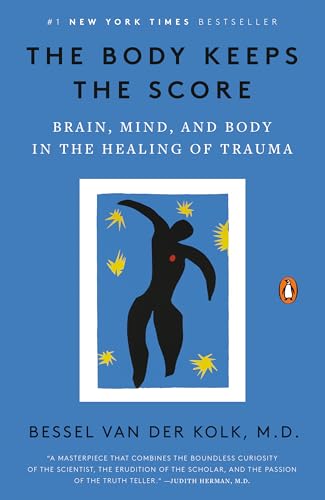
Overview: Bessel van der Kolk examines how trauma can affect body responses, memory, attention, relationships, and sense of self. He discusses therapeutic approaches that may help people reconnect with bodily experience and develop a stronger sense of safety.
Why it belongs on this list: The connection is strongest through trauma, memory, embodiment, safety, relationships, self-regulation, and the persistence of past danger in present experience. The Body Keeps the Score approaches the seed’s concerns from a different angle, adding its own evidence, examples, and limits instead of repeating a familiar list of advice. It is especially useful for readers who want to understand survival patterns in the body because it makes the underlying choice more visible: what to protect, what to question, and what may not be under personal control.
Reading experience: This is a much heavier companion, but it matters when imperfection and shame are connected to survival rather than simple self-criticism. It asks what safety and support the body needs before a person can be expected to risk openness or wholehearted participation.
Best for: Readers who want to understand survival patterns in the body.
Keep in mind: Clinical stories, research, and treatment discussion make it a demanding read.
What to notice: Readers may arrive at The Body Keeps the Score because of trauma, memory, embodiment, safety, relationships, self-regulation, and the persistence of past danger in present experience, yet its lasting value lies in the complications attached to that promise. The book asks what happens when a desirable change meets fatigue, unequal resources, competing duties, or an imperfect environment. That makes it a genuine next read: related enough to satisfy the original interest, but independent enough to widen it.
View available editions and reader reviews.
Choose by Self-Criticism, Relationships, Grief, or Creativity
Start with Self-Compassion when the inner critic is the loudest voice, or Set Boundaries, Find Peace when perfectionism appears as overgiving. Radical Acceptance supports difficult emotion; When Things Fall Apart meets grief and uncertainty; Daring Greatly focuses on connection; Quiet defends a less performative self; Big Magic encourages creative risk; The Courage to Be Disliked loosens approval; and The Body Keeps the Score examines survival patterns in the body.
Who This List Is Best For
This list is for adults dealing with perfectionism, people-pleasing, shame, creative fear, grief, burnout, relationship strain, or a harsh internal voice. Several books discuss trauma, abuse, depression, or loss. Self-acceptance should not be confused with tolerating harm, refusing repair, or blaming people for conditions created by inequality; professional and community support may be important.
FAQ
What is the closest book to The Gifts of Imperfection?
Daring Greatly is the closest companion for vulnerability, shame, and connection. Self-Compassion is the best follow-up when the main struggle is a harsh internal voice rather than fear of being seen by others.
How is self-acceptance different from giving up?
Self-acceptance describes worth and reality honestly; it does not mean refusing growth, repair, or responsibility. A person can accept a limitation, emotion, or past mistake while still choosing a different action and seeking support.
Which book helps with perfectionism?
Self-Compassion and Big Magic are strong choices for the inner and creative sides of perfectionism. Set Boundaries, Find Peace helps when the pattern appears as overcommitting or trying to keep everyone satisfied.
Which recommendation is best for grief?
When Things Fall Apart offers a contemplative account of uncertainty and loss. Radical Acceptance is more practice-oriented when grief is entangled with shame, fear, or emotional resistance.
Can these books replace therapy?
No. They can offer language and reflection, but trauma, depression, anxiety, abuse, addiction, or severe shame may require qualified professional care. Self-acceptance should widen support rather than make a reader responsible for healing alone.
Imperfection Is a Condition of Belonging, Not a Disqualification
The Gifts of Imperfection is persuasive because it treats wholeheartedness as a practice of returning, not a personality one finally achieves. The books here show different ways to make that return: through compassion, boundaries, grief, creative work, present attention, or a refusal to perform a self that was never sustainable. The best next read will make self-acceptance more specific and more honest.