
Attachment-based therapy sits at the crossroads of research, clinical practice, and everyday relationships. For some readers, the goal is to understand how attachment patterns shape closeness, conflict, and safety. For others, the need is more practical: finding a book that can actually help with anxiety, avoidance, high-conflict dynamics, or trauma-related relationship struggles. The best books in this area do not all do the same job. Some explain the science clearly, some translate therapy principles into relationship guidance, and some give clinicians a more technical framework for treatment.
That distinction matters. A strong book about attachment-based therapy can help you make sense of emotional patterns without oversimplifying them. It can also help you choose the right level of depth, whether you are a clinician, student, or reader trying to improve a relationship from the outside in. The list below focuses on books that are useful, credible, and genuinely relevant to attachment-based work.
Quick Answer
If you want the best books about attachment-based therapy, start with Attached for a clear, accessible overview of adult attachment, Wired for Love for a relationship-focused clinical lens, Help for High-Conflict Couples for emotionally focused therapy in action, Sensorimotor Psychotherapy for a trauma-informed clinical framework, and ACT with Love for a practical approach to relationship repair.
Comparison Table
| Book | Best For | Why It Stands Out |
|---|---|---|
| Attached | Beginners who want a readable introduction to adult attachment | A widely known starting point that explains attachment styles in everyday language and connects them to real relationship patterns. |
| Wired for Love | Couples and readers who want attachment ideas applied to conflict and connection | Turns attachment theory into practical relationship guidance without losing the clinical structure behind it. |
| Help for High-Conflict Couples | Couples, therapists, and readers interested in emotionally focused therapy | Uses emotionally focused therapy and attachment science to show how high-conflict relationships can move toward security. |
| Sensorimotor Psychotherapy | Clinicians and advanced readers working with trauma and attachment | A more clinical, body-oriented approach that connects attachment work with trauma treatment. |
| ACT with Love | Readers who want a practical, skills-based relationship book | Brings acceptance and commitment therapy into attachment-related relationship struggles with a grounded, usable style. |
| The Practical Anxious Attachment Recovery Workbook | Readers dealing with anxious attachment and overthinking | A structured workbook format that focuses on everyday exercises for insecurity, jealousy, and relationship anxiety. |
| Avoidant Attachment Recovery | Readers who recognize avoidant patterns and conflict avoidance | Targets the avoidant side of attachment with a direct, self-help oriented format. |
How We Chose These Recommendations
This list prioritizes books that help readers do something useful with attachment theory, not just define it. Some are better for first-time readers who want a clear conceptual foundation. Others are more valuable for couples, therapists, or advanced students who need a stronger clinical framework.
The selection also emphasizes long-term usefulness, not novelty. In psychology and psychotherapy, the most helpful books are usually the ones that translate theory into behavior, communication, and treatment decisions in a way that still holds up over time. That is why the list includes a mix of accessible classics, clinically respected titles, and practical workbooks for specific attachment patterns.
Recommended Books
Attached: The New Science of Adult Attachment and How It Can Help You Find–and Keep– Love

Overview: Attached gives readers a clear introduction to adult attachment and shows how attachment styles affect dating, communication, conflict, and emotional security. The book focuses on the everyday patterns people notice in relationships, which makes it especially useful for readers who want a practical entry point into attachment-based therapy ideas without getting buried in jargon.
Why it stands out: Among popular attachment books, this remains one of the most approachable. It translates a psychological framework into language that non-clinicians can use right away, which is why it often becomes the first book readers choose when they are trying to understand their own relationship behavior. It is not a therapy manual, but it offers a strong conceptual base for anyone who wants to understand attachment before moving into more clinical texts.
Strengths:
- Very accessible for beginners
- Connects attachment theory to real relationships
- Useful as a first step before more technical books
Best for: General readers, self-study, and anyone who wants a readable introduction to attachment styles in adult relationships.
Potential limitations: Less clinically detailed than therapy-focused titles, so professionals will likely want a more advanced companion book.
View price, available formats, and reader reviews.
Wired for Love: How Understanding Your Partner’s Brain and Attachment Style Can Help You Defuse Conflict and Build a Secure Relationship

Overview: Wired for Love applies attachment theory to romantic relationships in a way that feels concrete and action-oriented. It focuses on how partners react under stress, how conflict escalates, and what helps a relationship become more secure over time. The emphasis is on understanding relationship patterns rather than blaming either partner.
Why it stands out: This is one of the most useful bridge books between psychology and daily relationship work. It is more nuanced than a general-population attachment primer, but still accessible enough for non-clinicians. Readers who want attachment-based therapy ideas they can apply to a real partnership will find it especially practical. The book also helps explain why secure connection often depends on small behavioral changes rather than dramatic insight alone.
Strengths:
- Strong fit for couples-oriented reading
- Balances theory with practical relationship strategies
- Clear connection between attachment and conflict
Best for: Couples, individuals in long-term relationships, and readers who want attachment concepts tied to day-to-day communication.
Potential limitations: More relationship-focused than therapy-method focused, so it is not the deepest option for clinical study.
View price, available formats, and reader reviews.
Help for High-Conflict Couples: Using Emotionally Focused Therapy and the Science of Attachment to Build Lasting Connection

Overview: This book uses emotionally focused therapy, or EFT, alongside attachment science to address couples who get stuck in repeated cycles of criticism, withdrawal, defensiveness, and disconnection. Rather than focusing only on surface-level communication tricks, it looks at the emotional processes that keep conflict alive and shows how repair becomes possible.
Why it stands out: For readers who want a book that is clearly rooted in a respected therapeutic model, this is one of the strongest choices on the list. EFT is closely associated with attachment theory in clinical practice, and that gives the book real relevance for both couples and therapists. It is especially helpful when the problem is not simply “poor communication” but a deeper pattern of insecurity and escalation. Compared with more general self-help titles, it offers a better lens for understanding why certain conflicts repeat.
Strengths:
- Grounded in emotionally focused therapy
- Useful for recurring conflict patterns
- Relevant to both couples and clinicians
Best for: Couples in distress, therapists interested in EFT, and readers who want a clinically informed attachment book.
Potential limitations: The clinical framework may feel more serious than casual self-help reading, especially for beginners.
View price, available formats, and reader reviews.
Sensorimotor Psychotherapy: Interventions for Trauma and Attachment

Overview: This is a more advanced clinical book that connects trauma treatment with attachment work through a body-oriented psychotherapy framework. It is concerned with how attachment disruptions and traumatic stress show up in posture, regulation, defensive responses, and the body’s habitual patterns, not just in thoughts or narratives.
Why it stands out: Among books on attachment-based therapy, this one offers a distinctly clinical and integrative perspective. It is not trying to be a simplified introduction. Instead, it is aimed at practitioners and advanced readers who need a serious treatment model for trauma-linked attachment issues. That makes it especially valuable in professional settings where relational distress cannot be separated from nervous system regulation or developmental trauma. Compared with broader attachment books, it is much more specialized and much more technical.
Strengths:
- Clinically rich and trauma-informed
- Integrates body-based and attachment-focused treatment
- Well suited to advanced study
Best for: Therapists, graduate students, trauma clinicians, and advanced readers in psychotherapy.
Potential limitations: More specialized and technical than the average reader will need.
View price, available formats, and reader reviews.
ACT with Love: Stop Struggling, Reconcile Differences, and Strengthen Your Relationship with Acceptance and Commitment Therapy

Overview: ACT with Love uses acceptance and commitment therapy to address common relationship struggles such as reactivity, avoidance, and emotional gridlock. While it is not an attachment-only book, it fits this list because it helps readers respond differently to the insecurity and disconnection that often sit underneath attachment problems.
Why it stands out: The book is valuable because it gives readers concrete psychological skills rather than only a conceptual model. That makes it a good choice for people who understand their attachment patterns but still need a way to act differently in the middle of conflict. It also broadens the list by offering a therapy approach that complements attachment work instead of repeating it. For readers who want practical behavior change, this is one of the strongest options.
Strengths:
- Skills-based and practical
- Helpful for emotional reactivity in relationships
- Pairs well with attachment-focused reading
Best for: Readers who want usable relationship strategies and therapists looking for a complementary approach to attachment-based work.
Potential limitations: Less centered on attachment theory itself than the most literal matches on this list.
View price, available formats, and reader reviews.
The Practical Anxious Attachment Recovery Workbook: 40+ Easy DBT Exercises to Help You Build A Secure Attachment Style and Overcome Overthinking, Jealousy & Insecurity In Relationships

Overview: This workbook is aimed at readers who recognize anxious attachment patterns and want structured exercises to work on them. It emphasizes overthinking, jealousy, insecurity, and the day-to-day habits that keep anxious relationship patterns active. The DBT-based format makes it more hands-on than a traditional theory book.
Why it stands out: Compared with broader attachment books, this one is narrower and more practical. That is exactly why it earns a place here. Readers who are already convinced they struggle with anxious attachment often do better with a workbook that turns insight into repetitive practice. The emphasis on exercises makes it useful for self-guided work between therapy sessions or as a starting point for readers who need structure more than explanation.
Strengths:
- Highly structured workbook format
- Focused on anxious attachment behaviors
- Useful for practice, not just reading
Best for: Readers who want direct exercises for anxious attachment, overthinking, and insecurity.
Potential limitations: More self-help oriented than evidence-heavy clinical texts.
View price, available formats, and reader reviews.
Avoidant Attachment Recovery: Breaking Free from Avoidant Attachment, Gentle Path to Reclaiming Trust Issues, Fear of Intimacy, and Conflict Avoidance for Building Lasting, Meaningful Connections
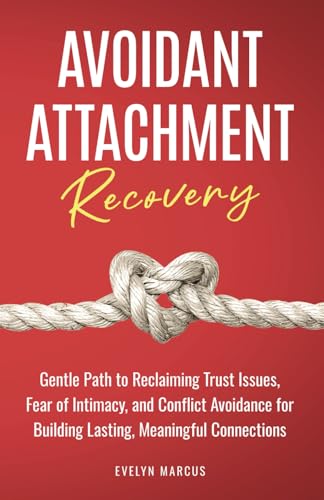
Overview: This book focuses on avoidant attachment, especially the habits of emotional distancing, conflict avoidance, and fear of intimacy that can make closeness difficult. It is written as a recovery-oriented guide for readers who recognize that stepping back, shutting down, or minimizing needs has become a relationship pattern.
Why it stands out: The main value here is specificity. A lot of attachment books lean heavily toward anxious attachment or speak about attachment in broad terms, but avoidant patterns need a different conversation. This book earns its place by speaking directly to that audience and by framing change as a gradual process rather than a personality overhaul. For readers who do not feel seen by more general relationship books, that narrow focus can be especially helpful.
Strengths:
- Dedicated to avoidant attachment patterns
- Clear focus on intimacy and conflict avoidance
- Accessible self-help format
Best for: Readers who identify with avoidant attachment and want a direct, self-guided starting point.
Potential limitations: More introductory in tone than the most established clinical books on the list.
View price, available formats, and reader reviews.
Who This List Is Best For
This list is best for readers who want attachment-based therapy books that do more than define a concept. It works well for beginners trying to understand adult attachment, couples who need help with conflict and closeness, therapists looking for clinically relevant frameworks, and students who want a stronger foundation in relationship psychology and trauma-informed care.
It is also a good fit if you know your need is more specific than “better communication.” Some readers want to understand anxious attachment. Others want help with avoidant patterns. Still others need a therapy-informed explanation of why trauma and attachment often overlap. These books cover those different goals without collapsing them into one generic category.
Final Thoughts
If your main goal is to understand attachment in everyday language, start with Attached. If you want a more relationship-centered and clinically useful book, Wired for Love and Help for High-Conflict Couples are the strongest next choices. For clinicians or advanced readers, Sensorimotor Psychotherapy offers the deepest treatment-oriented perspective.
If your concern is more specific, choose accordingly. Readers dealing with anxious attachment will get the most direct help from The Practical Anxious Attachment Recovery Workbook. Those who recognize avoidant patterns should start with Avoidant Attachment Recovery. And if you want practical relationship tools that complement attachment work, ACT with Love is the most flexible option.
FAQ
Which book is best for beginners?
Attached is the best place to start for most beginners because it explains adult attachment clearly and connects the theory to real relationship behavior.
Which book is most practical for couples?
Wired for Love is especially practical for couples because it focuses on conflict, connection, and the habits that help relationships feel safer.
Which book is best for therapists or graduate students?
Sensorimotor Psychotherapy is the most advanced clinical recommendation on this list, especially for readers working with trauma and attachment.
What if I want help with anxious attachment specifically?
The Practical Anxious Attachment Recovery Workbook is the most targeted choice for anxious attachment, overthinking, and relationship insecurity.
What if avoidant attachment is my main concern?
Avoidant Attachment Recovery is the most directly focused option for readers who identify with emotional distance, fear of intimacy, or conflict avoidance.
Can I learn attachment-based therapy from self-help books alone?
Self-help books can build strong understanding and give you useful language, but they do not replace diagnosis, psychotherapy, or clinical supervision. They are best used as education, preparation, or a supplement to professional support.




