
Running a restaurant is not one problem, it is several at once. You are managing labor, margins, service consistency, inventory, guest experience, and a steady stream of decisions that can affect the next shift, the next month, or the next year. That is why the best books for restaurant business tend to fall into a few distinct categories: practical operations manuals, financial guides, and books that sharpen the hospitality mindset behind the work. The right choice depends on whether you are opening a new place, tightening an existing operation, or trying to raise the standard of service without losing control of costs.
Quick Answer
For restaurant business, start with The Restaurant Manager’s Handbook: How to Set Up, Operate, and Manage a Financially Successful Food Service Operation, then compare it with Restaurant Success by the Numbers, Second Edition: A Money-Guy’s Guide to Opening the Next New Hot Spot and use Unreasonable Hospitality: The Remarkable Power of Giving People More Than They Expect when you need a different level of detail. The right choice depends on your current goal, experience, and the kind of change you want the book to support.
This shortlist was selected for hospitality, systems, staffing, guest experience, financial thinking, and whether the advice can survive the pace of daily operations. It mixes foundational explanations with practical guidance so readers can move from understanding the topic to making a better decision or trying a small, testable change.
Comparison Table
| Book | Best For | Why It Stands Out |
|---|---|---|
| The Restaurant Manager’s Handbook: How to Set Up, Operate, and Manage a Financially Successful Food Service Operation | Readers who want one practical handbook to consult while running or opening a restaurant. | Compared with narrower books that focus only on hospitality, menu design, or finance, this one gives readers a wider operating view. That matters in restaurants, where small problems in staffing, systems, purchasing, or service can quickly become expensive. It belongs on this list because it helps readers think like operators, not just idea generators. |
| Restaurant Success by the Numbers, Second Edition: A Money-Guy’s Guide to Opening the Next New Hot Spot | Entrepreneurs, owners, and managers who want a sharper understanding of restaurant economics. | Many restaurant books lean heavily toward inspiration or general management advice. This one is more grounded in the numbers that actually govern success. That makes it especially valuable for operators who are serious about understanding break-even points, financial risk, and the economics of growth. |
| Unreasonable Hospitality: The Remarkable Power of Giving People More Than They Expect | Owners, general managers, and service leaders who want to improve the quality of the guest experience. | The best restaurants are not only efficient, they are memorable. This book gives readers a clear framework for thinking about hospitality as a business strategy rather than a vague ideal. Among restaurant books, it stands apart because it is strongest on mindset, culture, and service standards, which are often the hardest parts to teach. |
| Setting the Table: The Transforming Power of Hospitality in Business | restaurant owners, hospitality leaders, and service-focused executives | It connects the guest experience to culture, operations, leadership, and long-term business performance. |
| The E-Myth Revisited: Why Most Small Businesses Don’t Work and What to Do About It | restaurant founders and operators building systems beyond the owner’s daily presence | It focuses on the difference between doing the work and designing a business that can deliver consistent work. |
How We Chose These Recommendations
This list focuses on books and tools that solve real restaurant problems rather than titles that merely mention business in passing. For the reading recommendations, priority went to books with lasting value, broad practical usefulness, and a clear place in restaurant operations, finance, or hospitality leadership. For the front-of-house and recordkeeping items, the emphasis was on products that support daily service work in a restaurant setting.
Just as important, each selection serves a different need. Some readers need a management reference they can keep returning to. Others need a better grasp of food cost, labor, and cash flow. A few are looking for a stronger service philosophy. And some simply need the right tools to keep the dining room organized. The goal here is not to list everything connected to restaurants, but to choose the options that help most.
Recommended Books
The Restaurant Manager’s Handbook: How to Set Up, Operate, and Manage a Financially Successful Food Service Operation

Overview: This is the broadest and most practical management title on the list. It addresses the major moving parts of restaurant operations, from setup and daily management to the financial discipline needed to keep a food service business healthy. For owners, managers, and aspiring operators, that combination makes it a useful reference rather than a one-time read.
Why it stands out: Compared with narrower books that focus only on hospitality, menu design, or finance, this one gives readers a wider operating view. That matters in restaurants, where small problems in staffing, systems, purchasing, or service can quickly become expensive. It belongs on this list because it helps readers think like operators, not just idea generators.
Strengths:
- Broad coverage of restaurant management fundamentals
- Useful as a reference book, not just a cover-to-cover read
- Strong fit for owners, managers, and first-time operators
Best for: Readers who want one practical handbook to consult while running or opening a restaurant.
Potential limitations: Its scope is wide, so readers looking for a single deep dive into one area, such as labor scheduling or hospitality culture, may want a more specialized companion book.
View price, available formats, and reader reviews.
Restaurant Success by the Numbers, Second Edition: A Money-Guy’s Guide to Opening the Next New Hot Spot

Overview: This book focuses on the financial side of restaurant ownership, which is where many promising concepts either prove themselves or break down. It is especially relevant for readers who need a clearer view of startup costs, operating numbers, and the realities behind opening and sustaining a profitable restaurant.
Why it stands out: Many restaurant books lean heavily toward inspiration or general management advice. This one is more grounded in the numbers that actually govern success. That makes it especially valuable for operators who are serious about understanding break-even points, financial risk, and the economics of growth.
Strengths:
- Clear emphasis on financial reality rather than restaurant romance
- Helpful for planning, budgeting, and evaluating new concepts
- Practical for owners who want more control over profitability
Best for: Entrepreneurs, owners, and managers who want a sharper understanding of restaurant economics.
Potential limitations: Readers looking for day-to-day service management or hospitality leadership will find this more focused on money than on front-of-house culture.
View price, available formats, and reader reviews.
Unreasonable Hospitality: The Remarkable Power of Giving People More Than They Expect

Overview: This book is about building a service culture that makes guests feel genuinely cared for, not merely processed. While it is not a restaurant operations manual, it is one of the most relevant modern books for owners and leaders who want to elevate the guest experience and train teams to notice the details that matter.
Why it stands out: The best restaurants are not only efficient, they are memorable. This book gives readers a clear framework for thinking about hospitality as a business strategy rather than a vague ideal. Among restaurant books, it stands apart because it is strongest on mindset, culture, and service standards, which are often the hardest parts to teach.
Strengths:
- Sharp focus on guest experience and service philosophy
- Useful for leaders building culture, not just procedures
- Helps restaurant teams think more deliberately about hospitality
Best for: Owners, general managers, and service leaders who want to improve the quality of the guest experience.
Potential limitations: Readers seeking spreadsheets, systems, or operational templates will find it more conceptual than procedural.
View price, available formats, and reader reviews.
Setting the Table: The Transforming Power of Hospitality in Business
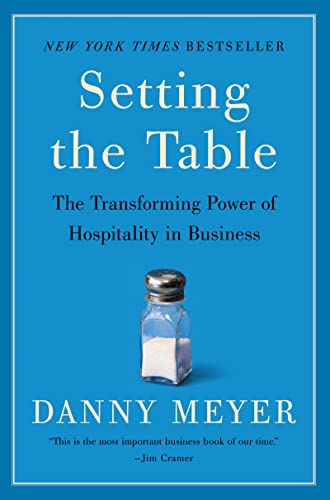
Overview: Danny Meyer explains how hospitality can become a repeatable business capability rather than a vague promise to be friendly. The book is especially useful for readers who need to connect frontline behavior with hiring, training, loyalty, and financial results.
Why it stands out: It connects the guest experience to culture, operations, leadership, and long-term business performance.
Strengths:
- Links service culture with operating decisions
- Useful for both independent operators and larger teams
- Turns hospitality into concrete management questions
Best for: restaurant owners, hospitality leaders, and service-focused executives
Potential limitations: It is a leadership and hospitality book, not a step-by-step restaurant accounting manual.
View price, available formats, and reader reviews.
The E-Myth Revisited: Why Most Small Businesses Don’t Work and What to Do About It

Overview: Michael E. Gerber’s classic is valuable for restaurant operators because consistency depends on systems, roles, standards, and repeatable training. It helps readers examine whether the business is organized around one heroic owner or around processes that a team can actually use.
Why it stands out: It focuses on the difference between doing the work and designing a business that can deliver consistent work.
Strengths:
- Clarifies the owner-versus-operator tension
- Encourages documented, repeatable processes
- Useful when a restaurant is preparing to grow
Best for: restaurant founders and operators building systems beyond the owner’s daily presence
Potential limitations: Its framework is broad, so readers must translate the ideas into restaurant-specific workflows.
View price, available formats, and reader reviews.
Who This List Is Best For
This list is for restaurant owners, operators, general managers, hospitality students, and leaders planning a new concept. It is especially useful when you want a thoughtful starting point rather than a one-size-fits-all answer. Read selectively: choose the book whose examples, level, and method match the decision or difficulty in front of you.
Final Thoughts
A strong restaurant-business reading list should balance guest experience with the less visible work that makes consistency possible: training, systems, financial discipline, and leadership. Start with the book that matches your current bottleneck, then turn one idea into a weekly operating experiment.
FAQ
Which book is best for a new restaurant owner?
The E-Myth Revisited is a useful starting point because it pushes owners to build systems, roles, and standards instead of relying on personal heroics.
Which book focuses most on hospitality?
Setting the Table is the clearest choice for connecting hospitality with culture, leadership, and business performance.
Are these books useful for restaurant managers?
Yes. Managers can use them to discuss service standards, training, handoffs, staffing, and the systems that keep guest experience consistent.
Do these books replace restaurant financial training?
No. They complement formal accounting, food-cost, labor, and compliance training; operators still need current local and industry-specific guidance.
How should I apply the ideas?
Choose one operational problem, define a measurable behavior, test it for two weeks, and review the result with the team before adding another initiative.




