
Middle managers sit in a difficult position. They are expected to translate strategy into action, support their teams, manage upward, and keep day-to-day work moving, often with limited authority and very little room for error. The best books for middle managers address that reality directly. Some focus on influence and politics, others on prioritization, team leadership, change, or the practical habits that make the role sustainable.
That variety matters. A middle manager who needs help navigating senior leadership has different needs from someone learning how to lead former peers or stabilize a stretched team. The books below were selected because they solve real problems middle managers face, and because each one offers a distinct angle rather than repeating the same advice in slightly different language.
Quick Answer
If you want the strongest books for middle managers, start with Leading from the Middle, The Middle Manager’s Survival Guide, The Exceptional Middle Manager, People, Problems and Paperwork, and It’s Your Ship. Together, they cover influence, leadership, prioritization, and practical management in a way that fits the real job.
Comparison Table
| Book | Best For | Why It Stands Out |
|---|---|---|
| Leading from the Middle | Managers who need influence across levels and functions | Focused on the political and practical reality of managing without full authority |
| The Middle Manager’s Survival Guide | Managers facing organizational complexity and constant pressure | Highly tactical, with tools for avoiding common traps and handling the role’s friction points |
| The Exceptional Middle Manager | Managers who want to improve team performance and career progression | Balances leadership effectiveness with smart career development |
| People, Problems and Paperwork | Managers who need help prioritizing competing demands | Directly addresses how to spend time where it matters most |
| It’s Your Ship | Readers who want a clear, action-oriented management model | Uses a memorable leadership case study to show accountability and ownership in practice |
| Becoming a Manager | First-time managers moving into the role from individual contributor work | Strong for readers who need to build a management foundation quickly |
| The Carrot Principle | Managers who want to improve engagement through recognition | Centers on a specific, often underused management tool |
| The Messy Middle | Managers dealing with uncertainty, setbacks, or long, difficult change efforts | Useful for the emotional and strategic strain that comes with prolonged middle-stage work |
| Sacred Cows Make the Best Burgers | Managers responsible for challenging stale habits or broken assumptions | An older but still relevant change-management perspective |
How We Chose These Recommendations
These books were selected for practical usefulness, durable reputation, and clear relevance to the middle-manager role. That means the list favors books that help with the real work of the position: influencing without overstepping, managing competing demands, building reliable teams, handling change, and making better use of limited time and authority.
We also looked for books that offer different forms of value. Some are tactical and easy to apply right away. Others are broader and more reflective, which helps readers who want context as well as tools. The goal was not to create the longest possible list, but to assemble a set of books that a thoughtful manager could actually use depending on the challenge in front of them.
Recommended Books
Leading from the Middle: A Playbook for Managers to Influence Up, Down, and Across the Organization

Overview: This book is built for managers who have responsibility without complete control. It focuses on the daily reality of influencing senior leaders, coordinating with peers, and supporting direct reports at the same time. The emphasis is on practical leadership in a matrixed or layered organization, where success depends as much on relationships and judgment as on formal authority.
Why it stands out: Among the best books for middle managers, this one is especially useful because it addresses the role from the inside. A lot of management books assume you are either a top executive or a first-time supervisor. This one speaks directly to the middle, where competing priorities and organizational politics are part of the job. That makes it valuable for readers who need a clearer map of how to be effective without trying to control everything.
Strengths:
- Targets the real influence challenges middle managers face
- Useful for managers working across functions or reporting lines
- Practical rather than abstract
Best for: Managers who need help managing up, across, and down in complex organizations.
Potential limitations: Readers looking for broad leadership theory may find it more applied than conceptual.
View price, available formats, and reader reviews.
The Middle Manager’s Survival Guide: 55 TOOLS and METHODS for steering clear of traps and navigating effectively in an increasingly challenging environment

Overview: This is a highly practical handbook for managers who need immediate help navigating traps, friction, and competing demands. The structure, with its many tools and methods, makes it useful as a reference rather than a book you have to read straight through. It is especially relevant for middle managers who are trying to stay effective in environments that are politically sensitive, fast-moving, or simply overloaded.
Why it stands out: Where some management books drift toward general advice, this one stays close to the mechanics of the job. That gives it real value for readers who want a problem-solving resource they can return to when a specific issue comes up. It earns its place on this list because middle managers often need guidance in short bursts, not just broad leadership philosophy.
Strengths:
- Built around tools, methods, and practical navigation
- Works well as a desk reference
- Focuses on the pressure points of the role
Best for: Managers who want tactical guidance for day-to-day challenges and organizational friction.
Potential limitations: The format is more practical than narrative, so readers wanting a more reflective leadership book may prefer a different option.
View price, available formats, and reader reviews.
The Exceptional Middle Manager: How to Think Smarter, Build High-Performance Teams, and Advance Your Career in Today’s Workplace

Overview: This book connects three concerns that often get separated in management discussions: better thinking, stronger teams, and career advancement. That combination makes it especially relevant for middle managers who want to be effective in the present while also preparing for the next step in their careers. The focus is not only on managing people, but also on becoming the kind of manager whose judgment and results stand out.
Why it stands out: Many books help managers become more organized or more empathetic, but fewer address the middle-manager role as a place for both performance and professional growth. That dual focus is what gives this title its value. It is a strong choice for readers who want a book that treats middle management as a serious leadership stage, not just a holding pattern before promotion.
Strengths:
- Combines team leadership with career development
- Useful for readers who want to think more strategically
- Addresses both present responsibilities and future progression
Best for: Ambitious managers who want to improve results without losing sight of advancement.
Potential limitations: Readers looking only for immediate management tactics may find the career-development emphasis broader than they need.
View price, available formats, and reader reviews.
People, Problems and Paperwork: How Managers Can Best Prioritize Their Work

Overview: Middle managers rarely struggle because they lack effort. They struggle because everything is urgent at once. This book addresses that exact problem by focusing on prioritization, helping managers decide where attention should go when people issues, operational problems, and administrative tasks all compete for the same hour. It is especially relevant for readers who feel busy but not necessarily effective.
Why it stands out: Prioritization is one of the most practical and overlooked middle-management skills. What makes this book valuable is its directness. Rather than treating time management as a generic productivity topic, it narrows the lens to the manager’s actual workload. That makes it a strong fit for readers who need to stop reacting to every demand and start making better decisions about their time.
Strengths:
- Focuses on a real managerial pain point
- Helps readers triage competing demands
- Practical for day-to-day use
Best for: Managers who are overwhelmed by competing responsibilities and need a better system for deciding what matters most.
Potential limitations: Readers seeking a broader leadership framework may want to pair it with a more comprehensive management book.
View price, available formats, and reader reviews.
It’s Your Ship: Management Techniques from the Best Damn Ship in the Navy, 10th Anniversary Edition
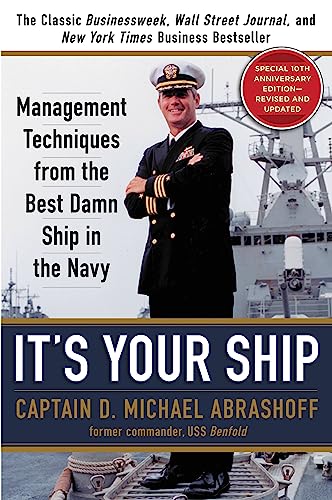
Overview: This book uses a naval leadership story to show what accountability, clarity, and ownership look like in practice. For middle managers, that combination is useful because it turns management principles into concrete behavior rather than abstract advice. The lessons apply well to teams that need direction, standards, and a stronger sense of responsibility.
Why it stands out: A lot of leadership books tell managers to inspire people. This one is more grounded in execution. It is a good choice for middle managers who need to improve team discipline, communication, and follow-through without relying on motivational language that sounds disconnected from real work. The case-study style also makes it more memorable than many generic management books.
Strengths:
- Clear, practical leadership lessons
- Strong emphasis on accountability and ownership
- Memorable format that is easy to apply
Best for: Managers who want straightforward management principles tied to real-world examples.
Potential limitations: Readers who prefer a modern corporate setting may find the naval framing less directly relatable, even though the lessons transfer well.
View price, available formats, and reader reviews.
Becoming a Manager: How New Managers Master the Challenges of Leadership

Overview: Although this book is aimed at new managers, it also works well for middle managers who still feel underprepared for the people side of leadership. It covers the transition from individual contributor to manager, with attention to the shift in mindset, relationships, and responsibility that comes with leading others. For readers who never received much formal management training, it can fill in important gaps.
Why it stands out: Not every middle manager is experienced in the role. Some have been promoted for technical skill and are still learning how to lead well. This book deserves a place on the list because it gives those readers a structured foundation without assuming too much prior knowledge. It is especially helpful for managers who feel confident in their subject matter expertise but less certain about coaching, feedback, or delegation.
Strengths:
- Clear introduction to management fundamentals
- Helpful for readers with little formal leadership training
- Addresses the mindset shift into management
Best for: First-time managers and middle managers who want a stronger foundation in leadership basics.
Potential limitations: Experienced managers may find some sections introductory.
View price, available formats, and reader reviews.
The Carrot Principle: How the Best Managers Use Recognition to Engage Their Employees, Retain Talent, and Drive Performance
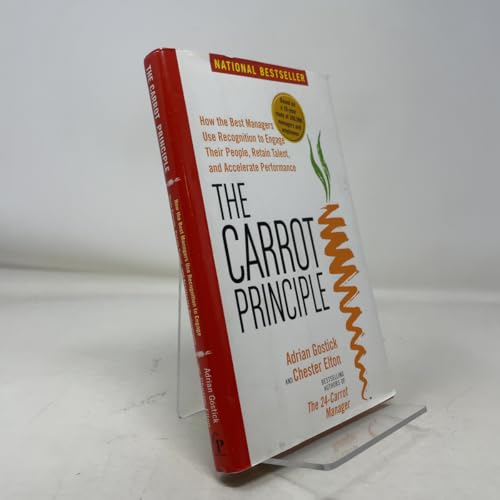
Overview: This book focuses on a management skill that is often undervalued in middle management: recognition. It explains how consistent, meaningful acknowledgment can improve engagement, retention, and performance. For managers who already know how to assign work but want to build stronger morale and commitment, the book offers a concrete path forward.
Why it stands out: Recognition is sometimes treated as a soft skill, but in practice it affects team health and results. That makes this book a smart addition to the list. It gives middle managers a specific lever they can pull without waiting for structural change or major budget shifts. Readers who need to improve team energy and reduce turnover will find this especially relevant.
Strengths:
- Focuses on a specific and useful management behavior
- Connects recognition to retention and performance
- Practical for everyday leadership
Best for: Managers who want to strengthen engagement and improve how their teams feel about the work.
Potential limitations: Readers looking for broad leadership coverage may find the focus narrower than other options on this list.
View price, available formats, and reader reviews.
The Messy Middle: Finding Your Way Through the Hardest and Most Crucial Part of Any Bold Venture

Overview: Middle management can feel like a long stretch between starting something and finishing it. This book is useful for that experience because it deals with uncertainty, setbacks, and the part of work where progress is rarely clean or linear. While it is not a management manual in the narrow sense, it offers useful perspective for leaders who need to stay steady through difficult, extended phases.
Why it stands out: Some middle managers benefit more from resilience and judgment than from another list of tactics. This book fills that gap. It helps readers think about ambiguity and persistence in a way that is especially relevant when they are managing initiatives that have lost momentum or facing work that no longer feels fresh. It broadens the list without drifting away from the middle-manager experience.
Strengths:
- Helpful for uncertainty and sustained pressure
- Offers a useful mindset for long, difficult projects
- Different from standard management-advice books
Best for: Managers dealing with change, stalled projects, or the strain of long-range work.
Potential limitations: Readers seeking a strict leadership handbook may find it more reflective than procedural.
View price, available formats, and reader reviews.
Sacred Cows Make the Best Burgers: Developing Change-Driving People and Organizations

Overview: This classic change-oriented management book is about challenging assumptions that have become so familiar they are no longer questioned. For middle managers, that matters because they often sit closest to the processes that need updating but may not have the authority to change them alone. The book’s value lies in its direct approach to organizational change and the human habits that keep outdated systems in place.
Why it stands out: Even though it is older than some other titles here, the core issue it addresses has not gone away. Middle managers still need to spot inefficient routines, build support for change, and keep teams moving when habits resist improvement. This book is a strong pick for readers who want a more provocative, change-focused perspective rather than a conventional management guide.
Strengths:
- Strong focus on change and organizational habits
- Useful for managers who need to challenge the status quo
- Offers a distinct perspective from newer leadership books
Best for: Managers involved in process improvement, transformation, or cultural change.
Potential limitations: The style and framing reflect its era, so some readers may prefer a more modern presentation.
View price, available formats, and reader reviews.
Leading with Bricks: Best Practices for Middle Managers

Overview: This book is explicitly centered on the middle-manager role and focuses on best practices for leading in that position. Its usefulness comes from that narrow focus, especially for readers who want a book that speaks directly to their day-to-day leadership environment rather than offering generic management advice.
Why it stands out: Because the book is written for middle managers specifically, it belongs in this list as a role-specific option. That said, the strongest reason to pick it is not simply that it matches the keyword. It adds value by offering a focused guide for managers who want practical best practices in a format that stays close to their actual responsibilities.
Strengths:
- Directly aimed at middle managers
- Practical best-practices orientation
- Easy to compare with more strategic or broader titles
Best for: Readers who want a middle-management book that stays tightly focused on the role itself.
Potential limitations: Readers wanting deep theory or a broader leadership framework may want a more expansive companion book.
View price, available formats, and reader reviews.
Who This List Is Best For
This list is best for middle managers who need practical help with influence, prioritization, team leadership, and change. It will also help new managers who have moved into the role quickly and want to build stronger habits before problems become entrenched. Readers who prefer a mix of tactical books and broader leadership perspective should find a useful balance here.
Final Thoughts
If you need the most directly relevant starting point, begin with Leading from the Middle or The Middle Manager’s Survival Guide. If your biggest challenge is time and competing demands, People, Problems and Paperwork is the most focused choice. If you want a broader leadership case study with clear lessons about accountability, It’s Your Ship is a strong next step.
For readers who are still building confidence in the role, Becoming a Manager can fill important gaps. And if your work depends on change, recognition, or staying steady through messy phases, the remaining titles give you specialized tools that fit those situations well. The best books for middle managers are not the ones that sound most impressive. They are the ones that help you handle the job more effectively on Monday morning.
FAQ
Which book is best for a middle manager who needs practical advice right away?
The Middle Manager’s Survival Guide is the most immediately tactical option. It is organized around tools and methods, which makes it easier to use when you are facing a specific problem.
Which book is best for learning how to influence without formal authority?
Leading from the Middle is the best fit. It focuses on influencing up, down, and across the organization, which is one of the defining challenges of the role.
Which book is most useful for prioritizing a heavy workload?
People, Problems and Paperwork is the clearest choice if your main issue is deciding what deserves your attention when everything feels urgent.
Which book should a new or first-time manager start with?
Becoming a Manager is the most accessible starting point for readers who need a basic foundation in leadership and the shift from individual contributor to manager.
Which book is best for improving team engagement?
The Carrot Principle is the strongest option for managers who want to use recognition more effectively to improve morale and retention.
Which recommendation offers the best long-term value?
Leading from the Middle and It’s Your Ship offer strong long-term value because they address enduring management problems rather than short-lived workplace trends.




