
Corporate strategy is one of those topics that looks straightforward until a team has to make real choices about where to compete, where to invest, and what to stop doing. The best books on the subject do more than explain frameworks. They help leaders think clearly under pressure, compare trade-offs, and avoid strategies that sound polished but fail in practice. That is why this list favors books that have earned lasting respect in business, consulting, and executive education.
If you are building strategy for a company, division, or business unit, the books below offer different kinds of help. Some are grounded in classic strategy thinking. Others are more practical, showing how to create advantage, analyze competition, or turn strategic intent into action. The right choice depends on whether you need a foundation, a toolkit, or a sharper way to think about market position.
Quick Answer
If you want the best books for corporate strategy, start with Good Strategy Bad Strategy, Blue Ocean Strategy, HBR’s 10 Must Reads On Strategy, The Art of Strategy, and On Grand Strategy. Together, they cover the core ways executives and managers think about competition, choice, and long-term direction.
Comparison Table
| Book | Best For | Why It Stands Out |
|---|---|---|
| Good Strategy Bad Strategy: The Difference and Why It Matters | Leaders, MBA students, and professionals who want a strong baseline understanding of corporate strategy. | Among books on corporate strategy, this is the one most likely to change how readers evaluate plans. It is especially strong at showing why so many organizations mistake goals for strategy. If you need a foundational book that sharpens… |
| Blue Ocean Strategy, Expanded Edition: How to Create Uncontested Market Space and Make the Competition Irrelevant | Companies that want to identify new growth opportunities or rethink their competitive position. | This is one of the few strategy books that gives readers a clearly defined alternative to rival-focused thinking. It is especially valuable for organizations trying to escape commoditization or reframe a crowded market. The expanded… |
| HBR’s 10 Must Reads On Strategy | Professionals who want a practical overview of core strategy concepts without reading a long standalone treatise. | The value here is breadth. Instead of following a single framework, readers get a curated overview of several important ideas that have shaped modern corporate strategy thinking. That makes it especially useful for professionals who want… |
| The Art of Strategy: A Game Theorist’s Guide to Success in Business and Life | Readers who want a more analytical and economics-informed approach to strategy. | Few corporate strategy books do a better job of helping readers think through conflict, negotiation, and interdependence. This is not just about corporate planning in the abstract. It is about how strategic behavior actually works when… |
| On Grand Strategy | Readers who want strategic depth and a wider perspective on leadership decisions. | Corporate strategy often gets too focused on immediate competition. This book widens the frame. It is especially useful for executives who need to balance ambition with limits and think about strategy as the disciplined use of resources… |
| Your Next Five Moves: Master the Art of Business Strategy | Business owners, operators, and readers who want a more tactical strategy book. | This recommendation earns its place because it translates strategic thinking into an easy-to-grasp mental model. It is especially appealing to readers who want strategy that feels active and operational rather than theoretical. Compared… |
| Playing to Win: How Strategy Really Works | Readers who want a practical, focused resource on strategic choices, where to play, and how to win. | This recommendation adds a distinct framework instead of repeating a generic introduction. It helps readers move from recognizing the issue to understanding the patterns, choices, or skills involved in strategic choices, where to play,… |
| The Innovator’s Dilemma: When New Technologies Cause Great Firms to Fail | Readers who want a practical, focused resource on disruption, strategic risk, and incumbent advantage. | This recommendation adds a distinct framework instead of repeating a generic introduction. It helps readers move from recognizing the issue to understanding the patterns, choices, or skills involved in disruption, strategic risk, and… |
How We Chose These Recommendations
This list favors books that help readers make better strategic decisions, not just books that use the word strategy in the title. The strongest choices here have a durable reputation, clear teaching value, and a practical connection to corporate decision-making. Some are classic strategy texts that belong in any serious business library. Others are more specialized, but still useful for leaders who need to think about competition, market position, execution, or organizational leverage.
The goal was to keep the list broad enough to be useful without becoming repetitive. Corporate strategy can mean different things depending on your role, so the recommendations include foundational theory, applied frameworks, and books that help with execution and leadership. Each one earned its place by solving a different part of the strategy problem.
Recommended Books
Good Strategy Bad Strategy: The Difference and Why It Matters

Overview: Richard Rumelt’s book is one of the clearest introductions to what strategy actually is. Rather than treating strategy as vision statements or broad ambition, it focuses on diagnosis, guiding policy, and coherent action. That makes it especially useful for corporate readers who need to separate real strategic thinking from vague planning language. The book uses accessible examples and a direct style, which helps it stay practical without becoming simplistic.
Why it stands out: Among books on corporate strategy, this is the one most likely to change how readers evaluate plans. It is especially strong at showing why so many organizations mistake goals for strategy. If you need a foundational book that sharpens judgment, this is the place to begin.
Strengths:
- Explains strategy in a concrete, workable way
- Useful for executives, managers, and consultants
- Balances theory with memorable real-world examples
- Helps readers diagnose weak thinking inside organizations
Best for: Leaders, MBA students, and professionals who want a strong baseline understanding of corporate strategy.
Potential limitations: Readers looking for step-by-step planning templates may find it more conceptual than operational.
View price, available formats, and reader reviews.
Blue Ocean Strategy, Expanded Edition: How to Create Uncontested Market Space and Make the Competition Irrelevant

Overview: W. Chan Kim and Renée Mauborgne focus on a familiar corporate challenge: how to grow without relying only on direct competition. Their framework emphasizes value innovation, strategic differentiation, and the search for market spaces that have not yet been fully contested. For companies that feel trapped in head-to-head competition, the book provides a different way to think about growth and positioning.
Why it stands out: This is one of the few strategy books that gives readers a clearly defined alternative to rival-focused thinking. It is especially valuable for organizations trying to escape commoditization or reframe a crowded market. The expanded edition also helps keep the material relevant for modern readers.
Strengths:
- Offers a distinct and memorable strategic framework
- Helpful for innovation, differentiation, and new-market thinking
- Well suited to teams searching for growth beyond price competition
- Widely discussed in business schools and strategy circles
Best for: Companies that want to identify new growth opportunities or rethink their competitive position.
Potential limitations: Some readers may find the framework more useful as a strategic lens than as a complete operating manual.
View price, available formats, and reader reviews.
HBR’s 10 Must Reads On Strategy

Overview: This collection gathers several influential Harvard Business Review articles on strategic thinking, competitive positioning, and corporate decision-making. It works well as a compact survey for readers who want exposure to multiple influential voices without committing to a long textbook. Because it is essay-based, it can help managers identify different strategic viewpoints and compare them quickly.
Why it stands out: The value here is breadth. Instead of following a single framework, readers get a curated overview of several important ideas that have shaped modern corporate strategy thinking. That makes it especially useful for professionals who want a fast but credible overview before diving deeper into a single book.
Strengths:
- Concise and efficient for busy readers
- Introduces multiple respected strategy perspectives
- Useful as a starting point or refresher
- Strong fit for executive and MBA reading lists
Best for: Professionals who want a practical overview of core strategy concepts without reading a long standalone treatise.
Potential limitations: Because it is a collection, the reading experience is less unified than a single-author book.
View price, available formats, and reader reviews.
The Art of Strategy: A Game Theorist’s Guide to Success in Business and Life

Overview: Avinash K. Dixit and Barry J. Nalebuff use game theory to explain strategic interaction in business and beyond. The book is especially good at showing how to think about competitors, incentives, commitments, and responses in situations where other players are also making choices. That makes it more analytical than many general business strategy books, while still remaining readable.
Why it stands out: Few corporate strategy books do a better job of helping readers think through conflict, negotiation, and interdependence. This is not just about corporate planning in the abstract. It is about how strategic behavior actually works when multiple parties are reacting to each other. That makes the book particularly useful for executives who need sharper decision-making tools.
Strengths:
- Strong conceptual framework for competitive behavior
- Connects strategy with incentives and game theory
- Helpful for negotiations, pricing, and market competition
- More intellectually rigorous than many general business books
Best for: Readers who want a more analytical and economics-informed approach to strategy.
Potential limitations: The game theory lens can feel abstract if you want a highly practical management manual.
View price, available formats, and reader reviews.
On Grand Strategy

Overview: John Lewis Gaddis approaches strategy from a broader historical and leadership perspective. Although the book is not a corporate playbook in the narrow sense, it is valuable for leaders who want to think about long time horizons, priorities, and the relationship between objectives and capacity. Its historical examples make the ideas memorable, and its scope encourages readers to think beyond quarterly planning cycles.
Why it stands out: Corporate strategy often gets too focused on immediate competition. This book widens the frame. It is especially useful for executives who need to balance ambition with limits and think about strategy as the disciplined use of resources over time. Among strategy books, it offers some of the most thoughtful long-range perspective.
Strengths:
- Broadens strategic thinking beyond short-term business tactics
- Strong historical examples make the ideas stick
- Useful for senior leaders and experienced managers
- Encourages disciplined, long-range judgment
Best for: Readers who want strategic depth and a wider perspective on leadership decisions.
Potential limitations: It is more reflective and historical than practical, so some readers may want a more applied companion book.
View price, available formats, and reader reviews.
Your Next Five Moves: Master the Art of Business Strategy

Overview: Patrick Bet-David frames strategy as sequential decision-making, with an emphasis on thinking ahead, reading opponents, and preparing for multiple outcomes. The book is written in a direct, business-minded style that makes it accessible to entrepreneurs and managers who want a more tactical approach to strategy. It is less academic than some of the classics, but it gives readers a straightforward way to think several moves ahead.
Why it stands out: This recommendation earns its place because it translates strategic thinking into an easy-to-grasp mental model. It is especially appealing to readers who want strategy that feels active and operational rather than theoretical. Compared with more formal business books, it is more about maneuvering and sequencing decisions.
Strengths:
- Accessible, action-oriented writing style
- Useful for entrepreneurs and fast-moving leaders
- Focuses on planning, timing, and sequencing decisions
- Practical for readers who like clear mental models
Best for: Business owners, operators, and readers who want a more tactical strategy book.
Potential limitations: Readers who prefer classic strategy theory may find it more personal and motivational in tone than scholarly.
View price, available formats, and reader reviews.
Playing to Win: How Strategy Really Works
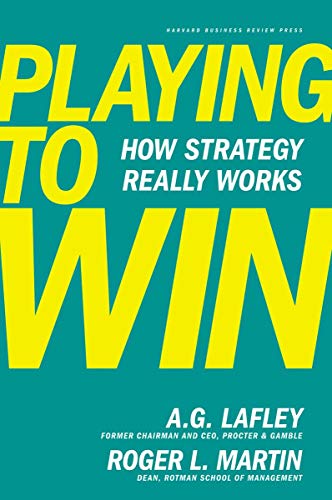
Overview: Playing to Win: How Strategy Really Works gives readers a clearer, more established way to explore strategic choices, where to play, and how to win. It is a stronger fit for this list because its main ideas connect directly to the practical questions readers bring to this topic.
Why it stands out: This recommendation adds a distinct framework instead of repeating a generic introduction. It helps readers move from recognizing the issue to understanding the patterns, choices, or skills involved in strategic choices, where to play, and how to win.
Strengths:
- Directly connected to strategic choices, where to play, and how to win
- Offers a clear framework readers can return to
- More focused than a general-purpose self-help choice
- Works well alongside the other recommendations on this list
Best for: Readers who want a practical, focused resource on strategic choices, where to play, and how to win.
Potential limitations: It works best as a focused resource for this topic, so readers may want to pair it with a broader foundational book.
View price, available formats, and reader reviews.
The Innovator’s Dilemma: When New Technologies Cause Great Firms to Fail

Overview: The Innovator’s Dilemma: When New Technologies Cause Great Firms to Fail gives readers a clearer, more established way to explore disruption, strategic risk, and incumbent advantage. It is a stronger fit for this list because its main ideas connect directly to the practical questions readers bring to this topic.
Why it stands out: This recommendation adds a distinct framework instead of repeating a generic introduction. It helps readers move from recognizing the issue to understanding the patterns, choices, or skills involved in disruption, strategic risk, and incumbent advantage.
Strengths:
- Directly connected to disruption, strategic risk, and incumbent advantage
- Offers a clear framework readers can return to
- More focused than a general-purpose self-help choice
- Works well alongside the other recommendations on this list
Best for: Readers who want a practical, focused resource on disruption, strategic risk, and incumbent advantage.
Potential limitations: It works best as a focused resource for this topic, so readers may want to pair it with a broader foundational book.
View price, available formats, and reader reviews.
Who This List Is Best For
This list is best for executives, managers, MBA students, consultants, entrepreneurs, and other professionals who need to think clearly about competition, positioning, and long-term business choices. It also works well for readers who want strategy books with different levels of depth, from accessible introductions to more analytical or historically minded titles.
Final Thoughts
If your main goal is to understand what strategy really means, start with Good Strategy Bad Strategy. If you want a fresh framework for growth, go to Blue Ocean Strategy. If you need a broader survey, HBR’s 10 Must Reads On Strategy gives you a compact overview without requiring a huge time commitment.
If you want a more analytical lens, The Art of Strategy is the strongest choice. If your work calls for long-range judgment, On Grand Strategy offers useful perspective. For readers who prefer something more tactical and business-oriented, Your Next Five Moves and Playing to Win: How Strategy Really Works are the most applied options. And if your strategy problem is really an execution problem, Multipliers is the best leadership companion on the list.
FAQ
Which book is best for beginners?
Good Strategy Bad Strategy is the best starting point for most beginners. It explains strategy in plain English and focuses on the difference between real strategic thinking and vague business talk. That makes it easier to absorb than more academic books, while still being rigorous enough for serious readers. If you want one book that can reset how you think about strategy, this is usually the right first step.
Which book offers the most practical advice?
If you want something directly usable in a business setting, Playing to Win: How Strategy Really Works is one of the more practical choices. For readers who want strategy tied to leadership and execution, Multipliers is also highly useful. The right answer depends on whether your main challenge is planning the strategy or getting people to execute it well.
Which book is best for competitive analysis?
The Art of Strategy is the strongest choice for readers who want to understand competition as a dynamic, interactive process. It uses game theory to explain how firms, leaders, and rivals respond to each other. That makes it especially valuable for pricing decisions, negotiation, market moves, and any situation where another player’s reaction matters.
Which book should I read first if I want a classic strategy foundation?
Start with Good Strategy Bad Strategy. It offers the clearest foundation in this list and helps readers identify the difference between useful strategic thinking and generic planning. After that, Blue Ocean Strategy or HBR’s 10 Must Reads On Strategy can broaden your perspective depending on whether you want a growth framework or a wider survey of ideas.
Do these books help with strategy execution, not just planning?
Yes, but some do it better than others. Multipliers is especially useful for execution because it focuses on how leaders bring out more from their teams. Playing to Win: How Strategy Really Works is also aimed at implementation. For readers who want the conceptual side first, Good Strategy Bad Strategy is the best foundation before moving into execution-focused titles.
Which book is best for experienced executives?
Experienced executives often benefit most from On Grand Strategy because it pushes strategic thinking to a broader, longer-term level. Good Strategy Bad Strategy is also valuable at senior levels because it sharpens judgment about what counts as real strategy. If an executive wants a more analytical lens on competition, The Art of Strategy is another strong option.




