
Believing in yourself is easy to talk about and harder to practice, especially when confidence has been knocked down by failure, comparison, grief, or a stretch of ordinary bad days. The right book can help in different ways. Some readers need a story that restores perspective. Others want a practical framework for changing how they think and act. A few are looking for something gentle enough to share with a child or teenager who needs encouragement. The best books for believing in yourself are not all the same, and that is exactly why a curated list is useful.
Quick Answer
If you want the clearest entry point into believing in yourself, start with The Magic of Believing: Believe in Yourself and The Universe Is Forced to Believe In You. It gives you a useful foundation in self-efficacy, self-esteem, values, action, and evidence created through consistent behavior. Choose The Confidence Gap when you want a more applied or contrasting approach, and use The Six Pillars of Self-Esteem when you want to extend the idea into a different context.
This list is designed for adults, teens, and readers rebuilding confidence without relying on empty motivation. The recommendations are intentionally varied: some explain the underlying research, some offer exercises, and some are strongest as narrative or leadership case studies. That variety makes it easier to choose a book that matches your current question rather than buying the longest list.
Comparison Table
| Book | Best For | Why It Stands Out |
|---|---|---|
| The Magic of Believing: Believe in Yourself and The Universe Is Forced to Believe In You | Adults who want a straightforward confidence book rather than a narrative or biography. | Among books for believing in yourself, this one is the most explicitly centered on the inner mechanics of confidence. It is less about storytelling and more about persuasion, which gives it a distinct role on the list. Readers who want a… |
| The Confidence Gap | readers who want evidence-informed tools for acting despite uncertainty | It earns a place in this list because it adds a distinct perspective on fear, self-doubt, values, and taking meaningful action without waiting to feel completely confident, helping readers move beyond a generic motivational summary and… |
| The Six Pillars of Self-Esteem | readers building a durable foundation for self-respect and personal agency | It earns a place in this list because it adds a distinct perspective on self-acceptance, responsibility, purpose, and the practices Nathaniel Branden associates with healthy self-esteem, helping readers move beyond a generic motivational… |
| The Gifts of Imperfection | Readers who are emotionally overextended by self-criticism or the pressure to appear fine. | It adds the self-acceptance dimension that emotional-balance readers often need when regulation advice turns into another standard they feel they must perform perfectly. |
| Mindset: The New Psychology of Success | Adults who want to build a more resilient approach to learning and improvement. | It is a practical foundation for learning new skills because it addresses how people respond when early progress is difficult. |
| Atomic Habits | Professionals who need to make progress on goals through repeatable daily actions. | It helps employees translate a work goal into consistent daily behavior instead of relying on motivation alone. |
| Grit | readers who want to connect self-belief with sustained behavior rather than temporary motivation | It earns a place in this list because it adds a distinct perspective on passion, perseverance, deliberate practice, and long-term effort toward difficult goals, helping readers move beyond a generic motivational summary and choose a… |
| You Are a Badass | readers who prefer an energetic, accessible introduction to confidence-building | It earns a place in this list because it adds a distinct perspective on self-talk, confidence, personal responsibility, and moving from intention to action, helping readers move beyond a generic motivational summary and choose a practical… |
How We Chose These Recommendations
This list focuses on books that help readers strengthen confidence in ways that are actually useful. Some do that through fiction, where a character’s resilience becomes a mirror for the reader. Others do it through biography or classic self-help, where the emphasis is on persistence, mindset, and practical confidence-building. For younger readers, the best choices are books that make self-belief feel understandable rather than abstract.
Preference went to books with a clear purpose, a recognizable place in the reading landscape, and an approach that fits the search intent without stretching it. That means choosing books that genuinely support self-belief, not just books with inspirational wording in the title. The result is a list with different entry points for different ages and reading styles.
Recommended Books
The Magic of Believing: Believe in Yourself and The Universe Is Forced to Believe In You

Overview: This confidence-focused book takes a direct, almost old-school approach to self-belief. Rather than treating confidence as a personality trait, it treats it as something you can cultivate through thought, expectation, and repeated mental practice. Readers drawn to affirmations, visualization, and mindset-centered advice will find a familiar structure here.
Why it stands out: Among books for believing in yourself, this one is the most explicitly centered on the inner mechanics of confidence. It is less about storytelling and more about persuasion, which gives it a distinct role on the list. Readers who want a book that speaks plainly about conviction, self-trust, and mental focus will get exactly that.
Strengths:
- Very direct about the relationship between thought and confidence
- Useful for readers who like mindset-based personal growth books
- Offers a classic self-help style that many readers still find accessible
Best for: Adults who want a straightforward confidence book rather than a narrative or biography.
Potential limitations: Readers who prefer evidence-heavy psychology or modern coaching language may find the style dated or overly spiritual in tone.
View price, available formats, and reader reviews.
The Confidence Gap

Overview: The Confidence Gap gives readers a focused way to understand fear, self-doubt, values, and taking meaningful action without waiting to feel completely confident. Its value is not only the headline idea; it also shows how the idea affects decisions, habits, relationships, or work in real situations.
Why it stands out: It earns a place in this list because it adds a distinct perspective on fear, self-doubt, values, and taking meaningful action without waiting to feel completely confident, helping readers move beyond a generic motivational summary and choose a practical next step.
Strengths:
- Clear framework for the topic
- Useful examples or reflection prompts
- Can be applied beyond a single situation
Best for: readers who want evidence-informed tools for acting despite uncertainty
Potential limitations: Courageous action should be paced to the situation and does not mean ignoring real risk.
View price, available formats, and reader reviews.
The Six Pillars of Self-Esteem

Overview: The Six Pillars of Self-Esteem gives readers a focused way to understand self-acceptance, responsibility, purpose, and the practices Nathaniel Branden associates with healthy self-esteem. Its value is not only the headline idea; it also shows how the idea affects decisions, habits, relationships, or work in real situations.
Why it stands out: It earns a place in this list because it adds a distinct perspective on self-acceptance, responsibility, purpose, and the practices Nathaniel Branden associates with healthy self-esteem, helping readers move beyond a generic motivational summary and choose a practical next step.
Strengths:
- Clear framework for the topic
- Useful examples or reflection prompts
- Can be applied beyond a single situation
Best for: readers building a durable foundation for self-respect and personal agency
Potential limitations: The framework is philosophical and self-development oriented rather than a clinical treatment plan.
View price, available formats, and reader reviews.
The Gifts of Imperfection

Overview: Brené Brown explores how perfectionism, shame, and fear of judgment can narrow a person’s emotional life. Its wholeheartedness framework encourages readers to replace performance-based self-worth with clearer values and more honest self-compassion.
Why it stands out: It adds the self-acceptance dimension that emotional-balance readers often need when regulation advice turns into another standard they feel they must perform perfectly.
Strengths:
- Accessible discussion of shame and perfectionism
- Reflective exercises and language
- Strong fit for self-compassion work
Best for: Readers who are emotionally overextended by self-criticism or the pressure to appear fine.
Potential limitations: The tone is reflective and values-driven rather than clinical or diagnostic.
View price, available formats, and reader reviews.
Mindset: The New Psychology of Success

Overview: Carol S. Dweck explains how beliefs about ability influence persistence, feedback, and willingness to learn.
Why it stands out: It is a practical foundation for learning new skills because it addresses how people respond when early progress is difficult.
Strengths:
- Clear distinction between fixed and growth mindsets
- Useful for learners and managers
- Encourages constructive responses to feedback
Best for: Adults who want to build a more resilient approach to learning and improvement.
Potential limitations: The concept can be over-simplified if treated as a motivational slogan rather than a pattern of behavior.
View price, available formats, and reader reviews.
Atomic Habits

Overview: James Clear presents a practical framework for designing environments and routines that make useful behaviors easier to repeat.
Why it stands out: It helps employees translate a work goal into consistent daily behavior instead of relying on motivation alone.
Strengths:
- Highly actionable habit framework
- Useful for individual and team routines
- Connects goals with environment design
Best for: Professionals who need to make progress on goals through repeatable daily actions.
Potential limitations: It is strongest on behavior change and less detailed on organizational goal governance.
View price, available formats, and reader reviews.
Grit

Overview: Grit gives readers a focused way to understand passion, perseverance, deliberate practice, and long-term effort toward difficult goals. Its value is not only the headline idea; it also shows how the idea affects decisions, habits, relationships, or work in real situations.
Why it stands out: It earns a place in this list because it adds a distinct perspective on passion, perseverance, deliberate practice, and long-term effort toward difficult goals, helping readers move beyond a generic motivational summary and choose a practical next step.
Strengths:
- Clear framework for the topic
- Useful examples or reflection prompts
- Can be applied beyond a single situation
Best for: readers who want to connect self-belief with sustained behavior rather than temporary motivation
Potential limitations: Persistence should be balanced with feedback and the willingness to change an unwise goal.
View price, available formats, and reader reviews.
You Are a Badass
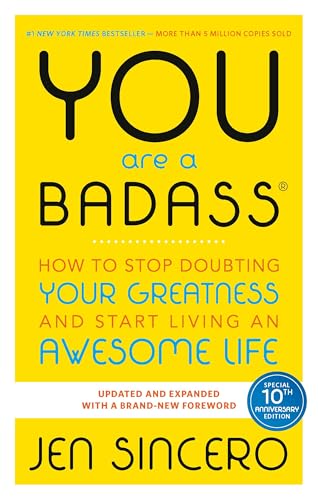
Overview: You Are a Badass gives readers a focused way to understand self-talk, confidence, personal responsibility, and moving from intention to action. Its value is not only the headline idea; it also shows how the idea affects decisions, habits, relationships, or work in real situations.
Why it stands out: It earns a place in this list because it adds a distinct perspective on self-talk, confidence, personal responsibility, and moving from intention to action, helping readers move beyond a generic motivational summary and choose a practical next step.
Strengths:
- Clear framework for the topic
- Useful examples or reflection prompts
- Can be applied beyond a single situation
Best for: readers who prefer an energetic, accessible introduction to confidence-building
Potential limitations: Its motivational tone is not a substitute for addressing depression, trauma, or structural barriers.
View price, available formats, and reader reviews.
Who This List Is Best For
These recommendations are a good fit for adults, teens, and readers rebuilding confidence without relying on empty motivation. They are especially useful if you want to understand believing in yourself with more nuance than a short checklist, quote, or social-media summary can provide.
- Readers who want a clear conceptual foundation before choosing a technique.
- People who prefer to compare research, practical exercises, and real-world examples.
- Professionals, students, or caregivers who need language they can apply in a real conversation or decision.
Use the Best For and Why It Stands Out columns together. A book can be excellent yet still be the wrong starting point if its depth, tone, or intended reader does not match your goal.
Final Thoughts
The strongest choice for believing in yourself depends on what you need to do next. Begin with The Magic of Believing: Believe in Yourself and The Universe Is Forced to Believe In You if you need a foundation, move to The Confidence Gap if you need a practical change, and consider The Six Pillars of Self-Esteem if you need a broader or more challenging perspective. The comparison table is meant to shorten that decision, not pretend that one book works for every reader.
A useful reading plan is simple: select one book, write down the question you want it to answer, and apply one idea before moving to another recommendation. For this topic, choose a small promise you can keep, then use the result as evidence rather than waiting for certainty. confidence is not a cure for depression, trauma, or structural barriers and should not be treated as one. Books can support reflection and skills practice, but they are not a substitute for qualified professional care when symptoms are severe, persistent, or unsafe.
FAQ
Which book should I read first for believing in yourself?
Start with The Magic of Believing: Believe in Yourself and The Universe Is Forced to Believe In You if you want the clearest foundation. If your immediate need is action rather than background, compare it with The Confidence Gap and choose the one whose exercises, examples, or audience match your situation.
How do I choose between a research-based book and a workbook?
Choose the research-oriented option when you need context and a better mental model. Choose the workbook or practical guide when you already understand the problem and need repetition, prompts, or a structured plan. The table’s Best For column is the fastest way to make that distinction.
What is a practical way to use books about believing in yourself?
Do not read the whole list at once. Pick one recommendation, define the behavior or decision you want to improve, and test a small idea from the book for seven days. For this topic, choose a small promise you can keep, then use the result as evidence rather than waiting for certainty.
Are these recommendations suitable for self-study?
Yes, for education and structured reflection. Take notes in your own words, mark claims you want to verify, and discuss difficult ideas with a trusted person or qualified professional when appropriate. Books can support reflection and skills practice, but they are not a substitute for qualified professional care when symptoms are severe, persistent, or unsafe.
Do I need to read every book on the list?
No. One well-matched book that changes what you notice or do is more valuable than collecting several recommendations without applying any of them.