
Starting out in executive leadership is less about mastering a title and more about learning how to make better decisions, use time well, and lead through other people instead of through your own effort alone. That is why the best books for executive leadership for beginners are usually the ones that focus on fundamentals first. They help new leaders understand priorities, delegation, communication, and judgment before moving into more advanced strategy. The right book can also save a beginner from learning those lessons the hard way.
Not every leadership book serves the same reader. Some are practical and concise, some are more coaching-oriented, and some are better for managers who need a clearer system for executive thinking. The list below favors books that are established, widely respected, and genuinely useful for someone who wants a strong foundation in executive leadership.
Quick Answer
If you want the clearest entry point into executive leadership for beginners, start with The Effective Executive: The Definitive Guide to Getting the Right Things Done. It gives you a useful foundation in priorities, decisions, communication, delegation, and the operating rhythm behind executive effectiveness. Choose The New One Minute Manager: A Timeless Guide to Effective Leadership, Stress Reduction, and Success in a Rapidly Changing Workplace when you want a more applied or contrasting approach, and use Business Made Simple: 60 Days to Master Leadership, Sales, Marketing, Execution, Management, Personal Productivity and More when you want to extend the idea into a different context.
This list is designed for professionals preparing for executive responsibility and leaders building foundational judgment. The recommendations are intentionally varied: some explain the underlying research, some offer exercises, and some are strongest as narrative or leadership case studies. That variety makes it easier to choose a book that matches your current question rather than buying the longest list.
Comparison Table
| Book | Best For | Why It Stands Out |
|---|---|---|
| The Effective Executive: The Definitive Guide to Getting the Right Things Done | Beginners who want a classic foundation in executive leadership and decision-making. | This remains one of the strongest starting points for beginners because it addresses the core problem behind many leadership mistakes: confusing activity with effectiveness. Drucker’s approach is practical, direct, and still highly… |
| The New One Minute Manager: A Timeless Guide to Effective Leadership, Stress Reduction, and Success in a Rapidly Changing Workplace | New managers and aspiring executives who want a straightforward, low-friction introduction to leadership. | Compared with denser leadership books, this one is unusually approachable without becoming superficial. It works well for readers who want a fast, practical introduction to management behavior before moving into more complex executive… |
| Business Made Simple: 60 Days to Master Leadership, Sales, Marketing, Execution, Management, Personal Productivity and More | Beginners who want a practical overview of leadership within the larger business system. | Many beginner leadership books stay narrowly focused on people management. This one gives readers a bigger operational picture, which can be especially valuable for someone moving toward executive work. The format also makes the material… |
| The Art of War for Executives: Sun Tzu’s Classic Text Interpreted for Today’s Business Reader | Beginners who want to understand the strategic side of executive leadership. | Among beginner-friendly executive leadership books, this one adds a strategic lens that many introductory titles overlook. It is less about day-to-day management and more about the mindset behind leadership under pressure. That makes it a… |
| The One Minute Manager Meets The Monkey | Beginners who need help delegating and managing their own time more effectively. | New executives often struggle not because they lack intelligence, but because they keep too much work on their own desk. This book gives a memorable way to see that problem and correct it. It belongs on this list because it addresses one… |
How We Chose These Recommendations
For beginners in executive leadership, the most useful books are the ones that teach durable habits rather than trendy slogans. These recommendations were chosen for their practical value, their long-standing reputation, and their usefulness to readers who are still building confidence as leaders. The list also favors books that are easy enough to start with, but substantial enough to remain useful as responsibilities grow.
Equally important, each book here serves a different purpose. One helps with priorities, another with people management, another with delegation, and another with strategic thinking. That variety matters for new executives because leadership is not one skill. It is a set of related skills that need to develop together.
Recommended Books
The Effective Executive: The Definitive Guide to Getting the Right Things Done

Overview: Peter Drucker’s classic focuses on what executives actually do well: manage time, decide what is worth doing, and contribute where they can make the greatest difference. It is not a motivational book and does not try to teach leadership through stories alone. Instead, it lays out a disciplined view of executive effectiveness, making it especially useful for readers who are new to senior responsibility and need a clear standard for how to think.
Why it stands out: This remains one of the strongest starting points for beginners because it addresses the core problem behind many leadership mistakes: confusing activity with effectiveness. Drucker’s approach is practical, direct, and still highly relevant. If you want a book that helps you think like an executive rather than just act busy, this is the one to begin with.
Strengths:
- Teaches timeless executive habits, not trends
- Strong emphasis on priorities and contribution
- Useful for both new managers and rising leaders
- Clear, concise, and highly focused
Best for: Beginners who want a classic foundation in executive leadership and decision-making.
Potential limitations: Readers looking for modern workplace examples or a highly conversational style may find it more formal than newer leadership books.
View price, available formats, and reader reviews.
The New One Minute Manager: A Timeless Guide to Effective Leadership, Stress Reduction, and Success in a Rapidly Changing Workplace

Overview: This slim, readable book is built for leaders who need a simple model they can actually remember and use. It focuses on the basics of managing people well, including clear expectations, feedback, and the discipline of keeping leadership simple enough to apply under pressure. For beginners, that simplicity is a feature, not a weakness.
Why it stands out: Compared with denser leadership books, this one is unusually approachable without becoming superficial. It works well for readers who want a fast, practical introduction to management behavior before moving into more complex executive topics. The ideas are easy to grasp and even easier to put into practice at work.
Strengths:
- Very accessible for first-time leaders
- Emphasizes clear communication and accountability
- Short enough to finish quickly
- Useful as a first leadership framework
Best for: New managers and aspiring executives who want a straightforward, low-friction introduction to leadership.
Potential limitations: Experienced leaders may find it too simple if they are looking for deep organizational or strategic analysis.
View price, available formats, and reader reviews.
Business Made Simple: 60 Days to Master Leadership, Sales, Marketing, Execution, Management, Personal Productivity and More
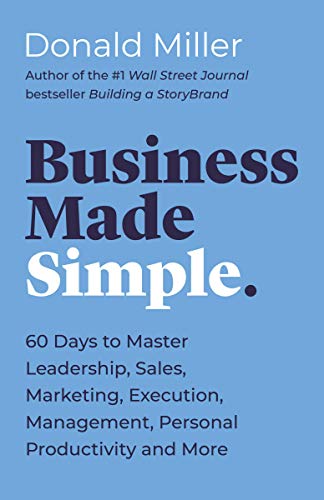
Overview: Donald Miller’s book is broader than a traditional leadership manual, which is exactly why it helps beginners. It explains the moving parts of business in a clean, understandable way and connects leadership to execution, personal productivity, and organizational performance. Readers who are stepping into executive responsibility often need that wider business context, not just advice on managing direct reports.
Why it stands out: Many beginner leadership books stay narrowly focused on people management. This one gives readers a bigger operational picture, which can be especially valuable for someone moving toward executive work. The format also makes the material feel manageable, with a progression that encourages steady learning rather than overwhelm.
Strengths:
- Broad business perspective for emerging leaders
- Plainspoken and easy to follow
- Connects leadership to execution and productivity
- Helpful for readers who need structure, not jargon
Best for: Beginners who want a practical overview of leadership within the larger business system.
Potential limitations: Readers who want a deep, academic treatment of leadership theory will probably want a more specialized book as well.
View price, available formats, and reader reviews.
The Art of War for Executives: Sun Tzu’s Classic Text Interpreted for Today’s Business Reader

Overview: This business adaptation of Sun Tzu helps readers think about competition, positioning, and strategy in a professional setting. For beginners in executive leadership, that can be valuable because leadership is not only about people. It is also about choosing where to focus, understanding conflict, and making disciplined strategic decisions when the stakes are high.
Why it stands out: Among beginner-friendly executive leadership books, this one adds a strategic lens that many introductory titles overlook. It is less about day-to-day management and more about the mindset behind leadership under pressure. That makes it a strong complement to more practical books on time and delegation.
Strengths:
- Introduces strategic thinking in a business context
- Useful for readers who want a competitive framework
- Can sharpen judgment and decision-making
- Offers a different angle from standard management books
Best for: Beginners who want to understand the strategic side of executive leadership.
Potential limitations: It is more interpretive than instructional, so readers seeking step-by-step leadership techniques may want a more practical companion book.
View price, available formats, and reader reviews.
The One Minute Manager Meets The Monkey

Overview: This well-known management book focuses on a common leadership problem: work that keeps getting handed back to the manager instead of staying where it belongs. That makes it especially relevant for beginners who are learning delegation, boundary-setting, and how to avoid becoming the bottleneck in their own organization. The lesson is simple, but the effect can be immediate.
Why it stands out: New executives often struggle not because they lack intelligence, but because they keep too much work on their own desk. This book gives a memorable way to see that problem and correct it. It belongs on this list because it addresses one of the most practical early-stage leadership skills: letting others own their responsibilities without abandoning accountability.
Strengths:
- Highly practical for delegation and workload management
- Memorable concept that is easy to apply
- Useful for preventing leader overload
- Compact and focused on a real workplace issue
Best for: Beginners who need help delegating and managing their own time more effectively.
Potential limitations: The presentation is light and somewhat dated in style, so readers wanting a modern business voice may prefer to pair it with a newer leadership book.
View price, available formats, and reader reviews.
Who This List Is Best For
These recommendations are a good fit for professionals preparing for executive responsibility and leaders building foundational judgment. They are especially useful if you want to understand executive leadership for beginners with more nuance than a short checklist, quote, or social-media summary can provide.
- Readers who want a clear conceptual foundation before choosing a technique.
- People who prefer to compare research, practical exercises, and real-world examples.
- Professionals, students, or caregivers who need language they can apply in a real conversation or decision.
Use the Best For and Why It Stands Out columns together. A book can be excellent yet still be the wrong starting point if its depth, tone, or intended reader does not match your goal.
Final Thoughts
The strongest choice for executive leadership for beginners depends on what you need to do next. Begin with The Effective Executive: The Definitive Guide to Getting the Right Things Done if you need a foundation, move to The New One Minute Manager: A Timeless Guide to Effective Leadership, Stress Reduction, and Success in a Rapidly Changing Workplace if you need a practical change, and consider Business Made Simple: 60 Days to Master Leadership, Sales, Marketing, Execution, Management, Personal Productivity and More if you need a broader or more challenging perspective. The comparison table is meant to shorten that decision, not pretend that one book works for every reader.
A useful reading plan is simple: select one book, write down the question you want it to answer, and apply one idea before moving to another recommendation. For this topic, practice making one decision legible: context, choice, trade-off, owner, and review date. executive leadership is broader than charisma or a single management technique.
FAQ
Which book should I read first for executive leadership for beginners?
Start with The Effective Executive: The Definitive Guide to Getting the Right Things Done if you want the clearest foundation. If your immediate need is action rather than background, compare it with The New One Minute Manager: A Timeless Guide to Effective Leadership, Stress Reduction, and Success in a Rapidly Changing Workplace and choose the one whose exercises, examples, or audience match your situation.
How do I choose between a research-based book and a workbook?
Choose the research-oriented option when you need context and a better mental model. Choose the workbook or practical guide when you already understand the problem and need repetition, prompts, or a structured plan. The table’s Best For column is the fastest way to make that distinction.
What is a practical way to use books about executive leadership for beginners?
Do not read the whole list at once. Pick one recommendation, define the behavior or decision you want to improve, and test a small idea from the book for seven days. For this topic, practice making one decision legible: context, choice, trade-off, owner, and review date.
Are these recommendations suitable for self-study?
Yes, for education and structured reflection. Take notes in your own words, mark claims you want to verify, and discuss difficult ideas with a trusted person or qualified professional when appropriate.
Do I need to read every book on the list?
No. One well-matched book that changes what you notice or do is more valuable than collecting several recommendations without applying any of them.