
Executives do not usually need another general project management primer. What they need is a way to decide which projects deserve attention, how to connect delivery to strategy, and how to keep teams moving without getting pulled into day-to-day task management. The best books for project management for executives address that higher-level problem. Some focus on portfolio choices and strategic alignment. Others explain governance, scope, or the leadership habits that make execution work across teams.
That means the right book depends on where you need help most. If you want to understand how projects support business goals, start with portfolio and strategy titles. If you need a practical framework for overseeing execution, choose a more foundational project management guide. And if your real challenge is leading people through complex work, a leadership book may be just as useful as a technical one.
Quick Answer
If you want the clearest entry point into project management for executives, start with Realizing Strategy through Projects: The Executive’s Guide. It gives you a useful foundation in portfolio choice, strategic alignment, governance, delivery methods, and the executive decisions that unblock projects. Choose Project Portfolio Management: A Practical Guide to Selecting Projects, Managing Portfolios, and Maximizing Benefits when you want a more applied or contrasting approach, and use Strategic Project Portfolio Management: Enabling a Productive Organization when you want to extend the idea into a different context.
This list is designed for executives, portfolio leaders, PMO professionals, and senior project sponsors. The recommendations are intentionally varied: some explain the underlying research, some offer exercises, and some are strongest as narrative or leadership case studies. That variety makes it easier to choose a book that matches your current question rather than buying the longest list.
Comparison Table
| Book | Best For | Why It Stands Out |
|---|---|---|
| Realizing Strategy through Projects: The Executive’s Guide | A focused recommendation for this topic | Adds a distinct perspective to the list |
| Project Portfolio Management: A Practical Guide to Selecting Projects, Managing Portfolios, and Maximizing Benefits | A focused recommendation for this topic | Adds a distinct perspective to the list |
| Strategic Project Portfolio Management: Enabling a Productive Organization | A focused recommendation for this topic | Adds a distinct perspective to the list |
| A Guide to The Project Management Body of Knowledge (PMBOK Guide) Paperback | A focused recommendation for this topic | Adds a distinct perspective to the list |
| Agile Project Management with Scrum (Developer Best Practices) | A focused recommendation for this topic | Adds a distinct perspective to the list |
How We Chose These Recommendations
This list is built for executives, not project coordinators. That means the emphasis is on strategic relevance, long-term usefulness, and books that help readers make better decisions about priorities, governance, and leadership. The strongest selections here are established titles with clear value for managers who oversee multiple initiatives or who need to understand how project work supports business results.
We also looked for variety. Some books are more technical and framework-driven. Others are leadership-oriented or focused on portfolio management, which gives readers a better way to match a book to their actual need rather than getting five versions of the same advice.
Recommended Books
Realizing Strategy through Projects: The Executive’s Guide
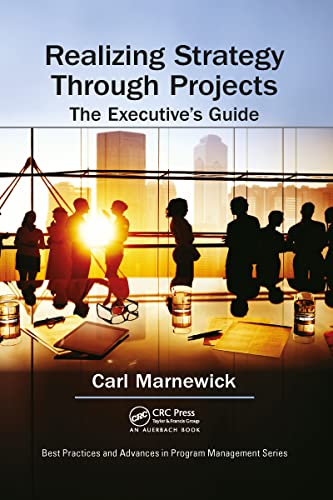
Overview: This book is squarely aimed at executives who need to understand how projects, programs, and portfolios work together to deliver strategy. Rather than focusing on the mechanics of scheduling or task tracking, it stays at the level where leaders make decisions about priorities, investments, and organizational alignment. That makes it especially useful for senior managers who are responsible for outcomes but do not need to live inside delivery details.
Why it stands out: Among books for project management for executives, this is one of the most directly relevant because it treats project work as a strategic management issue. It helps readers think about governance, value, and execution in the same conversation, which is exactly where executive decisions tend to live.
Strengths:
- Strong emphasis on strategy execution through projects
- Useful for portfolio and program-level thinking
- Well suited to executive and senior leadership audiences
- Helps connect project choices to business goals
Best for: Executives, senior directors, and portfolio leaders who want a high-level guide to using projects as a strategic tool.
Potential limitations: Readers looking for hands-on project tools or beginner-friendly explanations may find it more conceptual than practical.
View price, available formats, and reader reviews.
Project Portfolio Management: A Practical Guide to Selecting Projects, Managing Portfolios, and Maximizing Benefits

Overview: This is a practical portfolio management book for leaders who have to choose among competing initiatives and make sure the organization is investing in the right work. It focuses on selection, prioritization, and benefits realization, which are the areas executives usually care about most when project demand exceeds capacity.
Why it stands out: For executives, the hardest part of project management is often not execution but decision-making. This book earns its place because it gives readers a clear framework for deciding which projects deserve attention and how to manage a portfolio in a way that supports business value rather than internal politics.
Strengths:
- Directly addresses project selection and portfolio balance
- Practical focus on business benefits
- Helpful for leaders managing too many initiatives
- Good bridge between strategy and execution
Best for: Executives, PMO leaders, and department heads who need to make better decisions about which projects to fund and support.
Potential limitations: The portfolio emphasis makes it less useful for readers who want a general introduction to project management basics.
View price, available formats, and reader reviews.
Strategic Project Portfolio Management: Enabling a Productive Organization

Overview: This book approaches project portfolio management from the standpoint of organizational productivity. It is designed for leaders who want to improve how work is selected, coordinated, and governed across the enterprise. The focus is less on isolated project success and more on building an environment where multiple initiatives can contribute to performance without creating unnecessary drag.
Why it stands out: Compared with broader project management titles, this one is especially valuable for executives who think in systems. It addresses the structural side of execution, which matters when a company has too many projects, conflicting priorities, or weak coordination between departments.
Strengths:
- Strong fit for enterprise-level decision-making
- Connects portfolio management with productivity
- Useful for leaders managing cross-functional complexity
- Offers a strategic lens rather than a narrow project view
Best for: Senior leaders, PMO directors, and executives who want to improve the organization’s overall ability to execute.
Potential limitations: Readers seeking a quick, lightweight overview may find the material more substantial and more specialized than they need.
View price, available formats, and reader reviews.
A Guide to The Project Management Body of Knowledge (PMBOK Guide) Paperback

Overview: The PMBOK Guide is the standard reference many professionals use to understand the language, structure, and knowledge areas of project management. Executives do not usually need to memorize every process, but having a working grasp of the framework helps them ask better questions, oversee project teams more intelligently, and interpret status reports with more confidence.
Why it stands out: No executive list on project management is complete without a foundational reference. This guide is not the most approachable book on the page, but it is one of the most durable. For leaders who want to understand the discipline behind the methods their teams use, it remains a useful benchmark.
Strengths:
- Foundational reference for project management terminology and structure
- Useful for communicating with project professionals
- Provides a common framework across teams and organizations
- Helpful as a reference book rather than a one-time read
Best for: Executives who want enough technical fluency to oversee project work without becoming full-time project managers.
Potential limitations: It is more reference-oriented than narrative-driven, so it can feel dense for casual reading.
View price, available formats, and reader reviews.
Agile Project Management with Scrum (Developer Best Practices)

Overview: This book introduces Scrum in the context of agile project management, which makes it useful for executives who oversee product, technology, or innovation work. It is more specialized than a general project management book, but that specialization is also its value. Leaders who need to understand how agile teams operate will get a clearer picture of what Scrum can and cannot do.
Why it stands out: Not every executive project portfolio includes agile work, but when it does, a solid Scrum book can be far more useful than a general overview. This one belongs on the list because it helps leaders understand a common delivery model they are likely to encounter in modern organizations.
Strengths:
- Focused explanation of Scrum and agile delivery
- Useful for technology and product environments
- Helps executives interpret agile team language and cadence
- Relevant when traditional project methods are not the right fit
Best for: Executives overseeing software, product, or innovation teams that use agile methods.
Potential limitations: It is narrower than the other recommendations and is less useful for leaders outside agile-heavy environments.
View price, available formats, and reader reviews.
Who This List Is Best For
These recommendations are a good fit for executives, portfolio leaders, PMO professionals, and senior project sponsors. They are especially useful if you want to understand project management for executives with more nuance than a short checklist, quote, or social-media summary can provide.
- Readers who want a clear conceptual foundation before choosing a technique.
- People who prefer to compare research, practical exercises, and real-world examples.
- Professionals, students, or caregivers who need language they can apply in a real conversation or decision.
Use the Best For and Why It Stands Out columns together. A book can be excellent yet still be the wrong starting point if its depth, tone, or intended reader does not match your goal.
Final Thoughts
The strongest choice for project management for executives depends on what you need to do next. Begin with Realizing Strategy through Projects: The Executive’s Guide if you need a foundation, move to Project Portfolio Management: A Practical Guide to Selecting Projects, Managing Portfolios, and Maximizing Benefits if you need a practical change, and consider Strategic Project Portfolio Management: Enabling a Productive Organization if you need a broader or more challenging perspective. The comparison table is meant to shorten that decision, not pretend that one book works for every reader.
A useful reading plan is simple: select one book, write down the question you want it to answer, and apply one idea before moving to another recommendation. For this topic, review projects as a portfolio of strategic bets rather than a list of isolated status reports. methods and standards help with control, but leadership still has to resolve priority conflicts.
FAQ
Which book should I read first for project management for executives?
Start with Realizing Strategy through Projects: The Executive’s Guide if you want the clearest foundation. If your immediate need is action rather than background, compare it with Project Portfolio Management: A Practical Guide to Selecting Projects, Managing Portfolios, and Maximizing Benefits and choose the one whose exercises, examples, or audience match your situation.
How do I choose between a research-based book and a workbook?
Choose the research-oriented option when you need context and a better mental model. Choose the workbook or practical guide when you already understand the problem and need repetition, prompts, or a structured plan. The table’s Best For column is the fastest way to make that distinction.
What is a practical way to use books about project management for executives?
Do not read the whole list at once. Pick one recommendation, define the behavior or decision you want to improve, and test a small idea from the book for seven days. For this topic, review projects as a portfolio of strategic bets rather than a list of isolated status reports.
Are these recommendations suitable for self-study?
Yes, for education and structured reflection. Take notes in your own words, mark claims you want to verify, and discuss difficult ideas with a trusted person or qualified professional when appropriate.
Do I need to read every book on the list?
No. One well-matched book that changes what you notice or do is more valuable than collecting several recommendations without applying any of them.