
Changing your mindset sounds simple until you try to do it for real. Old habits, self-talk, stress, and repeated disappointments can make even good advice feel slippery. That is why the best books for mindset change are rarely the ones that promise a quick fix. The most useful ones give readers a clear framework, a better way to interpret setbacks, or a more workable relationship with thought, effort, and behavior.
Different books serve different needs. Some are grounded in psychology, some are more practical, and some are best when you want a shift in perspective rather than a formal program. The strongest choices for this topic are the books that actually help readers think differently, not just feel inspired for an afternoon.
Quick Answer
If you want the clearest entry point into mindset change, start with Mindset: The New Psychology of Success. It gives you a useful foundation in beliefs, evidence, behavior, identity, and the difference between reframing and denying reality. Choose Don’t Believe Everything You Think (Expanded Edition): Why Your Thinking Is The Beginning & End Of Suffering when you want a more applied or contrasting approach, and use Inner Excellence: Train Your Mind for Extraordinary Performance and the Best Possible Life when you want to extend the idea into a different context.
This list is designed for readers changing habits of thought, performance, and self-limiting narratives. The recommendations are intentionally varied: some explain the underlying research, some offer exercises, and some are strongest as narrative or leadership case studies. That variety makes it easier to choose a book that matches your current question rather than buying the longest list.
Comparison Table
| Book | Best For | Why It Stands Out |
|---|---|---|
| Mindset: The New Psychology of Success | Beginners, students, educators, parents, and readers who want the most established starting point on mindset change. | This is the most foundational book on mindset change for general readers. Rather than offering a list of affirmations or quick motivation, it gives readers a serious framework for understanding why some people improve when they fail and… |
| Don’t Believe Everything You Think (Expanded Edition): Why Your Thinking Is The Beginning & End Of Suffering | Readers dealing with overthinking, self-criticism, or a noisy inner monologue. | Among mindset books, this one is especially useful for readers who feel stuck in rumination, anxiety, or self-doubt. It does not try to overwhelm with theory. Instead, it offers a simple but persistent challenge: treat thoughts as events… |
| Inner Excellence: Train Your Mind for Extraordinary Performance and the Best Possible Life | Athletes, managers, entrepreneurs, and readers working toward demanding goals. | Many books on mindset stay at the level of positive thinking. This one is more concerned with training the mind for action. That makes it a strong choice for athletes, leaders, and professionals who want a mindset book that is grounded in… |
| 101 Essays That Will Change The Way You Think | Readers who want accessible inspiration with room for personal reflection. | This is one of the easiest mindset-change books to return to in pieces. That matters for readers who are not looking for a dense program, but for regular prompts that help them see familiar problems differently. Its structure makes it… |
| The Let Them Theory: A Life-Changing Tool That Millions of People Can’t Stop Talking About | Readers who want a straightforward tool for reducing stress and reclaiming focus. | Compared with broader mindset books, this one is unusually specific. It gives readers a memorable rule that is easy to apply when emotions run high. That clarity makes it especially useful for anyone who feels drained by people-pleasing,… |
| Unstoppable: Transforming Your Mindset to Create Change, Accelerate Results, and Be the Best at What You Do | Professionals, team leaders, and goal-focused readers who want practical momentum. | Some mindset books are introspective, but this one is more action-oriented. It is a good fit for readers who want to connect inner belief with external results, especially in work settings where consistency matters more than motivation.… |
| Change Your Mindset, Change Your Life: Lessons of Love, Leadership and Transformation | Readers interested in leadership, transformation, and how mindset affects everyday decisions. | Where some mindset books stay abstract, this one is more grounded in lived experience and applied reflection. Readers who want to think about mindset as something that affects communication, resilience, and leadership will find it more… |
How We Chose These Recommendations
This list prioritizes books that help readers actually change how they think, not just feel temporarily motivated. That means favoring works with a durable reputation, a clear point of view, and a practical or psychological approach that still feels useful beyond the first reading. Some of these books are foundational and widely respected. Others are newer, but they earn their place by offering a distinct angle that fills a real gap for readers.
The result is a mix of foundational psychology, personal reflection, and performance-minded guidance. Together, these books give readers meaningful options depending on whether they want to understand mindset change from an academic angle, a spiritual one, or a more everyday practical one.
Recommended Books
Mindset: The New Psychology of Success

Overview: Carol S. Dweck’s book is one of the clearest introductions to how beliefs about ability shape behavior, learning, and long-term outcomes. It explains the difference between fixed and growth mindsets and shows how those patterns influence school, work, relationships, and self-image. The writing is accessible, but the ideas have enough depth to stay useful long after the first read.
Why it stands out: This is the most foundational book on mindset change for general readers. Rather than offering a list of affirmations or quick motivation, it gives readers a serious framework for understanding why some people improve when they fail and others withdraw. That makes it especially valuable for anyone who wants the concept of mindset to mean something practical.
Strengths:
- Clear explanation of fixed versus growth mindset
- Useful across school, work, parenting, and personal development
- Backed by a strong psychological framework
Best for: Beginners, students, educators, parents, and readers who want the most established starting point on mindset change.
Potential limitations: Readers looking for a highly emotional or spiritual approach may find it more analytical than personal.
View price, available formats, and reader reviews.
Don’t Believe Everything You Think (Expanded Edition): Why Your Thinking Is The Beginning & End Of Suffering

Overview: Joseph Nguyen’s book takes a quieter, more contemplative approach to mindset change. Instead of focusing on achievement, it asks readers to notice how much suffering comes from identifying too closely with every thought. The expanded edition keeps the core message centered on awareness, detachment, and a less reactive inner life.
Why it stands out: Among mindset books, this one is especially useful for readers who feel stuck in rumination, anxiety, or self-doubt. It does not try to overwhelm with theory. Instead, it offers a simple but persistent challenge: treat thoughts as events rather than facts. That makes it distinct from the more achievement-oriented books on this list.
Strengths:
- Direct focus on thought patterns and mental distress
- Readable and accessible for a broad audience
- Helpful for readers seeking emotional calm, not just performance
Best for: Readers dealing with overthinking, self-criticism, or a noisy inner monologue.
Potential limitations: Readers who want structured exercises or a research-heavy framework may prefer a more traditional psychology book.
View price, available formats, and reader reviews.
Inner Excellence: Train Your Mind for Extraordinary Performance and the Best Possible Life

Overview: Jim Murphy’s book connects mindset change to performance, discipline, and resilience. It is especially strong when readers want more than abstract inspiration and need a mental approach that can support competition, work pressure, or long-term goals. The emphasis is on building an inner life that can withstand uncertainty and pressure.
Why it stands out: Many books on mindset stay at the level of positive thinking. This one is more concerned with training the mind for action. That makes it a strong choice for athletes, leaders, and professionals who want a mindset book that is grounded in discipline rather than slogans.
Strengths:
- Practical connection between mindset and performance
- Useful for high-pressure environments
- Balances mental discipline with personal growth
Best for: Athletes, managers, entrepreneurs, and readers working toward demanding goals.
Potential limitations: The performance focus may feel narrower than more general books on personal development.
View price, available formats, and reader reviews.
101 Essays That Will Change The Way You Think
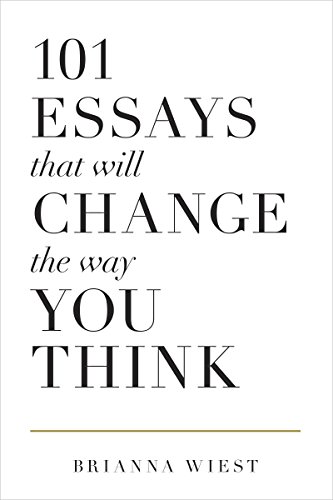
Overview: Brianna Wiest’s collection is built for readers who prefer short reflections over one long argument. The essays touch on self-awareness, emotional habits, identity, and the ways people resist change. Rather than moving through a single system, the book invites repeated small shifts in perspective.
Why it stands out: This is one of the easiest mindset-change books to return to in pieces. That matters for readers who are not looking for a dense program, but for regular prompts that help them see familiar problems differently. Its structure makes it especially approachable for readers who like to pause, reflect, and absorb ideas gradually.
Strengths:
- Short-form chapters make it easy to read in small sessions
- Covers a broad range of mindset and self-awareness themes
- Works well as a reflection book rather than a linear program
Best for: Readers who want accessible inspiration with room for personal reflection.
Potential limitations: Because it is essay-based, it is less structured than a traditional self-help or psychology book.
View price, available formats, and reader reviews.
The Let Them Theory: A Life-Changing Tool That Millions of People Can’t Stop Talking About

Overview: Mel Robbins’s book centers on a simple mental practice: stop overmanaging other people’s behavior and return your attention to what you can control. That idea has broad usefulness in relationships, work conflicts, and day-to-day frustration. The book is most valuable when readers want a practical way to step out of reactive patterns.
Why it stands out: Compared with broader mindset books, this one is unusually specific. It gives readers a memorable rule that is easy to apply when emotions run high. That clarity makes it especially useful for anyone who feels drained by people-pleasing, comparison, or the habit of trying to manage outcomes that belong to someone else.
Strengths:
- Simple central idea that is easy to remember and use
- Helpful for boundaries and emotional detachment
- Practical in both personal and professional situations
Best for: Readers who want a straightforward tool for reducing stress and reclaiming focus.
Potential limitations: The core concept is narrow, so readers seeking a broad psychology overview may want a more expansive companion book.
View price, available formats, and reader reviews.
Unstoppable: Transforming Your Mindset to Create Change, Accelerate Results, and Be the Best at What You Do

Overview: This book is aimed at readers who want mindset change to show up in tangible results. Its focus is on how thinking affects momentum, execution, and professional performance. Rather than lingering on theory, it leans toward the habits and mental shifts that help people keep moving when progress is slow.
Why it stands out: Some mindset books are introspective, but this one is more action-oriented. It is a good fit for readers who want to connect inner belief with external results, especially in work settings where consistency matters more than motivation. That makes it different from the more reflective titles on this list.
Strengths:
- Strong emphasis on action and follow-through
- Relevant for career and performance contexts
- Useful for readers who want mindset change tied to measurable progress
Best for: Professionals, team leaders, and goal-focused readers who want practical momentum.
Potential limitations: Readers seeking a philosophical or deeply psychological treatment of mindset may find it more targeted than expansive.
View price, available formats, and reader reviews.
Change Your Mindset, Change Your Life: Lessons of Love, Leadership and Transformation

Overview: This book brings mindset change into the context of leadership, relationships, and personal transformation. It is less concerned with formal theory and more concerned with how mindset shows up in real human situations. That makes it especially relevant for readers who want a book that connects self-understanding with how they lead and relate to others.
Why it stands out: Where some mindset books stay abstract, this one is more grounded in lived experience and applied reflection. Readers who want to think about mindset as something that affects communication, resilience, and leadership will find it more useful than a purely motivational title.
Strengths:
- Blends personal growth with leadership and relationships
- Accessible for readers who want practical reflection
- Offers a more human, less clinical tone than psychology-based books
Best for: Readers interested in leadership, transformation, and how mindset affects everyday decisions.
Potential limitations: It is more specialized than the broader classics, so it works best as a secondary read after a foundational book.
View price, available formats, and reader reviews.
Who This List Is Best For
These recommendations are a good fit for readers changing habits of thought, performance, and self-limiting narratives. They are especially useful if you want to understand mindset change with more nuance than a short checklist, quote, or social-media summary can provide.
- Readers who want a clear conceptual foundation before choosing a technique.
- People who prefer to compare research, practical exercises, and real-world examples.
- Professionals, students, or caregivers who need language they can apply in a real conversation or decision.
Use the Best For and Why It Stands Out columns together. A book can be excellent yet still be the wrong starting point if its depth, tone, or intended reader does not match your goal.
Final Thoughts
The strongest choice for mindset change depends on what you need to do next. Begin with Mindset: The New Psychology of Success if you need a foundation, move to Don’t Believe Everything You Think (Expanded Edition): Why Your Thinking Is The Beginning & End Of Suffering if you need a practical change, and consider Inner Excellence: Train Your Mind for Extraordinary Performance and the Best Possible Life if you need a broader or more challenging perspective. The comparison table is meant to shorten that decision, not pretend that one book works for every reader.
A useful reading plan is simple: select one book, write down the question you want it to answer, and apply one idea before moving to another recommendation. For this topic, turn a mindset statement into a behavior you can observe and review. mindset is one factor among skills, resources, relationships, and circumstances.
FAQ
Which book should I read first for mindset change?
Start with Mindset: The New Psychology of Success if you want the clearest foundation. If your immediate need is action rather than background, compare it with Don’t Believe Everything You Think (Expanded Edition): Why Your Thinking Is The Beginning & End Of Suffering and choose the one whose exercises, examples, or audience match your situation.
How do I choose between a research-based book and a workbook?
Choose the research-oriented option when you need context and a better mental model. Choose the workbook or practical guide when you already understand the problem and need repetition, prompts, or a structured plan. The table’s Best For column is the fastest way to make that distinction.
What is a practical way to use books about mindset change?
Do not read the whole list at once. Pick one recommendation, define the behavior or decision you want to improve, and test a small idea from the book for seven days. For this topic, turn a mindset statement into a behavior you can observe and review.
Are these recommendations suitable for self-study?
Yes, for education and structured reflection. Take notes in your own words, mark claims you want to verify, and discuss difficult ideas with a trusted person or qualified professional when appropriate.
Do I need to read every book on the list?
No. One well-matched book that changes what you notice or do is more valuable than collecting several recommendations without applying any of them.