
Studying effectively is less about grinding through more hours and more about choosing a method that fits the task in front of you. A student cramming for exams, a professional preparing for a certification, and a language learner building long-term retention all need different guidance. That is why the best books for studying effectively are not just “study tip” books. The strongest ones teach you how memory works, how to take better notes, how to organize practice, and how to turn reading into real recall.
Quick Answer
For most readers, Make It Stick: The Science of Successful Learning is the best starting point because it gives the clearest foundation for effective studying. How to Become a Straight-A Student is a strong next choice when you want a more practical or applied approach, while Building a Second Brain adds a different perspective for readers who want to go deeper.
Comparison Table
| Book | Best For | Why It Stands Out |
|---|---|---|
| Make It Stick: The Science of Successful Learning | Readers who want a book specifically about memory, retrieval, and durable learning. | It earns a place on this list because it addresses memory, retrieval, and durable learning directly and adds a distinct perspective alongside the other recommendations. |
| How to Become a Straight-A Student | Readers who want a book specifically about study systems and efficient academic work. | It earns a place on this list because it addresses study systems and efficient academic work directly and adds a distinct perspective alongside the other recommendations. |
| Building a Second Brain | Knowledge workers, writers, and students who need a repeatable system for managing research and ideas. | Unlike a notebook or stationery product, this book explains the information architecture behind a reliable personal knowledge system and shows how notes can support creative work. |
| Ultralearning: Master Hard Skills, Outsmart the Competition, and Accelerate Your Career | Independent learners who want to use notes as part of a demanding skill-building plan. | It gives note-takers a reason to connect every page of notes to a learning task, feedback loop, or project outcome. |
| Deep Work | Professionals whose goals are repeatedly delayed by interruptions and shallow work. | Effective goal setting depends on protected execution time; this book addresses the work conditions that make goals achievable. |
| The First 20 Hours: How to Learn Anything … Fast! | Readers who take notes for courses, professional skills, or a new personal project. | It complements note-taking by showing how notes should support deliberate practice and immediate use, rather than becoming an end in themselves. |
| Peak: Secrets from the New Science of Expertise | Learners who want to improve a professional, academic, athletic, or creative skill. | It offers a stronger adult learning recommendation than preschool workbooks because it explains how people can intentionally build capability. |
| The Fifth Discipline | Leaders and professionals facing complex problems that cannot be solved by isolated fixes. | It is a better adult problem-solving recommendation than a children’s logic workbook because it addresses complex systems and collective learning. |
How We Chose These Recommendations
The best books for studying effectively should do more than encourage good intentions. They need to improve how a reader actually learns, remembers, and performs under pressure. That is why this list mixes a few different kinds of books: one that explains learning science, one that translates study habits into plain practice, some that help younger students build fundamentals, and several exam-specific guides for readers with a clear credentialing goal.
We gave priority to books with lasting usefulness, clear instructional value, and a direct connection to study performance. A strong study book should help a reader make better decisions about time, repetition, recall, and review. When the goal is a specific exam or subject, a targeted guide can be more useful than a general study skills book. When the goal is better overall learning, a broader book with durable methods earns its place.
Recommended Books
Make It Stick: The Science of Successful Learning

Overview: Make It Stick: The Science of Successful Learning is a focused resource for memory, retrieval, and durable learning. It gives readers a concrete way to understand the topic and apply the ideas in real situations.
Why it stands out: It earns a place on this list because it addresses memory, retrieval, and durable learning directly and adds a distinct perspective alongside the other recommendations.
Strengths:
- Clear explanation of the core ideas
- Useful examples or practical takeaways
- Easy to compare with the other books on this list
Best for: Readers who want a book specifically about memory, retrieval, and durable learning.
Potential limitations: The examples and level of detail may fit some readers better than others, so it works best as part of a focused reading plan.
View price, available formats, and reader reviews.
How to Become a Straight-A Student

Overview: How to Become a Straight-A Student is a focused resource for study systems and efficient academic work. It gives readers a concrete way to understand the topic and apply the ideas in real situations.
Why it stands out: It earns a place on this list because it addresses study systems and efficient academic work directly and adds a distinct perspective alongside the other recommendations.
Strengths:
- Clear explanation of the core ideas
- Useful examples or practical takeaways
- Easy to compare with the other books on this list
Best for: Readers who want a book specifically about study systems and efficient academic work.
Potential limitations: The examples and level of detail may fit some readers better than others, so it works best as part of a focused reading plan.
View price, available formats, and reader reviews.
Building a Second Brain
Overview: Tiago Forte presents a system for capturing, organizing, distilling, and expressing information so that notes remain useful when a project or decision requires them.
Why it stands out: Unlike a notebook or stationery product, this book explains the information architecture behind a reliable personal knowledge system and shows how notes can support creative work.
Strengths:
- Clear framework for organizing digital information
- Useful for projects and creative work
- Emphasizes retrieval and reuse rather than collection
Best for: Knowledge workers, writers, and students who need a repeatable system for managing research and ideas.
Potential limitations: Readers who prefer purely analog methods may need to adapt the examples.
View price, available formats, and reader reviews.
Ultralearning: Master Hard Skills, Outsmart the Competition, and Accelerate Your Career

Overview: Scott Young describes an aggressive but structured approach to self-directed learning, including direct practice, retrieval, feedback, and experimentation.
Why it stands out: It gives note-takers a reason to connect every page of notes to a learning task, feedback loop, or project outcome.
Strengths:
- Practical self-directed learning framework
- Strong emphasis on direct practice
- Works across technical and creative skills
Best for: Independent learners who want to use notes as part of a demanding skill-building plan.
Potential limitations: The pace and intensity may be unrealistic for readers with limited time.
View price, available formats, and reader reviews.
Deep Work
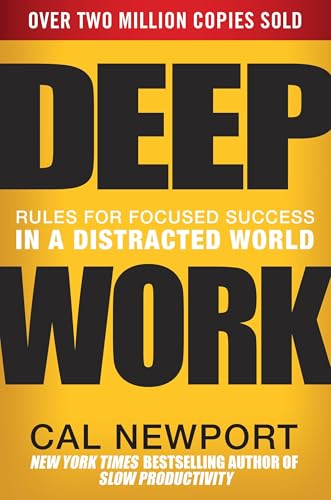
Overview: Cal Newport argues that sustained, distraction-free concentration is a competitive advantage and offers rules for building that capacity into a working week.
Why it stands out: Effective goal setting depends on protected execution time; this book addresses the work conditions that make goals achievable.
Strengths:
- Clear case for focused work
- Practical scheduling ideas
- Useful for knowledge workers
Best for: Professionals whose goals are repeatedly delayed by interruptions and shallow work.
Potential limitations: Some roles require constant availability, so the methods need careful adaptation.
View price, available formats, and reader reviews.
The First 20 Hours: How to Learn Anything … Fast!

Overview: Josh Kaufman breaks down the early stage of skill acquisition into focused practice, removing barriers, and learning only what is needed to get started.
Why it stands out: It complements note-taking by showing how notes should support deliberate practice and immediate use, rather than becoming an end in themselves.
Strengths:
- Concrete approach to starting a new skill
- Helps readers define the minimum useful knowledge
- Encourages focused practice
Best for: Readers who take notes for courses, professional skills, or a new personal project.
Potential limitations: The promise of rapid early progress should not be confused with mastery.
View price, available formats, and reader reviews.
Peak: Secrets from the New Science of Expertise

Overview: Anders Ericsson and Robert Pool explain how deliberate practice, feedback, and mental representation drive improvement in demanding skills.
Why it stands out: It offers a stronger adult learning recommendation than preschool workbooks because it explains how people can intentionally build capability.
Strengths:
- Research-based view of expertise
- Clear role for feedback and practice
- Applicable across many skill domains
Best for: Learners who want to improve a professional, academic, athletic, or creative skill.
Potential limitations: Deliberate practice requires sustained effort and access to useful feedback.
View price, available formats, and reader reviews.
The Fifth Discipline
Overview: Peter Senge explains how systems thinking, shared vision, and team learning help organizations solve problems and adapt over time.
Why it stands out: It is a better adult problem-solving recommendation than a children’s logic workbook because it addresses complex systems and collective learning.
Strengths:
- Systems-thinking framework
- Useful for organizations and teams
- Links learning with long-term change
Best for: Leaders and professionals facing complex problems that cannot be solved by isolated fixes.
Potential limitations: The concepts are demanding and require application to a real organizational context.
View price, available formats, and reader reviews.
Who This List Is Best For
This list is best for readers who want study guidance that actually matches a real learning goal. That includes college students, school-aged students building fundamentals, language learners, and candidates preparing for professional or military exams. It is also a strong fit for readers who want to understand the science behind studying, not just collect more tips.
Final Thoughts
The strongest choice depends on what you need from a book about effective studying. Start with Make It Stick: The Science of Successful Learning if you want the clearest foundation, move to How to Become a Straight-A Student when you want a more practical framework, and use Building a Second Brain when you want to broaden your perspective. The comparison table above is designed to make that choice easier without treating one book as the right answer for every reader.
FAQ
Which book should I read first?
Start with Make It Stick: The Science of Successful Learning if you want the clearest introduction to effective studying. It is the most useful foundation before choosing a narrower or more advanced recommendation.
Which recommendation is the most practical?
How to Become a Straight-A Student is a strong practical choice because it translates the topic into ideas or exercises that can be used immediately. If your needs are more specialized, compare the Best For column in the table.
Can I use these books for self-study?
Yes. Read one book at a time, take notes on the ideas that fit your situation, and apply one or two practices before moving on. For mental-health or clinical concerns, books should support—not replace—professional care.
How should I choose between the recommendations?
Choose based on your current goal, experience level, and preferred format. A practical guide may be best when you need action now, while a broader or more research-oriented book may be better when you want context and long-term understanding.
Do I need to read every book on the list?
No. One well-matched book, followed by deliberate application, is usually more useful than collecting several books without using what they teach.