
The teenage years are often described as a problem to manage, but that misses the real question: what is actually happening in adolescent development, and why do teenagers think, feel, and act the way they do? For parents, educators, counselors, and curious readers, the goal is usually not to label teens as difficult. It is to understand the mix of brain development, social pressure, emotion, and identity formation that shapes this stage of life.
The best books about teenage brain do different jobs. Some explain the neuroscience in plain language. Others focus on parenting and communication. A few are better for readers who want a more specific lens, such as girls’ development or neurodiversity. The strongest titles below were chosen for their clarity, usefulness, and long-standing relevance.
Quick Answer
If you want the strongest starting points, begin with Brainstorm: The Power and Purpose of the Teenage Brain, The Teenage Brain: A Neuroscientist’s Survival Guide to Raising Adolescents and Young Adults, and Untangled: Guiding Teenage Girls Through the Seven Transitions into Adulthood. For a broader science-and-behavior perspective, The Brain Is Kind of a Big Deal and Wonderfully Wired Brains: An Introduction to the World of Neurodiversity are especially useful.
Comparison Table
| Book | Best For | Why It Stands Out |
|---|---|---|
| Brainstorm: The Power and Purpose of the Teenage Brain | Readers who want a clear, respected introduction to adolescent neuroscience | A classic explanation of why the teenage brain is still developing and why that matters in everyday life |
| The Teenage Brain: A Neuroscientist’s Survival Guide to Raising Adolescents and Young Adults | Parents and caregivers looking for practical guidance | Connects neuroscience directly to family life, communication, and boundaries |
| Untangled: Guiding Teenage Girls Through the Seven Transitions into Adulthood | Parents, teachers, and mentors of teenage girls | Focuses on the developmental transitions that shape girls’ adolescence without reducing them to stereotypes |
| The Brain Is Kind of a Big Deal | Families who want an accessible, engaging brain book for younger teens | Makes brain science approachable without losing the core ideas |
| Wonderfully Wired Brains: An Introduction to the World of Neurodiversity | Readers who want to understand brain differences and neurodiversity | Broadens the conversation beyond “normal” development and helps readers think more flexibly about brains |
| Phineas Gage: A Gruesome but True Story About Brain Science | Middle-grade readers and families who prefer a story-driven introduction to brain science | Uses a famous case study to make brain science memorable and concrete |
| All About Brains: A Book About People | Younger readers and adults who want a broad, human-centered brain overview | Introduces brains through people and everyday experience rather than technical language |
| Social Anxiety Relief Guide For Teenage Girls: How to Rewire the Brain From Insecure and Self-Conscious to Brave and Empowered | Readers specifically looking at anxiety and confidence in teenage girls | Targets a narrow emotional challenge rather than adolescent development in general |
How We Chose These Recommendations
This list favors books that help readers understand adolescence with clarity rather than sensationalism. The best books about teenage brain should do more than repeat that teenagers are impulsive or emotional. They should explain what is changing in the brain, how that shows up in behavior, and what adults can realistically do with that information.
That is why the selections below balance neuroscience, parenting insight, and age-appropriate education. Some books are better for deepening scientific understanding. Others are better for day-to-day family life or for readers who want a specific lens, such as girls’ development or neurodiversity. Each recommendation earned its place because it offers a distinct value to the reader.
Recommended Books
Brainstorm: The Power and Purpose of the Teenage Brain

Overview: Daniel J. Siegel’s book is one of the most widely recognized introductions to adolescent brain development. It explains the teenage years as a period of growth, not just risk, and connects brain maturation to behavior, identity, emotion, and decision-making. The writing is accessible enough for general readers while still grounded in a serious developmental perspective.
Why it stands out: Among books about the teenage brain, this is one of the clearest places to start because it gives readers a framework they can actually use. It does not reduce adolescence to conflict or chaos. Instead, it shows why teenagers often act the way they do and how adults can respond more effectively. That makes it especially useful for parents, teachers, counselors, and anyone who wants a respectful understanding of adolescence.
Strengths:
- Clear explanation of adolescent neuroscience
- Useful for both parents and professionals
- Balances science with everyday relevance
- Helps reframe teenage behavior more constructively
Best for: Readers who want the most authoritative and readable general overview of teenage brain development.
Potential limitations: Readers looking for a highly technical neuroscience text may find it simplified for a broad audience.
View price, available formats, and reader reviews.
The Teenage Brain: A Neuroscientist’s Survival Guide to Raising Adolescents and Young Adults
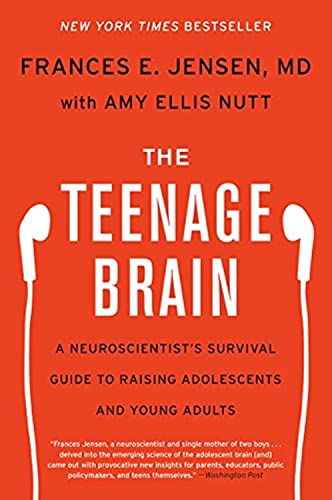
Overview: Frances E. Jensen brings neuroscience into the messy reality of parenting adolescents and young adults. The book focuses on how the teen brain handles sleep, risk, stress, learning, and emotion, then translates that science into practical guidance for families. It is especially strong on the gap between what teens know and what they are developmentally able to do consistently.
Why it stands out: Compared with broader adolescent psychology books, this one is more directly useful for day-to-day parenting decisions. It is not just about understanding teenagers in theory. It helps adults think about limits, expectations, communication, and the kinds of mistakes that are developmentally common. That practical orientation makes it a strong companion to more general brain science books.
Strengths:
- Strong bridge between neuroscience and parenting
- Addresses common family concerns with context
- Helpful for parents of both teens and young adults
- Written by a respected neuroscientist
Best for: Parents and caregivers who want science-based guidance they can use at home.
Potential limitations: The focus is practical and explanatory rather than deeply clinical or academic.
View price, available formats, and reader reviews.
Untangled: Guiding Teenage Girls Through the Seven Transitions into Adulthood

Overview: Lisa Damour organizes adolescent development around seven transitions that many girls move through on the way to adulthood. The book pays close attention to identity, authority, friendship, emotion, and independence, all of which become especially important during the teenage years. It is less about brain science in isolation and more about how development shows up in real life.
Why it stands out: This is one of the most useful books for readers who want a thoughtful, non-alarmist guide to teenage girls. Rather than treating normal adolescent behavior as a crisis, it gives adults a way to recognize developmental patterns and respond with more confidence. It also avoids flattening teenage girls into stereotypes, which makes the advice more durable and more credible.
Strengths:
- Focused specifically on teenage girls
- Offers a clear developmental framework
- Practical for parents, teachers, and counselors
- Balanced tone that avoids overreaction
Best for: Adults guiding teenage girls through emotional, social, and developmental transitions.
Potential limitations: Readers wanting a general neuroscience text will find it more focused on behavior and development than on the brain itself.
View price, available formats, and reader reviews.
The Brain Is Kind of a Big Deal

Overview: For readers who want brain science presented in a more approachable and engaging format, this book makes the subject feel accessible without talking down to the audience. It introduces the brain in a way that can help younger teens and families build vocabulary around how the mind and body work together. The emphasis is on learning, curiosity, and understanding rather than diagnosis or problem-solving.
Why it stands out: Not every reader needs a dense developmental psychology book. Some need a clearer, friendlier entry point, especially when introducing a younger teen to the topic. This book earns its place by making neuroscience easier to absorb without losing the basic idea that the brain is complex, changing, and worth understanding. It is a strong bridge between picture-book style accessibility and more serious science reading.
Strengths:
- Approachable introduction to brain science
- Good fit for younger teens and family reading
- Encourages curiosity about how the brain works
- Less intimidating than many neuroscience books
Best for: Families and younger readers who want a simple entry into brain development.
Potential limitations: It does not go as deep into adolescent psychology as the more advanced titles on this list.
View price, available formats, and reader reviews.
Wonderfully Wired Brains: An Introduction to the World of Neurodiversity

Overview: This book expands the conversation beyond typical adolescent development by introducing neurodiversity in a way that is accessible and respectful. For readers who are trying to understand teenage behavior through the lens of brain differences, it offers a broader framework than standard teen-brain books. That makes it especially valuable for families and educators supporting teens whose experiences do not fit a one-size-fits-all model.
Why it stands out: One of the limitations of many books about teenage brain is that they focus on a fairly narrow picture of development. This title is useful because it reminds readers that not every adolescent brain develops or processes the world in the same way. That perspective can reduce shame, improve communication, and lead to better support. It is not a replacement for specialized clinical resources, but it is an excellent introduction to the idea that brain differences matter.
Strengths:
- Introduces neurodiversity in clear language
- Helpful for inclusive parenting and teaching
- Broadens the discussion beyond typical development
- Supports a more flexible understanding of brain differences
Best for: Readers who want to understand adolescent brains in the context of neurodiversity.
Potential limitations: It is broader than a classic teen-development book, so readers seeking only adolescent neuroscience may want to pair it with a more focused title.
View price, available formats, and reader reviews.
Phineas Gage: A Gruesome but True Story About Brain Science

Overview: John Fleischman uses the famous Phineas Gage case to introduce readers to brain science through medical history. The story is vivid, memorable, and anchored in a real event that changed how scientists thought about the brain. For younger readers, that narrative approach can make neuroscience feel concrete instead of abstract.
Why it stands out: While many books on this topic are aimed at parents or professionals, this one is valuable for curious middle-grade readers and families reading together. It teaches that brain injuries and brain function are not just theoretical ideas. The historical angle also makes it more memorable than a standard science overview. Among books for younger audiences, it offers one of the strongest story-driven paths into the subject.
Strengths:
- Story-based introduction to brain science
- Strong fit for middle-grade readers
- Makes a scientific concept memorable through history
- Good choice for family reading or classroom use
Best for: Teens and preteens who learn best through narrative and real-world examples.
Potential limitations: It is not a direct guide to adolescent development or parenting.
View price, available formats, and reader reviews.
All About Brains: A Book About People

Overview: This book takes a people-centered approach to brain learning, which makes it useful for readers who want a broad and welcoming introduction rather than a specialized adolescent text. It works best as a general brain book that can help younger readers or families start asking better questions about how brains shape behavior, learning, and emotion.
Why it stands out: Not every reader searching for the best books about teenage brain is ready for a heavy neuroscience discussion. This book fills the gap between simple curiosity and more advanced study. Its human-centered framing makes it a practical choice for readers who want brain ideas explained in a way that connects naturally to everyday life. That makes it different from the more targeted parenting and teen-development books on the list.
Strengths:
- Broad, accessible entry point into brain learning
- Useful for family reading
- Connects brain ideas to people and behavior
- Good companion to more focused teen books
Best for: Readers who want a general introduction before moving into more specific adolescent brain books.
Potential limitations: It is broader and less specialized than the top neuroscience and parenting choices here.
View price, available formats, and reader reviews.
Social Anxiety Relief Guide For Teenage Girls: How to Rewire the Brain From Insecure and Self-Conscious to Brave and Empowered

Overview: This title is aimed at a narrower need than the rest of the list: helping teenage girls understand and respond to social anxiety. It connects brain-based language with confidence-building and emotional coping, which makes it relevant for readers who are less interested in general adolescent development and more focused on a specific struggle.
Why it stands out: The book earns its place because some readers do not need a broad theory of adolescence. They need a focused resource that speaks directly to insecurity, self-consciousness, and social fear in teenage girls. While it is more specialized than the main neuroscience titles, that specialization is also its value. It serves readers who want a narrower, practical lens on emotional well-being during the teenage years.
Strengths:
- Targets a specific emotional challenge
- Written for teenage girls and their support network
- Focuses on confidence and social coping
- More direct than general teen-brain books
Best for: Readers seeking a focused book on teenage girls, social anxiety, and emotional coping.
Potential limitations: It is much narrower in scope than the core neuroscience and developmental titles on this list.
View price, available formats, and reader reviews.
Who This List Is Best For
This list is best for parents, caregivers, teachers, school counselors, psychology students, and lifelong learners who want a reliable way to understand adolescent development. It also helps readers who are trying to support teenage girls, learn about neurodiversity, or find a simpler introduction to brain science for younger teens.
Final Thoughts
If your goal is the strongest all-around understanding of adolescent neuroscience, start with Brainstorm. If you want guidance that translates science into everyday parenting, The Teenage Brain is the better fit. For readers focused on teenage girls, Untangled offers the most practical developmental framework.
If you need something more accessible for a younger reader, choose The Brain Is Kind of a Big Deal or Phineas Gage. And if your interest is shaped by brain differences or anxiety, Wonderfully Wired Brains and Social Anxiety Relief Guide For Teenage Girls serve narrower but important needs.
FAQ
Which book is best for beginners?
Brainstorm is the best general starting point for most beginners because it explains teenage brain development clearly without oversimplifying the science.
Which book is most practical for parents?
The Teenage Brain is the most directly practical choice for parents because it connects brain science to communication, rules, sleep, risk, and everyday family decisions.
Which book is best for teenage girls?
Untangled is the best choice for understanding the developmental transitions many teenage girls move through. It is thoughtful, specific, and useful without being overly prescriptive.
Can I learn about teenage brain through self-study?
Yes. These books are suitable for self-study, especially if you want a better understanding of adolescence as a developmental stage. If you are looking for help with a mental health condition, though, a book should be treated as educational support rather than a substitute for professional care.
Which book should I read first if I want both science and real-world application?
Start with Brainstorm if you want the clearest overview, or The Teenage Brain if your main concern is how to apply the science at home.
Which recommendation offers the best long-term value?
Brainstorm offers the strongest long-term value because its explanation of adolescent development remains useful across different family situations, school settings, and stages of teenage growth.




