
Finding the best books about ADHD usually starts with a practical problem: the advice online feels scattered, the experiences are all over the map, and it is not always clear whether a book is explaining ADHD well or simply rebranding familiar tips. For a topic like this, the most useful books do different jobs. Some offer a solid scientific overview, some focus on adult strategies, some speak directly to women, parents, or couples, and some help readers understand the emotional side of living with neurodivergence. The strongest choices are the ones that combine credibility with real-world usefulness.
Quick Answer
If you want the clearest entry point into ADHD, start with ADHD 2.0: New Science and Essential Strategies for Thriving with Distraction–from Childhood through Adulthood. It gives you a useful foundation in executive function, emotional regulation, relationships, and practical strategies rather than a single stereotype of ADHD. Choose Dirty Laundry: Why Adults with ADHD Are So Ashamed and What We Can Do to Help when you want a more applied or contrasting approach, and use The Adult ADHD and Anxiety Workbook: Cognitive Behavioral Therapy Skills to Manage Stress, Find Focus, and Reclaim Your Life when you want to extend the idea into a different context.
This list is designed for adults, parents, partners, and readers exploring neurodivergent experiences. The recommendations are intentionally varied: some explain the underlying research, some offer exercises, and some are strongest as narrative or leadership case studies. That variety makes it easier to choose a book that matches your current question rather than buying the longest list.
Comparison Table
| Book | Best For | Why It Stands Out |
|---|---|---|
| ADHD 2.0: New Science and Essential Strategies for Thriving with Distraction–from Childhood through Adulthood | Readers who want one strong, well-rounded introduction to ADHD with a contemporary, evidence-aware perspective. | Among the best books about ADHD, this is one of the strongest choices for readers who want a credible starting point. It combines research-informed explanation with strategies that can actually be applied at home, at work, or in school.… |
| Dirty Laundry: Why Adults with ADHD Are So Ashamed and What We Can Do to Help | Adults with ADHD who recognize the emotional toll of the condition and want a book that speaks to that experience honestly. | Many ADHD books emphasize productivity systems. This one is more useful for readers whose bigger problem is not knowing what to do, but feeling bad about themselves in the first place. That makes it especially valuable in a… |
| The Adult ADHD and Anxiety Workbook: Cognitive Behavioral Therapy Skills to Manage Stress, Find Focus, and Reclaim Your Life | Adults who want a practical, skills-based book they can work through on their own or alongside therapy. | What makes this book especially useful is its specificity. Plenty of ADHD books mention anxiety, but fewer are organized around the way anxiety can complicate attention, task initiation, and self-management. Readers who want a… |
| A Radical Guide for Women with ADHD: Embrace Neurodiversity, Live Boldly, and Break Through Barriers | Women who want a book that reflects the lived reality of ADHD rather than a one-size-fits-all framework. | Many mainstream ADHD books are written as if the reader is a generic adult. This one is more specific and therefore more helpful for its intended audience. It speaks to readers who have spent years compensating, overfunctioning, or… |
| How to Parent Children with ADHD: 48 Techniques & Strategies to Understand and Support Your Neurodivergent Child. Manage and Improve Your Kid’s Emotional Regulation, Focus, and Self-Control | Parents and caregivers who want concrete ideas they can use immediately. | Parent-focused ADHD books can become either overly clinical or overly general. This one earns its place by staying centered on everyday family realities. It is especially useful for caregivers who want a compact, action-oriented guide… |
| The ADHD Effect on Marriage: Understand and Rebuild Your Relationship in Six Steps | Married couples or long-term partners dealing with ADHD-related friction and communication problems. | Relationship books about ADHD are often too broad or too generic. This one is useful because it addresses the specific ways ADHD can affect intimacy and day-to-day cooperation between partners. It is a strong choice for couples who need a… |
| ADHD for Smart Ass Women: How to Fall in Love with Your Neurodivergent Brain – A Coach’s Mental Health Guide with Proven Strategies | Women who want an approachable guide that feels less formal than a clinical handbook. | Compared with more formal ADHD books, this one has an accessible tone that may resonate with readers who have resisted medicalized or overly academic approaches. It is a good fit for women who want to feel understood while still getting… |
| Your Brain’s Not Broken: Strategies for Navigating Your Emotions and Life with ADHD | Guide & Workbook for Neurodivergent Adult Men & Women | Tools for Parenting ADD Children | Adults who want a guided, skills-based book that covers both emotions and daily functioning. | The book works well for readers who want both validation and direction. Rather than speaking only to productivity, it acknowledges that emotional regulation often shapes how ADHD shows up at work, at home, and in relationships. That… |
| Invisible ADHD: Proven Mood and Life Management for Smart Yet Scattered Women | Women who recognize themselves in the “high-functioning but overwhelmed” ADHD profile. | Some ADHD books are written for obviously hyperactive or disruptive presentations. This one is useful precisely because it speaks to the quieter, more hidden side of ADHD. For women who were successful enough to be overlooked, the book… |
| ADHD is Awesome: A Guide To (Mostly) Thriving With ADHD | Readers who want a more hopeful, less clinical ADHD book. | A lot of ADHD writing can feel corrective or problem-centered. This one offers a useful counterbalance by emphasizing adaptability, self-acceptance, and what can work when standard systems fail. That perspective matters in a… |
How We Chose These Recommendations
This list favors books that help readers understand ADHD clearly and use that understanding in daily life. That means prioritizing books with strong practical value, a thoughtful perspective on neurodiversity, and a format suited to the reader’s goal, whether that is learning the basics, managing adult responsibilities, supporting a child, or improving a relationship.
Because ADHD affects people differently, the list mixes scientific overviews, workbooks, relationship guidance, and books written for specific audiences. The goal is not to find one book that does everything. It is to give readers a set of well-chosen options that cover the most useful angles without repeating the same advice in slightly different packaging.
Recommended Books
ADHD 2.0: New Science and Essential Strategies for Thriving with Distraction–from Childhood through Adulthood

Overview: ADHD 2.0 offers a broad, updated look at ADHD across the lifespan, with attention to both the science and the everyday reality of living with distractibility, impulsivity, and executive function challenges. It is especially useful for readers who want a modern framework that goes beyond stereotypes and treats ADHD as a complex neurological difference rather than a simple discipline problem.
Why it stands out: Among the best books about ADHD, this is one of the strongest choices for readers who want a credible starting point. It combines research-informed explanation with strategies that can actually be applied at home, at work, or in school. The range is a major advantage. Instead of focusing narrowly on one age group, it speaks to childhood through adulthood, which makes it useful for families and adults who are trying to understand how ADHD changes over time.
Strengths:
- Science-informed without becoming inaccessible
- Covers ADHD across different life stages
- Balances explanation with practical strategies
Best for: Readers who want one strong, well-rounded introduction to ADHD with a contemporary, evidence-aware perspective.
Potential limitations: Readers looking for a very specific workbook format or a highly specialized focus, such as women’s experience or couples therapy, may want a more targeted companion book.
View price, available formats, and reader reviews.
Dirty Laundry: Why Adults with ADHD Are So Ashamed and What We Can Do to Help

Overview: Dirty Laundry focuses on one of the least discussed parts of adult ADHD, the shame that builds up around missed deadlines, disorganization, emotional reactivity, and years of being misunderstood. Rather than treating shame as a side issue, the book puts it at the center and explores how it affects identity, motivation, and relationships.
Why it stands out: Many ADHD books emphasize productivity systems. This one is more useful for readers whose bigger problem is not knowing what to do, but feeling bad about themselves in the first place. That makes it especially valuable in a neurodiversity-focused reading list, because it acknowledges that ADHD is not just about performance. It is also about how people learn to see themselves after years of criticism or masking.
Strengths:
- Addresses shame directly and thoughtfully
- Useful for adults who have internalized negative messages about ADHD
- Focuses on emotional understanding, not just behavioral management
Best for: Adults with ADHD who recognize the emotional toll of the condition and want a book that speaks to that experience honestly.
Potential limitations: Readers seeking step-by-step productivity systems may want something more technique-driven alongside it.
View price, available formats, and reader reviews.
The Adult ADHD and Anxiety Workbook: Cognitive Behavioral Therapy Skills to Manage Stress, Find Focus, and Reclaim Your Life

Overview: This workbook is built for adults who need practical skills, not just insight. It uses cognitive behavioral therapy principles to help readers deal with the overlap between ADHD and anxiety, which is a common and often exhausting combination. The format is hands-on and structured, making it easy to move from reading to doing.
Why it stands out: What makes this book especially useful is its specificity. Plenty of ADHD books mention anxiety, but fewer are organized around the way anxiety can complicate attention, task initiation, and self-management. Readers who want a therapeutic, exercise-based approach will find this more actionable than a general overview. It also fits well for people who are already familiar with ADHD and want tools rather than background.
Strengths:
- Workbook format encourages direct application
- Focuses on a common ADHD and anxiety overlap
- Uses CBT-informed skills in a structured way
Best for: Adults who want a practical, skills-based book they can work through on their own or alongside therapy.
Potential limitations: The workbook style may feel too structured for readers who prefer narrative, memoir, or more conversational guidance.
View price, available formats, and reader reviews.
A Radical Guide for Women with ADHD: Embrace Neurodiversity, Live Boldly, and Break Through Barriers

Overview: This book centers the experiences of women with ADHD, especially the ways symptoms can be missed, misread, or masked for years. It covers the practical and emotional consequences of living with ADHD in contexts where women are often expected to appear organized, calm, and self-sufficient. The neurodiversity-affirming angle is a major part of its appeal.
Why it stands out: Many mainstream ADHD books are written as if the reader is a generic adult. This one is more specific and therefore more helpful for its intended audience. It speaks to readers who have spent years compensating, overfunctioning, or quietly struggling while being overlooked by teachers, partners, or even clinicians. That specificity makes it one of the most relevant books on this list for women seeking both validation and useful next steps.
Strengths:
- Strong fit for women whose ADHD has been underrecognized
- Combines self-understanding with practical guidance
- Uses a neurodiversity-affirming perspective
Best for: Women who want a book that reflects the lived reality of ADHD rather than a one-size-fits-all framework.
Potential limitations: Readers looking for a more clinical or research-heavy text may want to pair it with a science-based overview.
View price, available formats, and reader reviews.
How to Parent Children with ADHD: 48 Techniques & Strategies to Understand and Support Your Neurodivergent Child. Manage and Improve Your Kid’s Emotional Regulation, Focus, and Self-Control

Overview: This parenting book is designed for caregivers who need clear, usable strategies for supporting a child with ADHD. It focuses on emotional regulation, focus, and self-control, which are often the core issues families are trying to manage at home. The emphasis is on techniques rather than theory, which makes it practical for daily use.
Why it stands out: Parent-focused ADHD books can become either overly clinical or overly general. This one earns its place by staying centered on everyday family realities. It is especially useful for caregivers who want a compact, action-oriented guide that translates ADHD understanding into routines and support strategies. The neurodivergent framing also helps move the conversation away from punishment and toward skill-building.
Strengths:
- Highly practical and family-oriented
- Addresses emotional regulation alongside attention and behavior
- Useful for building a more supportive home environment
Best for: Parents and caregivers who want concrete ideas they can use immediately.
Potential limitations: Readers seeking a deeply researched developmental psychology text may prefer a more academic parenting book.
View price, available formats, and reader reviews.
The ADHD Effect on Marriage: Understand and Rebuild Your Relationship in Six Steps
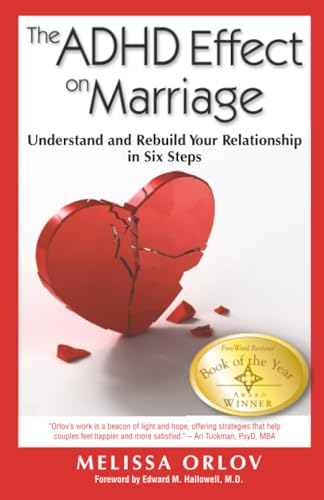
Overview: This relationship-focused book looks at how ADHD affects communication, responsibility-sharing, conflict, and trust within marriage. Rather than treating ADHD as an individual problem only, it shows how symptoms and misunderstandings can shape the entire partnership. The six-step structure gives couples a clear path to work with.
Why it stands out: Relationship books about ADHD are often too broad or too generic. This one is useful because it addresses the specific ways ADHD can affect intimacy and day-to-day cooperation between partners. It is a strong choice for couples who need a shared language for recurring arguments, resentment, or unequal mental load. For readers trying to understand ADHD in a relational context, it offers a more targeted lens than most general self-help books.
Strengths:
- Focused on real relationship patterns, not abstract advice
- Provides a structured framework for couples
- Helps partners understand the ADHD dynamic without reducing it to blame
Best for: Married couples or long-term partners dealing with ADHD-related friction and communication problems.
Potential limitations: Its focus on marriage makes it less relevant for single readers or those looking for general ADHD education.
View price, available formats, and reader reviews.
ADHD for Smart Ass Women: How to Fall in Love with Your Neurodivergent Brain – A Coach’s Mental Health Guide with Proven Strategies

Overview: This coaching-oriented book is aimed at women who want ADHD guidance in a more direct, conversational voice. It combines practical strategies with a self-acceptance framework, which can make it feel less clinical and more personally approachable than some other books in the category.
Why it stands out: Compared with more formal ADHD books, this one has an accessible tone that may resonate with readers who have resisted medicalized or overly academic approaches. It is a good fit for women who want to feel understood while still getting concrete advice. Within the broader set of books about ADHD, it adds a more personal and encouraging perspective without abandoning usefulness.
Strengths:
- Conversational and easy to engage with
- Especially relevant to women exploring neurodivergence
- Balances emotional validation with practical strategies
Best for: Women who want an approachable guide that feels less formal than a clinical handbook.
Potential limitations: Readers who prefer a research-heavy or highly evidence-based text may want to pair it with a more science-oriented book.
View price, available formats, and reader reviews.
Your Brain’s Not Broken: Strategies for Navigating Your Emotions and Life with ADHD | Guide & Workbook for Neurodivergent Adult Men & Women | Tools for Parenting ADD Children

Overview: This guide and workbook blends emotional support with actionable strategies for daily life with ADHD. It is aimed at adults who want to understand the connection between ADHD, emotions, and functioning, while also getting structured tools they can use in real situations. The workbook format makes the book more hands-on than a typical narrative self-help title.
Why it stands out: The book works well for readers who want both validation and direction. Rather than speaking only to productivity, it acknowledges that emotional regulation often shapes how ADHD shows up at work, at home, and in relationships. That broader view makes it a good bridge between self-understanding and practical change, especially for adults who want something more interactive than a conventional advice book.
Strengths:
- Combines emotional insight with practical exercises
- Accessible to adult readers with different levels of ADHD familiarity
- Useful for readers who benefit from workbook-style learning
Best for: Adults who want a guided, skills-based book that covers both emotions and daily functioning.
Potential limitations: Readers looking for a deeply academic overview or a specialized focus may find it broader than they need.
View price, available formats, and reader reviews.
Invisible ADHD: Proven Mood and Life Management for Smart Yet Scattered Women
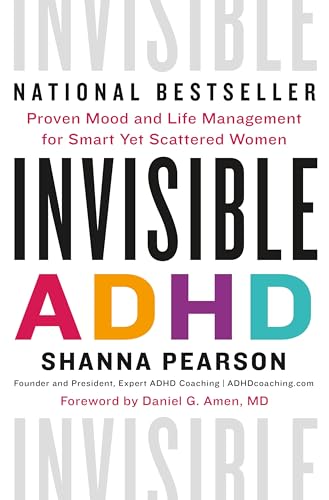
Overview: Invisible ADHD focuses on women whose ADHD is not immediately obvious from the outside. It addresses the gap between looking competent and feeling overwhelmed, which is a familiar experience for many adults who have masked symptoms for years. The book emphasizes mood and life management, making it especially relevant for readers whose ADHD is tied up with burnout, anxiety, and self-doubt.
Why it stands out: Some ADHD books are written for obviously hyperactive or disruptive presentations. This one is useful precisely because it speaks to the quieter, more hidden side of ADHD. For women who were successful enough to be overlooked, the book can feel more specific and affirming than broader titles. It earns a place on this list by focusing on a pattern that is common but not always recognized.
Strengths:
- Strong fit for masked or overlooked ADHD
- Connects ADHD with mood and day-to-day life management
- Helpful for readers who have long been told they are simply disorganized or scattered
Best for: Women who recognize themselves in the “high-functioning but overwhelmed” ADHD profile.
Potential limitations: Readers looking for a broad primer on ADHD may want a more general starting point first.
View price, available formats, and reader reviews.
ADHD is Awesome: A Guide To (Mostly) Thriving With ADHD

Overview: This book takes a more strengths-aware approach to ADHD, aiming to help readers think about thriving rather than simply fixing deficits. It is less formal than some clinical titles and more focused on finding workable ways to live well with ADHD traits in real life.
Why it stands out: A lot of ADHD writing can feel corrective or problem-centered. This one offers a useful counterbalance by emphasizing adaptability, self-acceptance, and what can work when standard systems fail. That perspective matters in a neurodiversity-focused list, especially for readers who are tired of books that only describe what is difficult. It is not the most technical option here, but it does provide a distinctly encouraging lens.
Strengths:
- Strengths-aware and non-shaming
- Accessible for readers who want a lighter tone
- Focuses on practical ways to work with ADHD traits
Best for: Readers who want a more hopeful, less clinical ADHD book.
Potential limitations: It is less comprehensive than the strongest evidence-oriented titles on this list.
View price, available formats, and reader reviews.
Who This List Is Best For
These recommendations are a good fit for adults, parents, partners, and readers exploring neurodivergent experiences. They are especially useful if you want to understand ADHD with more nuance than a short checklist, quote, or social-media summary can provide.
- Readers who want a clear conceptual foundation before choosing a technique.
- People who prefer to compare research, practical exercises, and real-world examples.
- Professionals, students, or caregivers who need language they can apply in a real conversation or decision.
Use the Best For and Why It Stands Out columns together. A book can be excellent yet still be the wrong starting point if its depth, tone, or intended reader does not match your goal.
Final Thoughts
The strongest choice for ADHD depends on what you need to do next. Begin with ADHD 2.0: New Science and Essential Strategies for Thriving with Distraction–from Childhood through Adulthood if you need a foundation, move to Dirty Laundry: Why Adults with ADHD Are So Ashamed and What We Can Do to Help if you need a practical change, and consider The Adult ADHD and Anxiety Workbook: Cognitive Behavioral Therapy Skills to Manage Stress, Find Focus, and Reclaim Your Life if you need a broader or more challenging perspective. The comparison table is meant to shorten that decision, not pretend that one book works for every reader.
A useful reading plan is simple: select one book, write down the question you want it to answer, and apply one idea before moving to another recommendation. For this topic, match the book to the reader’s role—self-management, parenting, partnership, or identity—before buying. books can educate and support skills, but diagnosis and treatment decisions belong with qualified professionals. Books can support reflection and skills practice, but they are not a substitute for qualified professional care when symptoms are severe, persistent, or unsafe.
FAQ
Which book should I read first for ADHD?
Start with ADHD 2.0: New Science and Essential Strategies for Thriving with Distraction–from Childhood through Adulthood if you want the clearest foundation. If your immediate need is action rather than background, compare it with Dirty Laundry: Why Adults with ADHD Are So Ashamed and What We Can Do to Help and choose the one whose exercises, examples, or audience match your situation.
How do I choose between a research-based book and a workbook?
Choose the research-oriented option when you need context and a better mental model. Choose the workbook or practical guide when you already understand the problem and need repetition, prompts, or a structured plan. The table’s Best For column is the fastest way to make that distinction.
What is a practical way to use books about ADHD?
Do not read the whole list at once. Pick one recommendation, define the behavior or decision you want to improve, and test a small idea from the book for seven days. For this topic, match the book to the reader’s role—self-management, parenting, partnership, or identity—before buying.
Are these recommendations suitable for self-study?
Yes, for education and structured reflection. Take notes in your own words, mark claims you want to verify, and discuss difficult ideas with a trusted person or qualified professional when appropriate. Books can support reflection and skills practice, but they are not a substitute for qualified professional care when symptoms are severe, persistent, or unsafe.
Do I need to read every book on the list?
No. One well-matched book that changes what you notice or do is more valuable than collecting several recommendations without applying any of them.




