
Jealousy in relationships can look simple from the outside, but the experience is often tangled: insecurity, attachment anxiety, fear of abandonment, obsessive comparison, retroactive jealousy, or discomfort with nontraditional relationship structures. The right book depends on which part of the problem is actually driving the reaction. Some readers need practical exercises to steady themselves in the moment. Others need a clearer understanding of attachment patterns. Some are trying to stop intrusive thoughts about a partner’s past, while others want a more thoughtful framework for trust, boundaries, and relationship agreements.
That is why the best books for jealousy in relationships are not all the same kind of book. A useful list needs a mix of approaches, including structured self-help, relationship psychology, and books that address jealousy in specific contexts. The recommendations below were chosen to help readers match the book to the problem they are really trying to solve.
Quick Answer
If you want the clearest entry point into jealousy in relationships, start with The Practical Anxious Attachment Recovery Workbook: 40+ Easy DBT Exercises to Help You Build A Secure Attachment Style and Overcome Overthinking, Jealousy & Insecurity In Relationships. It gives you a useful foundation in the difference between a feeling, a story about the feeling, and a behavior that damages trust. Choose Overcoming Retroactive Jealousy: A Guide to Getting Over Your Partner’s Past and Finding Peace when you want a more applied or contrasting approach, and use The Ethical Slut, Third Edition: A Practical Guide to Polyamory, Open Relationships, and Other Freedoms in Sex and Love when you want to extend the idea into a different context.
This list is designed for readers dealing with comparison, intrusive thoughts, or trust friction. The recommendations are intentionally varied: some explain the underlying research, some offer exercises, and some are strongest as narrative or leadership case studies. That variety makes it easier to choose a book that matches your current question rather than buying the longest list.
Comparison Table
| Book | Best For | Why It Stands Out |
|---|---|---|
| The Practical Anxious Attachment Recovery Workbook: 40+ Easy DBT Exercises to Help You Build A Secure Attachment Style and Overcome Overthinking, Jealousy & Insecurity In Relationships | Readers who want an exercise-based approach to jealousy and relationship anxiety. | For readers who want something usable right away, this is one of the clearest matches on the list. The workbook format makes it more practical than a theory-heavy relationship book, and the DBT orientation gives it a structured feel that… |
| Overcoming Retroactive Jealousy: A Guide to Getting Over Your Partner’s Past and Finding Peace | Readers who cannot stop thinking about a partner’s past relationships or experiences. | Many jealousy books stay broad, but retroactive jealousy needs a narrower tool. This title earns its place because it speaks to readers whose main problem is not current betrayal but fixation on what came before. That specificity makes it… |
| The Ethical Slut, Third Edition: A Practical Guide to Polyamory, Open Relationships, and Other Freedoms in Sex and Love | Readers in open relationships, polyamorous relationships, or other forms of consensual nonmonogamy. | For readers in polyamorous or open relationships, many general jealousy books miss the point. This one is different because it treats jealousy as something to work with in the context of ethical nonmonogamy rather than as proof that the… |
| Retroactive Jealousy: From Hellish Intrusive Thoughts to Becoming Your Best Self: Get Over the Past, Crush OCD, & Stop Being A Jealous Partner | Readers whose jealousy feels obsessive, repetitive, or hard to shut off. | Compared with broader self-help titles, this one is more explicitly about the thought process behind retroactive jealousy. That gives it a practical role alongside Overcoming Retroactive Jealousy, which is more of a step-by-step guide.… |
| Jealousy: How To Overcome Jealousy, Insecurity and Trust Issues – Save Your Relationship, Love Life and Emotions | Readers who want a general introduction to jealousy in relationships. | The value here is accessibility. Some readers do not need a deep dive into attachment theory or a narrowly focused workbook. They need a clear, practical entry point that helps them name the problem and begin responding differently. This… |
| Healthy Relationships: Overcome Anxiety, Couple Conflicts, Insecurity and Depression without therapy. Stop Jealousy and Negative Thinking. Learn how to have a Happy Relationship with anyone. | Readers whose jealousy is part of wider relationship stress and conflict. | Some jealousy books focus so tightly on one feeling that they miss the broader relationship climate. This one is helpful because it treats jealousy as part of a larger emotional system. Readers who need to improve the overall tone of the… |
| Anxiety in Relationship: How To Eliminate Negative Thinking, Jealousy, Attachment And Overcome Couple Conflicts. Insecurity And Fear Of Abandonment … – Help Yourself Understanding Your Partner | Readers whose jealousy is driven by abandonment fear or attachment insecurity. | Among the books on this list, this is one of the more direct options for readers who recognize themselves in abandonment anxiety. That focus makes it especially relevant for people who are triggered by distance, ambiguity, or perceived… |
How We Chose These Recommendations
This list was built around practical usefulness, not keyword matching. Jealousy in relationships can come from different psychological sources, so the best books are the ones that help readers identify the source and respond to it in a realistic way. Some of these books focus on attachment and insecurity, others on obsessive or retroactive jealousy, and one addresses jealousy within consensual nonmonogamy, where the problem has a different shape altogether.
For a topic like this, editorial value matters more than breadth. The recommendations below were selected for their usefulness to readers, their clear fit for specific jealousy problems, and their ability to offer something meaningfully different from one another. Where a book is more niche or more basic, that is noted plainly so readers can choose with confidence.
Recommended Books
The Practical Anxious Attachment Recovery Workbook: 40+ Easy DBT Exercises to Help You Build A Secure Attachment Style and Overcome Overthinking, Jealousy & Insecurity In Relationships

Overview: This workbook is aimed squarely at people whose jealousy shows up as anxious attachment, spiraling thoughts, and a constant need for reassurance. Its DBT-based exercises give readers a concrete way to notice triggers, calm the body, and challenge the reflexes that keep insecurity alive in relationships. Rather than treating jealousy as a moral failing, it frames it as a pattern that can be understood and practiced through.
Why it stands out: For readers who want something usable right away, this is one of the clearest matches on the list. The workbook format makes it more practical than a theory-heavy relationship book, and the DBT orientation gives it a structured feel that many self-help books on jealousy lack. It is especially useful when jealousy is tied to overthinking, checking behavior, or fear that a partner will pull away.
Strengths:
- Workbook format encourages active practice rather than passive reading
- DBT exercises fit emotional regulation and distress tolerance
- Useful for jealousy linked to anxious attachment and insecurity
Best for: Readers who want an exercise-based approach to jealousy and relationship anxiety.
Potential limitations: Readers looking for a more academic or research-driven psychology book may find it more practical than analytical.
View price, available formats, and reader reviews.
Overcoming Retroactive Jealousy: A Guide to Getting Over Your Partner’s Past and Finding Peace

Overview: This book focuses on one of the most specific forms of jealousy in relationships: distress over a partner’s romantic or sexual past. That kind of jealousy often feels different from ordinary insecurity because it is driven by mental replay, comparison, and difficulty letting go of information that cannot be changed. The book addresses that problem directly and offers a path toward more stable thinking and less emotional escalation.
Why it stands out: Many jealousy books stay broad, but retroactive jealousy needs a narrower tool. This title earns its place because it speaks to readers whose main problem is not current betrayal but fixation on what came before. That specificity makes it more useful than general jealousy advice for a large share of readers searching this topic.
Strengths:
- Tightly focused on retroactive jealousy rather than general relationship insecurity
- Helpful for people stuck in comparison loops and mental replay
- Offers a clear, problem-specific framework
Best for: Readers who cannot stop thinking about a partner’s past relationships or experiences.
Potential limitations: Because it is so focused, it is less useful for jealousy rooted mainly in communication problems or attachment insecurity.
View price, available formats, and reader reviews.
The Ethical Slut, Third Edition: A Practical Guide to Polyamory, Open Relationships, and Other Freedoms in Sex and Love

Overview: This long-established book is a practical guide to consensual nonmonogamy, but it is also one of the more useful books for understanding jealousy in relationships when the issue is tied to open arrangements, shifting boundaries, or negotiated freedom. It explores communication, consent, emotional honesty, and the realities of managing jealousy without pretending that people simply stop feeling it because they agreed to a structure.
Why it stands out: For readers in polyamorous or open relationships, many general jealousy books miss the point. This one is different because it treats jealousy as something to work with in the context of ethical nonmonogamy rather than as proof that the relationship model is broken. That makes it a strong and enduring recommendation for readers who need guidance grounded in a specific relationship structure.
Strengths:
- Well known in discussions of consensual nonmonogamy
- Balances emotional insight with practical communication guidance
- Useful for readers negotiating boundaries, agreements, and trust
Best for: Readers in open relationships, polyamorous relationships, or other forms of consensual nonmonogamy.
Potential limitations: Readers in strictly monogamous relationships may find much of the material less directly applicable.
View price, available formats, and reader reviews.
Retroactive Jealousy: From Hellish Intrusive Thoughts to Becoming Your Best Self: Get Over the Past, Crush OCD, & Stop Being A Jealous Partner

Overview: This book addresses retroactive jealousy from the angle of intrusive thinking and obsessive loops. That matters because for many readers the issue is less about the relationship itself and more about the mind’s inability to stop revisiting details, imagining comparisons, or searching for certainty. The book leans into that mental pattern and frames the problem in a way that will feel familiar to readers who experience jealousy as compulsive rumination.
Why it stands out: Compared with broader self-help titles, this one is more explicitly about the thought process behind retroactive jealousy. That gives it a practical role alongside Overcoming Retroactive Jealousy, which is more of a step-by-step guide. Readers who want a book that speaks to obsessive thinking and the emotional strain of those thoughts will find this version especially relevant.
Strengths:
- Targets intrusive thoughts and obsessive comparison
- Highly specific to retroactive jealousy
- Helpful for readers who feel trapped in mental checking or replay
Best for: Readers whose jealousy feels obsessive, repetitive, or hard to shut off.
Potential limitations: The narrower focus makes it less helpful for readers dealing with general trust issues or relationship conflict unrelated to a partner’s past.
View price, available formats, and reader reviews.
Jealousy: How To Overcome Jealousy, Insecurity and Trust Issues – Save Your Relationship, Love Life and Emotions

Overview: This is a broad self-help book for readers who want a straightforward look at jealousy, insecurity, and trust issues without committing to a highly specialized angle. It is aimed at the everyday problems that show up in many relationships, including mistrust, fear, and emotional reactivity. That makes it a useful starting place for someone who is not yet sure whether their jealousy is attachment-based, past-focused, or rooted in communication problems.
Why it stands out: The value here is accessibility. Some readers do not need a deep dive into attachment theory or a narrowly focused workbook. They need a clear, practical entry point that helps them name the problem and begin responding differently. This book fills that role better than more specialized titles, even if it is less nuanced than the strongest psychology-driven options.
Strengths:
- Broad coverage of jealousy, insecurity, and trust problems
- Accessible for readers who want a simple overview
- Useful as a first pass before choosing a more specialized book
Best for: Readers who want a general introduction to jealousy in relationships.
Potential limitations: Readers looking for evidence-based psychology or a clinically grounded approach may want a more specialized title first.
View price, available formats, and reader reviews.
Healthy Relationships: Overcome Anxiety, Couple Conflicts, Insecurity and Depression without therapy. Stop Jealousy and Negative Thinking. Learn how to have a Happy Relationship with anyone.
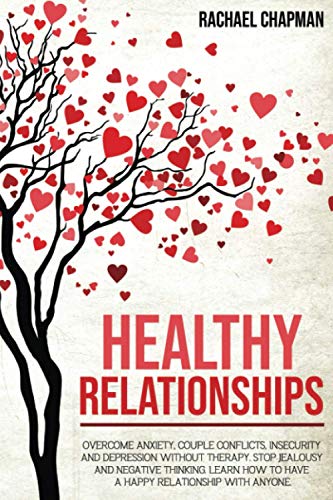
Overview: This book takes a broader relationship-skills approach, linking jealousy to anxiety, negative thinking, couple conflict, and emotional insecurity. Rather than isolating jealousy as a single symptom, it places it inside the wider pattern of how people think and act when they feel unsafe in a relationship. That makes it more useful for readers whose jealousy tends to spread into arguments, suspicion, and constant tension.
Why it stands out: Some jealousy books focus so tightly on one feeling that they miss the broader relationship climate. This one is helpful because it treats jealousy as part of a larger emotional system. Readers who need to improve the overall tone of the relationship, not just manage one recurring feeling, will likely get more out of it than from a narrower retroactive-jealousy title.
Strengths:
- Connects jealousy to anxiety and conflict patterns
- Broad enough to help with multiple relationship issues at once
- Suitable for readers seeking a practical, general self-help approach
Best for: Readers whose jealousy is part of wider relationship stress and conflict.
Potential limitations: The breadth can make it less precise for readers with a clearly defined problem such as retroactive jealousy.
View price, available formats, and reader reviews.
Anxiety in Relationship: How To Eliminate Negative Thinking, Jealousy, Attachment And Overcome Couple Conflicts. Insecurity And Fear Of Abandonment … – Help Yourself Understanding Your Partner

Overview: This book is geared toward readers whose jealousy is tightly linked to relationship anxiety, abandonment fear, and attachment concerns. It brings those ideas together in a single self-help framework, which can be useful when the emotional pattern is less about one specific trigger and more about a general fear of losing the relationship. The emphasis is practical and reflective rather than academic.
Why it stands out: Among the books on this list, this is one of the more direct options for readers who recognize themselves in abandonment anxiety. That focus makes it especially relevant for people who are triggered by distance, ambiguity, or perceived withdrawal from a partner. It also broadens the list by addressing the anxious side of jealousy rather than only the obsessive or retroactive side.
Strengths:
- Addresses attachment anxiety and fear of abandonment directly
- Useful for readers who become jealous when connection feels uncertain
- Combines jealousy with couple-conflict themes
Best for: Readers whose jealousy is driven by abandonment fear or attachment insecurity.
Potential limitations: The book is less specialized than the retroactive-jealousy titles, so readers with that specific problem may want a narrower choice.
View price, available formats, and reader reviews.
Who This List Is Best For
These recommendations are a good fit for readers dealing with comparison, intrusive thoughts, or trust friction. They are especially useful if you want to understand jealousy in relationships with more nuance than a short checklist, quote, or social-media summary can provide.
- Readers who want a clear conceptual foundation before choosing a technique.
- People who prefer to compare research, practical exercises, and real-world examples.
- Professionals, students, or caregivers who need language they can apply in a real conversation or decision.
Use the Best For and Why It Stands Out columns together. A book can be excellent yet still be the wrong starting point if its depth, tone, or intended reader does not match your goal.
Final Thoughts
The strongest choice for jealousy in relationships depends on what you need to do next. Begin with The Practical Anxious Attachment Recovery Workbook: 40+ Easy DBT Exercises to Help You Build A Secure Attachment Style and Overcome Overthinking, Jealousy & Insecurity In Relationships if you need a foundation, move to Overcoming Retroactive Jealousy: A Guide to Getting Over Your Partner’s Past and Finding Peace if you need a practical change, and consider The Ethical Slut, Third Edition: A Practical Guide to Polyamory, Open Relationships, and Other Freedoms in Sex and Love if you need a broader or more challenging perspective. The comparison table is meant to shorten that decision, not pretend that one book works for every reader.
A useful reading plan is simple: select one book, write down the question you want it to answer, and apply one idea before moving to another recommendation. For this topic, track triggers and write a response that protects honesty without turning reassurance into surveillance. jealousy can involve anxiety, attachment, or relationship dynamics, so one workbook will not fit every situation. Books can support reflection and skills practice, but they are not a substitute for qualified professional care when symptoms are severe, persistent, or unsafe.
FAQ
Which book should I read first for jealousy in relationships?
Start with The Practical Anxious Attachment Recovery Workbook: 40+ Easy DBT Exercises to Help You Build A Secure Attachment Style and Overcome Overthinking, Jealousy & Insecurity In Relationships if you want the clearest foundation. If your immediate need is action rather than background, compare it with Overcoming Retroactive Jealousy: A Guide to Getting Over Your Partner’s Past and Finding Peace and choose the one whose exercises, examples, or audience match your situation.
How do I choose between a research-based book and a workbook?
Choose the research-oriented option when you need context and a better mental model. Choose the workbook or practical guide when you already understand the problem and need repetition, prompts, or a structured plan. The table’s Best For column is the fastest way to make that distinction.
What is a practical way to use books about jealousy in relationships?
Do not read the whole list at once. Pick one recommendation, define the behavior or decision you want to improve, and test a small idea from the book for seven days. For this topic, track triggers and write a response that protects honesty without turning reassurance into surveillance.
Are these recommendations suitable for self-study?
Yes, for education and structured reflection. Take notes in your own words, mark claims you want to verify, and discuss difficult ideas with a trusted person or qualified professional when appropriate. Books can support reflection and skills practice, but they are not a substitute for qualified professional care when symptoms are severe, persistent, or unsafe.
Do I need to read every book on the list?
No. One well-matched book that changes what you notice or do is more valuable than collecting several recommendations without applying any of them.




