
Team leaders rarely need more information. What they usually need is better judgment: how to earn trust, set standards, handle conflict, and keep a group moving in the same direction without becoming the bottleneck. That is why the best books for team leaders are not all the same. Some focus on trust and culture, some on practical team dynamics, and others on the leader’s own habits and decision-making. The strongest choices give you a clear way to lead people, not just manage tasks.
Quick Answer
If you want the clearest entry point into team leaders, start with Leaders Eat Last: Why Some Teams Pull Together and Others Don’t. It gives you a useful foundation in trust, clarity, conflict, feedback, coaching, and the everyday systems that turn a group into a team. Choose Multipliers, Revised and Updated: How the Best Leaders Make Everyone Smarter when you want a more applied or contrasting approach, and use The Five Dysfunctions of a Team: A Leadership Fable, 20th Anniversary Edition when you want to extend the idea into a different context.
This list is designed for new supervisors, experienced managers, and professionals responsible for team performance. The recommendations are intentionally varied: some explain the underlying research, some offer exercises, and some are strongest as narrative or leadership case studies. That variety makes it easier to choose a book that matches your current question rather than buying the longest list.
How We Chose These Recommendations
This list favors books that help team leaders do the work that matters most: building trust, improving communication, clarifying expectations, and creating conditions where people can contribute well. Each recommendation earned its place by offering a distinct leadership lens rather than repeating the same advice in different packaging.
We also prioritized books with lasting relevance. Team leadership changes with tools and workplace trends, but the core problems stay familiar. Books that explain those fundamentals clearly, and in a way leaders can apply right away, are the ones most worth reading.
Recommended Books
Leaders Eat Last: Why Some Teams Pull Together and Others Don’t

Overview: Leaders Eat Last examines why some teams develop trust, commitment, and a sense of shared safety while others stay guarded and fragmented. The book focuses on the conditions that make people willing to work for one another instead of merely alongside one another. It is especially useful for leaders who know their team has technical skill but lacks cohesion, loyalty, or confidence in leadership.
Why it stands out: Among the best books for team leaders, this one is particularly strong on culture. It does not treat trust as a soft extra. It treats trust as the foundation of performance. That makes it a good fit for leaders who want to understand why morale, stability, and accountability often rise or fall together.
Strengths:
- Clear focus on trust and team culture
- Useful for both new and experienced leaders
- Connects leadership behavior with team loyalty
Best for: Leaders who want to strengthen cohesion, safety, and long-term commitment within a team.
Potential limitations: Readers looking for a step-by-step management handbook may find it more conceptual than tactical.
View price, available formats, and reader reviews.
Multipliers, Revised and Updated: How the Best Leaders Make Everyone Smarter

Overview: Multipliers is about the difference between leaders who drain energy and leaders who increase the intelligence of the people around them. The book gives a practical picture of how some managers accidentally become bottlenecks while others create room for others to think, contribute, and solve problems. It is one of the most helpful books for team leaders who want to stop over-functioning and start building a stronger team around them.
Why it stands out: Where some leadership books focus on inspiration, this one focuses on leverage. It helps leaders see how their own habits can either expand or shrink team capability. That makes it especially valuable for managers who are competent but too central to every decision.
Strengths:
- Strong framework for multiplying team talent
- Practical for managers who want better delegation
- Useful for identifying habits that unintentionally limit others
Best for: Team leaders who want to develop stronger independent thinkers and reduce dependency on themselves.
Potential limitations: Leaders looking for a deep treatment of conflict resolution or organizational politics will need a different book alongside it.
View price, available formats, and reader reviews.
The Five Dysfunctions of a Team: A Leadership Fable, 20th Anniversary Edition

Overview: The Five Dysfunctions of a Team lays out a memorable model for understanding why teams break down. It moves from lack of trust to fear of conflict, weak commitment, avoidance of accountability, and inattention to results. The fable format keeps the ideas accessible, while the framework gives leaders a language for discussing problems that are often easy to feel but hard to name.
Why it stands out: This is one of the most useful books for team leaders because it translates messy team problems into a sequence leaders can actually work through. It is not trying to be subtle. It is trying to help leaders diagnose breakdowns quickly, which is exactly why so many managers return to it.
Strengths:
- Simple, memorable framework for team problems
- Easy to discuss with managers or direct reports
- Highly practical for diagnosing weak team performance
Best for: Leaders facing tension, disengagement, or unclear accountability inside a team.
Potential limitations: The fable style may feel a little straightforward for readers who prefer a more academic or data-heavy approach.
View price, available formats, and reader reviews.
The Ideal Team Player: How to Recognize and Cultivate The Three Essential Virtues
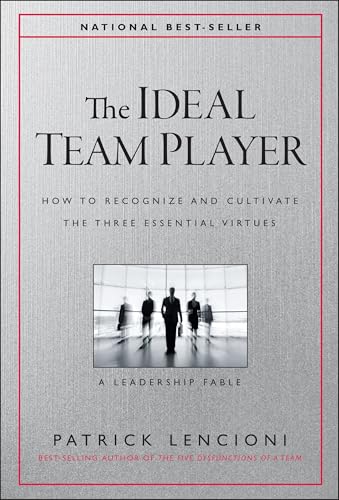
Overview: The Ideal Team Player focuses on the qualities that make someone dependable and effective inside a team. Rather than offering broad leadership theory, it gives readers a straightforward way to think about team member behavior, hiring, and development. That makes it especially useful for leaders who need to build a team with the right mix of attitude, curiosity, and dependability.
Why it stands out: Many books for team leaders discuss how to lead people. This one helps leaders think more clearly about the people themselves. It is especially valuable when a team is technically capable but still hard to work with, because it gives leaders a practical standard for what good team behavior looks like.
Strengths:
- Clear model for evaluating team members
- Helpful for hiring and coaching
- Simple enough to use in day-to-day leadership conversations
Best for: Leaders who want a practical framework for building a dependable, collaborative team.
Potential limitations: It is more focused on team character and behavior than on broader strategy or organizational culture.
View price, available formats, and reader reviews.
Best Team Ever: The Surprising Science of High-Performing Teams

Overview: Best Team Ever brings a research-informed perspective to what makes teams perform well. Rather than relying only on anecdotes or leadership slogans, it examines the science behind team effectiveness and turns that into practical lessons for managers. Readers who want a modern, evidence-based view of team leadership will find this especially useful.
Why it stands out: This book belongs on a list of the best books for team leaders because it balances accessibility with evidence. It offers a more analytical route than the classic leadership fables, which makes it a strong choice for readers who want to understand not just what works, but why it works.
Strengths:
- Research-driven approach to team performance
- Good complement to more narrative leadership books
- Useful for readers who value evidence and modern workplace insight
Best for: Team leaders who want a more analytical explanation of high-performing teams.
Potential limitations: Readers looking for a highly emotional or story-centered leadership book may prefer a different starting point.
View price, available formats, and reader reviews.
When Teams Work Best: 6,000 Team Members and Leaders Tell What it Takes to Succeed

Overview: When Teams Work Best draws on a large body of reported team experience to identify what supports success in real workplaces. Its value lies in showing patterns that come from many voices, not just one leadership philosophy. For team leaders who want to compare their own assumptions with what actual teams say helps, it can be a revealing read.
Why it stands out: Compared with more theory-driven leadership books, this one offers a broader, field-based perspective. It is a useful choice for readers who want evidence rooted in team member and leader experience rather than a single manager’s framework. That makes it especially strong for people leading larger or more diverse groups.
Strengths:
- Draws on broad real-world team input
- Helps leaders spot recurring success patterns
- Useful for reflecting on workplace culture and team design
Best for: Leaders who want a wider view of what makes teams succeed in practice.
Potential limitations: Readers who prefer compact, highly prescriptive books may find it less immediate than some of the other recommendations here.
View price, available formats, and reader reviews.
From Supervisor to Super Leader: How to Break Free from Stress and Build a Thriving Team That Gets Results

Overview: From Supervisor to Super Leader is aimed at readers who are moving beyond task oversight and into the more demanding work of building a healthy team. The book centers on stress, leadership habits, and the practical challenge of creating results without burning out the manager or the group. That makes it a useful pick for front-line supervisors and newer team leads.
Why it stands out: Some leadership books assume the reader already has breathing room. This one speaks more directly to the leader who is still in the thick of day-to-day pressure. Its focus on staying effective while reducing stress gives it a different purpose from the more theory-heavy books on this list.
Strengths:
- Practical for newer leaders and working supervisors
- Addresses stress as part of leadership performance
- Focused on building a healthier team environment
Best for: First-time team leaders or supervisors who need guidance that feels grounded in daily reality.
Potential limitations: Experienced leaders may want something broader or more strategic once they have the basics in place.
View price, available formats, and reader reviews.
The Servant Leader: How to Build a Creative Team, Develop Great Morale, and Improve Bottom-Line Performance

Overview: The Servant Leader presents a people-centered approach to leadership that connects morale, creativity, and performance. It is a good fit for readers who believe a team does best when the leader removes obstacles, builds confidence, and encourages contribution rather than commanding from a distance. The book is especially relevant for leaders trying to improve culture without sacrificing results.
Why it stands out: This book offers a different emphasis from the more diagnostic titles on this list. Instead of concentrating on team dysfunction, it focuses on the leadership stance that can prevent dysfunction from taking root. That makes it a valuable complement to more tactical team-management books.
Strengths:
- Strong focus on morale and creative contribution
- Useful for leaders interested in service-oriented management
- Connects team culture with performance outcomes
Best for: Leaders who want to build a collaborative, energized team through a more servant-minded style.
Potential limitations: Readers seeking a highly structured management system may want a more procedural book alongside it.
View price, available formats, and reader reviews.
Comparison Table
| Book | Best For | Why It Stands Out |
|---|---|---|
| Leaders Eat Last: Why Some Teams Pull Together and Others Don’t | Leaders who want to strengthen cohesion, safety, and long-term commitment within a team. | Among the best books for team leaders, this one is particularly strong on culture. It does not treat trust as a soft extra. It treats trust as the foundation of performance. That makes it a good fit for leaders who want to understand why… |
| Multipliers, Revised and Updated: How the Best Leaders Make Everyone Smarter | Team leaders who want to develop stronger independent thinkers and reduce dependency on themselves. | Where some leadership books focus on inspiration, this one focuses on leverage. It helps leaders see how their own habits can either expand or shrink team capability. That makes it especially valuable for managers who are competent but… |
| The Five Dysfunctions of a Team: A Leadership Fable, 20th Anniversary Edition | Leaders facing tension, disengagement, or unclear accountability inside a team. | This is one of the most useful books for team leaders because it translates messy team problems into a sequence leaders can actually work through. It is not trying to be subtle. It is trying to help leaders diagnose breakdowns quickly,… |
| The Ideal Team Player: How to Recognize and Cultivate The Three Essential Virtues | Leaders who want a practical framework for building a dependable, collaborative team. | Many books for team leaders discuss how to lead people. This one helps leaders think more clearly about the people themselves. It is especially valuable when a team is technically capable but still hard to work with, because it gives… |
| Best Team Ever: The Surprising Science of High-Performing Teams | Team leaders who want a more analytical explanation of high-performing teams. | This book belongs on a list of the best books for team leaders because it balances accessibility with evidence. It offers a more analytical route than the classic leadership fables, which makes it a strong choice for readers who want to… |
| When Teams Work Best: 6,000 Team Members and Leaders Tell What it Takes to Succeed | Leaders who want a wider view of what makes teams succeed in practice. | Compared with more theory-driven leadership books, this one offers a broader, field-based perspective. It is a useful choice for readers who want evidence rooted in team member and leader experience rather than a single manager’s… |
| From Supervisor to Super Leader: How to Break Free from Stress and Build a Thriving Team That Gets Results | First-time team leaders or supervisors who need guidance that feels grounded in daily reality. | Some leadership books assume the reader already has breathing room. This one speaks more directly to the leader who is still in the thick of day-to-day pressure. Its focus on staying effective while reducing stress gives it a different… |
| The Servant Leader: How to Build a Creative Team, Develop Great Morale, and Improve Bottom-Line Performance | Leaders who want to build a collaborative, energized team through a more servant-minded style. | This book offers a different emphasis from the more diagnostic titles on this list. Instead of concentrating on team dysfunction, it focuses on the leadership stance that can prevent dysfunction from taking root. That makes it a valuable… |
Who This List Is Best For
These recommendations are a good fit for new supervisors, experienced managers, and professionals responsible for team performance. They are especially useful if you want to understand team leaders with more nuance than a short checklist, quote, or social-media summary can provide.
- Readers who want a clear conceptual foundation before choosing a technique.
- People who prefer to compare research, practical exercises, and real-world examples.
- Professionals, students, or caregivers who need language they can apply in a real conversation or decision.
Use the Best For and Why It Stands Out columns together. A book can be excellent yet still be the wrong starting point if its depth, tone, or intended reader does not match your goal.
Final Thoughts
The strongest choice for team leaders depends on what you need to do next. Begin with Leaders Eat Last: Why Some Teams Pull Together and Others Don’t if you need a foundation, move to Multipliers, Revised and Updated: How the Best Leaders Make Everyone Smarter if you need a practical change, and consider The Five Dysfunctions of a Team: A Leadership Fable, 20th Anniversary Edition if you need a broader or more challenging perspective. The comparison table is meant to shorten that decision, not pretend that one book works for every reader.
A useful reading plan is simple: select one book, write down the question you want it to answer, and apply one idea before moving to another recommendation. For this topic, set one team norm, one ownership rule, and one feedback rhythm that people can see in practice. team leadership is contextual; a memorable model still needs adaptation to culture and power.
FAQ
Which book should I read first for team leaders?
Start with Leaders Eat Last: Why Some Teams Pull Together and Others Don’t if you want the clearest foundation. If your immediate need is action rather than background, compare it with Multipliers, Revised and Updated: How the Best Leaders Make Everyone Smarter and choose the one whose exercises, examples, or audience match your situation.
How do I choose between a research-based book and a workbook?
Choose the research-oriented option when you need context and a better mental model. Choose the workbook or practical guide when you already understand the problem and need repetition, prompts, or a structured plan. The table’s Best For column is the fastest way to make that distinction.
What is a practical way to use books about team leaders?
Do not read the whole list at once. Pick one recommendation, define the behavior or decision you want to improve, and test a small idea from the book for seven days. For this topic, set one team norm, one ownership rule, and one feedback rhythm that people can see in practice.
Are these recommendations suitable for self-study?
Yes, for education and structured reflection. Take notes in your own words, mark claims you want to verify, and discuss difficult ideas with a trusted person or qualified professional when appropriate.
Do I need to read every book on the list?
No. One well-matched book that changes what you notice or do is more valuable than collecting several recommendations without applying any of them.