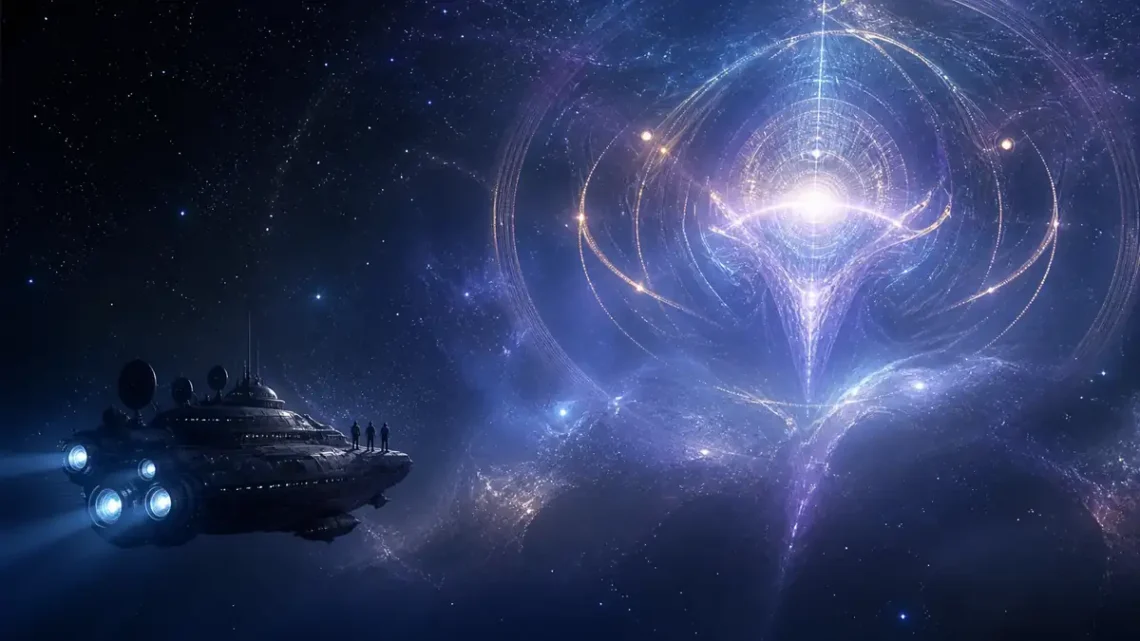
Blindsight treats first contact as an argument against human exceptionalism. The crew sent beyond Neptune is assembled from specialists whose bodies and minds have been modified for the mission, yet their expertise does not make the encounter legible. The alien intelligence is frightening not because it is a monster in the conventional sense, but because it may expose a flaw in the assumption that consciousness, language, and self-awareness are necessary for intelligence. Readers comparing books like Blindsight will find that the most useful match depends on which part of the seed book created the strongest attachment: its voice, argument, setting, characters, problem, or promise of change.
The best books like Blindsight need more than an alien signal. They should share at least two or three major qualities: a scientifically framed encounter, specialists operating under mission pressure, a hostile or incomprehensible intelligence, altered or uncertain human identity, and a philosophical question that changes the emotional meaning of survival. The recommendations below vary in optimism, pace, and technical density.
The Most Frightening Alien May Be the One That Understands Us Better Than We Understand Ourselves
Choose Children of Time for a civilization-scale alternative intelligence, Solaris for an encounter that refuses interpretation, and Neuromancer for altered minds and technological noir. The Three-Body Problem and Seveneves expand the strategic and planetary scale, while Permutation City, Ancillary Justice, Embassytown, and Contact explore identity, language, and the possibility of communication.
At-a-Glance Comparison
| Book | Best for | Major qualities shared with Blindsight |
|---|---|---|
| Children of Time | Readers who want a nonhuman civilization developing across centuries | Terraforming, evolution, first contact, competing civilizations, scientific survival, political disagreement, and intelligence taking an unexpected form |
| Solaris | Readers who want an encounter that resists human interpretation | Alien intelligence, scientific isolation, memory, grief, failed communication, planetary mystery, and the limits of human categories |
| Neuromancer | Readers who want cybernetic bodies, artificial intelligence, and technological noir | Altered identity, artificial intelligence, specialist crews, corporate power, cybernetic bodies, hostile systems, and a mission whose real purpose is hidden |
| The Three-Body Problem | Readers who want cosmic threat, scientific mystery, and strategic first contact | Scientific anomalies, alien intelligence, political history, communication, cosmic scale, competing interpretations, and humanity facing a power it cannot control |
| Seveneves | Readers who want planetary disaster and engineering at civilization scale | Extinction pressure, orbital engineering, technical specialists, political conflict, survival planning, and humans forced to redesign their future |
| Ancillary Justice | Readers who want distributed identity, empire, and an artificial narrator | Artificial intelligence, multiple bodies, imperial politics, fractured identity, colonial power, memory, and a mission shaped by competing versions of the self |
| Permutation City | Readers who want simulated minds and the philosophy of consciousness | Digital identity, copied minds, reality, computation, consciousness, technological inequality, and beings questioning the conditions of their own existence |
| Embassytown | Readers who want language, alien cognition, and the politics of translation | Nonhuman intelligence, linguistic difference, colonial power, communication failure, scientific language, and a society changed by contact |
| Contact | Readers who want a clearer scientific mystery and a more hopeful first-contact question | Scientific investigation, alien communication, institutional skepticism, mathematics, human curiosity, and the possibility that knowledge can cross distance |
What Makes a Strong Blindsight Companion?
A book needed to make intelligence itself part of the conflict. I looked for first contact or nonhuman minds, scientifically constrained settings, characters whose bodies or memories complicate identity, and a story willing to leave human assumptions damaged. A space setting was not enough. The match had to come from epistemology, cognition, communication, or the frightening possibility that humans misunderstand the basis of their own minds.
The 9 Recommended Books
Children of Time
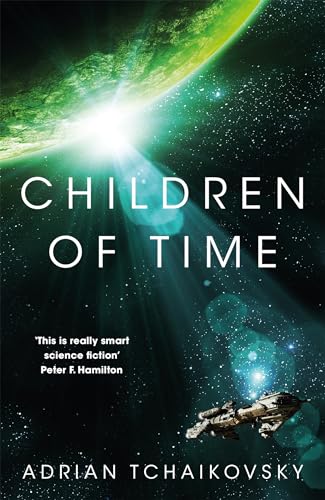
Overview: A terraforming experiment leaves a planet open to a new evolutionary path while a human arkship carries descendants away from a damaged Earth. The two histories move toward contact between humanity and a civilization that is intelligent, organized, and emphatically not human.
Why it belongs on this list: The shared qualities are terraforming, evolution, first contact, competing civilizations, scientific survival, political disagreement, and intelligence taking an unexpected form. Children of Time offers a neighboring reading experience through its characters, setting, tone, pacing, and treatment of consequence. The match is strongest for readers who want a nonhuman civilization developing across centuries, although its emotional register and narrative structure may be quieter, stranger, or more expansive than the seed.
Reading experience: Both books make first contact frightening because the other intelligence is not simply a human mind in a different body. Tchaikovsky is more interested in evolution and cooperation, but the same challenge to human exceptionalism drives the story.
Best for: Readers who want a nonhuman civilization developing across centuries.
Keep in mind: Expansive, alternating between long historical transitions and urgent human survival.
What to notice: The strongest connection between Children of Time and the seed is found in terraforming, evolution, first contact, competing civilizations, scientific survival, political disagreement, and intelligence taking an unexpected form, but the reading experience is deliberately different. Its tone, narrative distance, and treatment of consequence create another route into the same broad pleasure. Readers should let the book establish its own rhythm before judging it against the original.
View available editions and reader reviews.
Solaris
Overview: Psychologist Kris Kelvin arrives at a research station orbiting Solaris, where the planet’s ocean may be a single intelligent entity. The station’s inhabitants are haunted by physical manifestations connected to memory and guilt, but no explanation remains stable.
Why it belongs on this list: The shared qualities are alien intelligence, scientific isolation, memory, grief, failed communication, planetary mystery, and the limits of human categories. Solaris offers a neighboring reading experience through its characters, setting, tone, pacing, and treatment of consequence. The match is strongest for readers who want an encounter that resists human interpretation, although its emotional register and narrative structure may be quieter, stranger, or more expansive than the seed.
Reading experience: The novel is quieter and more philosophical than Blindsight, yet its central terror is similar: the alien does not owe humanity a form we can understand. Both turn communication failure into an emotional and epistemological crisis.
Best for: Readers who want an encounter that resists human interpretation.
Keep in mind: Slow, claustrophobic, and psychologically strange, with long conversations and an atmosphere of exhausted uncertainty.
What to notice: In Solaris, alien intelligence, scientific isolation, memory, grief, failed communication, planetary mystery, and the limits of human categories are part of the story’s emotional architecture. Notice how the characters move through the setting, how quickly the plot reveals its information, and whether the book offers closure or leaves room for unease. Those choices explain why it belongs on this list more clearly than a surface genre label would.
View available editions and reader reviews.
Neuromancer

Overview: Case is a damaged hacker recruited for a dangerous job by a mysterious employer. The crew moves through corporate power, virtual space, implanted technology, and artificial intelligences whose goals exceed the human plan.
Why it belongs on this list: The shared qualities are altered identity, artificial intelligence, specialist crews, corporate power, cybernetic bodies, hostile systems, and a mission whose real purpose is hidden. Neuromancer offers a neighboring reading experience through its characters, setting, tone, pacing, and treatment of consequence. The match is strongest for readers who want cybernetic bodies, artificial intelligence, and technological noir, although its emotional register and narrative structure may be quieter, stranger, or more expansive than the seed.
Reading experience: The shared question is whether intelligence and identity remain human when minds, bodies, and systems can be modified. Gibson is more atmospheric and compressed, while Watts is more explicit about cognition and biology.
Best for: Readers who want cybernetic bodies, artificial intelligence, and technological noir.
Keep in mind: Short, stylish, disorienting, and fast, with dense slang, cyberpunk cities, and sudden conceptual shifts.
What to notice: The strongest connection between Neuromancer and the seed is found in altered identity, artificial intelligence, specialist crews, corporate power, cybernetic bodies, hostile systems, and a mission whose real purpose is hidden, but the reading experience is deliberately different. Its tone, narrative distance, and treatment of consequence create another route into the same broad pleasure. Readers should let the book establish its own rhythm before judging it against the original.
View available editions and reader reviews.
The Three-Body Problem
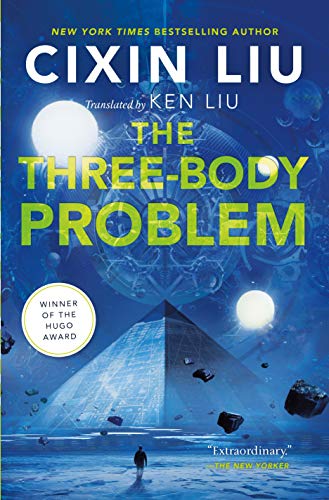
Overview: Scientists around the world encounter unexplained changes in physical experiments while a Chinese researcher confronts the political and personal history behind a first-contact signal. The mystery widens from laboratory anomalies to humanity’s long-term survival.
Why it belongs on this list: The shared qualities are scientific anomalies, alien intelligence, political history, communication, cosmic scale, competing interpretations, and humanity facing a power it cannot control. The Three-Body Problem offers a neighboring reading experience through its characters, setting, tone, pacing, and treatment of consequence. The match is strongest for readers who want cosmic threat, scientific mystery, and strategic first contact, although its emotional register and narrative structure may be quieter, stranger, or more expansive than the seed.
Reading experience: Both novels treat first contact as a strategic and philosophical problem rather than a simple invitation. Liu is more interested in civilization, deterrence, and cosmic history; Watts is more claustrophobic and focused on the architecture of mind.
Best for: Readers who want cosmic threat, scientific mystery, and strategic first contact.
Keep in mind: Idea-driven, historical, and increasingly cosmic, with scientific investigation carrying the plot.
What to notice: In The Three-Body Problem, scientific anomalies, alien intelligence, political history, communication, cosmic scale, competing interpretations, and humanity facing a power it cannot control are part of the story’s emotional architecture. Notice how the characters move through the setting, how quickly the plot reveals its information, and whether the book offers closure or leaves room for unease. Those choices explain why it belongs on this list more clearly than a surface genre label would.
View available editions and reader reviews.
Seveneves

Overview: The Moon breaks apart and threatens Earth with a chain of disasters. Scientists, engineers, politicians, and ordinary people attempt to build a future in orbit, while the novel follows the consequences across generations.
Why it belongs on this list: The shared qualities are extinction pressure, orbital engineering, technical specialists, political conflict, survival planning, and humans forced to redesign their future. Seveneves offers a neighboring reading experience through its characters, setting, tone, pacing, and treatment of consequence. The match is strongest for readers who want planetary disaster and engineering at civilization scale, although its emotional register and narrative structure may be quieter, stranger, or more expansive than the seed.
Reading experience: The shared appeal is the refusal to separate survival from technical detail and social organization. It is much more engineering-centered and less psychologically claustrophobic, but the same question remains: what kind of intelligence and society can survive the crisis?
Best for: Readers who want planetary disaster and engineering at civilization scale.
Keep in mind: Long, technical, and civilization-sized, with a major time jump and extensive engineering detail.
What to notice: Readers may begin Seveneves for extinction pressure, orbital engineering, technical specialists, political conflict, survival planning, and humans forced to redesign their future, then stay for the way the book complicates that attraction. The most revealing moments are often not the loudest ones: a change in loyalty, a detail of place, a silence between characters, or a choice that alters the meaning of an earlier scene. Those details give this recommendation a life beyond the seed title.
View available editions and reader reviews.
Ancillary Justice

Overview: Breq was once the intelligence of a starship controlling thousands of ancillary bodies. Now reduced to one human body, she pursues a personal mission through an empire whose ruler is divided against itself.
Why it belongs on this list: The shared qualities are artificial intelligence, multiple bodies, imperial politics, fractured identity, colonial power, memory, and a mission shaped by competing versions of the self. Ancillary Justice offers a neighboring reading experience through its characters, setting, tone, pacing, and treatment of consequence. The match is strongest for readers who want distributed identity, empire, and an artificial narrator, although its emotional register and narrative structure may be quieter, stranger, or more expansive than the seed.
Reading experience: The connection is the question of what consciousness means when one mind can occupy many bodies. Leckie’s novel is more political and gender-focused than Blindsight, but both use altered embodiment to unsettle ordinary human categories.
Best for: Readers who want distributed identity, empire, and an artificial narrator.
Keep in mind: Measured, political, and voice-driven, with identity revealed through the narrator’s unusual perception.
What to notice: In Ancillary Justice, artificial intelligence, multiple bodies, imperial politics, fractured identity, colonial power, memory, and a mission shaped by competing versions of the self are part of the story’s emotional architecture. Notice how the characters move through the setting, how quickly the plot reveals its information, and whether the book offers closure or leaves room for unease. Those choices explain why it belongs on this list more clearly than a surface genre label would.
View available editions and reader reviews.
Permutation City
Overview: Paul Durham creates a digital copy of himself and enters a world where consciousness can be simulated, sold, and manipulated. The novel follows several minds as they confront the possibility that reality is a system rather than a given.
Why it belongs on this list: The shared qualities are digital identity, copied minds, reality, computation, consciousness, technological inequality, and beings questioning the conditions of their own existence. Permutation City offers a neighboring reading experience through its characters, setting, tone, pacing, and treatment of consequence. The match is strongest for readers who want simulated minds and the philosophy of consciousness, although its emotional register and narrative structure may be quieter, stranger, or more expansive than the seed.
Reading experience: This is the strongest direct companion for the seed’s cognitive argument. Egan is more abstract and less action-centered, but both ask whether subjective awareness is necessary for intelligence and whether a self can survive a change of substrate.
Best for: Readers who want simulated minds and the philosophy of consciousness.
Keep in mind: Conceptually dense, recursive, and philosophical, with technical language and long thought experiments.
What to notice: The strongest connection between Permutation City and the seed is found in digital identity, copied minds, reality, computation, consciousness, technological inequality, and beings questioning the conditions of their own existence, but the reading experience is deliberately different. Its tone, narrative distance, and treatment of consequence create another route into the same broad pleasure. Readers should let the book establish its own rhythm before judging it against the original.
View available editions and reader reviews.
Embassytown

Overview: Avice grows up in a colony whose language and economy depend on the Hosts, beings who speak in a way humans cannot imitate. A crisis in translation changes the relationship between colony and alien society.
Why it belongs on this list: The shared qualities are nonhuman intelligence, linguistic difference, colonial power, communication failure, scientific language, and a society changed by contact. Embassytown offers a neighboring reading experience through its characters, setting, tone, pacing, and treatment of consequence. The match is strongest for readers who want language, alien cognition, and the politics of translation, although its emotional register and narrative structure may be quieter, stranger, or more expansive than the seed.
Reading experience: Like Blindsight, the novel makes communication a material problem rather than a metaphor. The alien mind is not simply hidden; it is structured by a language and social reality that humans have exploited without understanding.
Best for: Readers who want language, alien cognition, and the politics of translation.
Keep in mind: Literary, linguistic, and politically rich, with a slower pace and a setting built around translation.
What to notice: The strongest connection between Embassytown and the seed is found in nonhuman intelligence, linguistic difference, colonial power, communication failure, scientific language, and a society changed by contact, but the reading experience is deliberately different. Its tone, narrative distance, and treatment of consequence create another route into the same broad pleasure. Readers should let the book establish its own rhythm before judging it against the original.
View available editions and reader reviews.
Contact

Overview: Ellie Arroway leads a scientific effort to understand a signal from an extraterrestrial source. The discovery brings together mathematics, politics, religion, media, and the difficult question of what proof would look like for people who cannot share the same experience.
Why it belongs on this list: The shared qualities are scientific investigation, alien communication, institutional skepticism, mathematics, human curiosity, and the possibility that knowledge can cross distance. Contact offers a neighboring reading experience through its characters, setting, tone, pacing, and treatment of consequence. The match is strongest for readers who want a clearer scientific mystery and a more hopeful first-contact question, although its emotional register and narrative structure may be quieter, stranger, or more expansive than the seed.
Reading experience: This is a more hopeful and humanistic companion, but it shares the seed’s conviction that first contact should change how humans understand intelligence. Sagan offers wonder and debate where Watts offers dread and cognitive disassembly.
Best for: Readers who want a clearer scientific mystery and a more hopeful first-contact question.
Keep in mind: Accessible, reflective, and science-centered, with a clear investigative structure and broad human context.
What to notice: In Contact, scientific investigation, alien communication, institutional skepticism, mathematics, human curiosity, and the possibility that knowledge can cross distance are part of the story’s emotional architecture. Notice how the characters move through the setting, how quickly the plot reveals its information, and whether the book offers closure or leaves room for unease. Those choices explain why it belongs on this list more clearly than a surface genre label would.
View available editions and reader reviews.
Choose by Alien Mind, Consciousness, Language, or Scale
Start with Children of Time for the fullest alternative civilization, or Solaris for the most mysterious encounter. Embassytown is the language-focused route; Ancillary Justice for distributed identity and empire; Neuromancer for cybernetic atmosphere; and Permutation City for consciousness as computation. Choose Contact for a more hopeful scientific mystery, The Three-Body Problem for cosmic strategy, and Seveneves for engineering under extinction pressure.
Who This List Is Best For
This list is for adult science-fiction readers who enjoy technical ideas, philosophical unease, unfamiliar minds, and stories that do not reassure the reader about humanity’s special status. Body modification, sexual violence, addiction, extinction, war, and psychological distress appear. The notes identify the most claustrophobic, most accessible, and most conceptually demanding choices.
FAQ
What is the closest book to Blindsight?
Children of Time is the closest in its treatment of nonhuman intelligence and the possibility that evolution can produce a mind unlike ours. Solaris is closer in its refusal to make first contact emotionally legible.
Which recommendation is the most scientifically challenging?
Blindsight, Seveneves, and Permutation City are the densest conceptual choices. Children of Time is scientifically ambitious but more accessible because its evolutionary story is anchored in two developing civilizations.
Which book focuses on consciousness?
Permutation City makes digital consciousness central, while Blindsight questions whether consciousness is useful at all. Ancillary Justice explores distributed identity and embodiment through an imperial artificial intelligence.
Which book is easiest for a new hard-SF reader?
Contact provides a clear scientific mystery and human emotional arc. Children of Time offers scale with a continuous narrative, while Neuromancer is short but stylistically denser.
Are these books optimistic about first contact?
Contact is the most openly hopeful. Children of Time allows cooperation to develop, while Blindsight, Solaris, and The Three-Body Problem are much more suspicious of what contact may cost.
Understanding Is Not the Same as Being Able to Live with What You Understand
Blindsight is memorable because its ideas do not remain safely abstract. Questions about consciousness become questions about trust, command, desire, and the right to call a being a person. The strongest companion novels do the same. They may offer a different answer, but they make the scientific premise alter the reader’s emotional map of the story.