
Make Your Bed takes a simple routine and uses it as a doorway into a larger account of discipline. William McRaven’s lessons come from military training, but the book’s appeal is civilian: when circumstances are uncertain, a small completed action can create a little order, a little dignity, and a first step toward the next decision. The useful question is not whether a made bed solves a crisis. It is whether a person can practice responsibility without waiting for the crisis to become manageable. Readers comparing books like Make Your Bed will find that the most useful match depends on which part of the seed book created the strongest attachment: its voice, argument, setting, characters, problem, or promise of change.
The strongest books like Make Your Bed should connect daily behavior with courage, leadership, resilience, or service without pretending that effort alone controls outcomes. The recommendations below share several qualities with McRaven’s memoir-like lessons: small routines, disciplined action, accountability, team responsibility, recovery from hardship, and a clear-eyed view of what can and cannot be controlled.
A Small Order Can Be a Way to Begin
Choose Atomic Habits for behavior design, The Power of Habit for the science of routines, or Extreme Ownership for leadership and responsibility. The Obstacle Is the Way adds Stoic reframing, Discipline Is Destiny offers historical examples, and The Daily Stoic, The Comfort Crisis, Deep Work, and The 5 AM Club explore attention, discomfort, focus, and morning structure.
At-a-Glance Comparison
| Book | Best for | Major qualities shared with Make Your Bed |
|---|---|---|
| Atomic Habits | Readers who want small routines designed around the real environment | Cues, identity, friction, repetition, environment, small actions, and behavior that compounds through consistency |
| The Power of Habit | Readers who want the science behind cues, routines, and rewards | Habit loops, cues, rewards, behavior change, organizational routines, willpower, and the way repeated actions become automatic |
| Extreme Ownership | Readers who want leadership lessons about responsibility and team performance | Accountability, team communication, decentralized leadership, preparation, mission clarity, and taking responsibility for outcomes |
| The Obstacle Is the Way | Readers who want a Stoic framework for responding to setbacks | Perception, action, discipline, obstacles, emotional control, resilience, and distinguishing what can be controlled from what cannot |
| Discipline Is Destiny | Readers who want historical examples of self-command and restraint | Temperance, courage, routines, self-control, leadership, historical example, and the relationship between discipline and freedom |
| The Daily Stoic | Readers who want a short daily practice of reflection and perspective | Daily exercises, Stoicism, emotional regulation, control, preparation, impermanence, and responding rather than reacting |
| Deep Work | Readers who want disciplined attention for demanding work | Focus, distraction, ritual, concentration, scheduling, digital boundaries, and producing valuable work in a noisy environment |
| The Comfort Crisis | Readers who want to examine voluntary discomfort and modern convenience | Challenge, discomfort, outdoor effort, resilience, attention, physical limits, and questioning habits built around constant convenience |
| The 5 AM Club | Readers who want a highly structured morning routine | Early rising, morning ritual, focus, exercise, reflection, productivity, and using the first part of the day deliberately |
What Makes a Strong Make Your Bed Companion?
I looked for books that translate values into repeated actions: routines, preparation, ownership, attention, team behavior, or deliberate exposure to difficulty. A recommendation needed to offer more than motivational language. It had to acknowledge recovery, luck, leadership context, and the difference between chosen discomfort and actual harm. Discipline is useful when it supports a life; it is not a virtue when it becomes punishment.
The 9 Recommended Books
Atomic Habits

Overview: James Clear explains how habits form through cues, cravings, responses, and rewards. He shows why changing the environment and making a behavior easier can be more reliable than depending on a daily burst of willpower.
Why it belongs on this list: The connection is strongest through cues, identity, friction, repetition, environment, small actions, and behavior that compounds through consistency. Atomic Habits approaches the seed’s concerns from a different angle, adding its own evidence, examples, and limits instead of repeating a familiar list of advice. It is especially useful for readers who want small routines designed around the real environment because it makes the underlying choice more visible: what to protect, what to question, and what may not be under personal control.
Reading experience: The book turns the made-bed idea into a complete behavior system. It helps readers understand why a tiny action can matter without pretending that symbolic discipline solves every problem.
Best for: Readers who want small routines designed around the real environment.
Keep in mind: Clear is systematic and accessible, with practical examples. The approach needs adaptation when the barrier is illness, poverty, trauma, or an unsafe environment.
What to notice: The right reading pace for Atomic Habits depends on what the reader needs from readers who want small routines designed around the real environment. Its discussion of cues, identity, friction, repetition, environment, small actions, and behavior that compounds through consistency is clear enough to revisit, but it also benefits from pausing over examples and disagreements. Give the author room to make a case before deciding whether the ideas fit your work, health, relationships, and available freedom.
View available editions and reader reviews.
The Power of Habit

Overview: Charles Duhigg uses scientific studies and stories from individuals, companies, and communities to explain how habits operate. The cue-routine-reward loop gives readers a way to identify what a behavior is doing before trying to replace it.
Why it belongs on this list: The connection is strongest through habit loops, cues, rewards, behavior change, organizational routines, willpower, and the way repeated actions become automatic. The Power of Habit approaches the seed’s concerns from a different angle, adding its own evidence, examples, and limits instead of repeating a familiar list of advice. It is especially useful for readers who want the science behind cues, routines, and rewards because it makes the underlying choice more visible: what to protect, what to question, and what may not be under personal control.
Reading experience: The connection is the belief that small repeated actions can influence a larger life. Duhigg adds more attention to neural and organizational systems, while McRaven is more focused on character and daily responsibility.
Best for: Readers who want the science behind cues, routines, and rewards.
Keep in mind: Narrative and example-driven, with a clear popular-science structure and less direct step-by-step coaching than Clear.
What to notice: The right reading pace for The Power of Habit depends on what the reader needs from readers who want the science behind cues, routines, and rewards. Its discussion of habit loops, cues, rewards, behavior change, organizational routines, willpower, and the way repeated actions become automatic is clear enough to revisit, but it also benefits from pausing over examples and disagreements. Give the author room to make a case before deciding whether the ideas fit your work, health, relationships, and available freedom.
View available editions and reader reviews.
Extreme Ownership

Overview: Jocko Willink and Leif Babin draw on military leadership experiences to explain how teams can clarify missions, communicate priorities, and take ownership when plans fail. The book pairs battlefield stories with organizational principles.
Why it belongs on this list: The connection is strongest through accountability, team communication, decentralized leadership, preparation, mission clarity, and taking responsibility for outcomes. Extreme Ownership approaches the seed’s concerns from a different angle, adding its own evidence, examples, and limits instead of repeating a familiar list of advice. It is especially useful for readers who want leadership lessons about responsibility and team performance because it makes the underlying choice more visible: what to protect, what to question, and what may not be under personal control.
Reading experience: The shared appeal is disciplined action under pressure, but this book moves from personal routine to team responsibility. It asks leaders to remove excuses and create clarity, while also requiring judgment about what responsibility can realistically mean in a complex organization.
Best for: Readers who want leadership lessons about responsibility and team performance.
Keep in mind: Direct, operational, and intense, with military examples that may not translate cleanly to every workplace.
What to notice: A strong reason to include Extreme Ownership is that accountability, team communication, decentralized leadership, preparation, mission clarity, and taking responsibility for outcomes are treated as lived conditions, not just slogans. The book is most rewarding when readers compare its account of readers who want leadership lessons about responsibility and team performance with their own circumstances. Some of its suggestions will be immediately usable; others are better read as questions that expose what a productivity or personal-growth promise leaves out.
View available editions and reader reviews.
The Obstacle Is the Way

Overview: Ryan Holiday presents Stoic ideas through historical examples and argues that an obstacle can become material for action when a person changes perspective, chooses a response, and works within reality.
Why it belongs on this list: The connection is strongest through perception, action, discipline, obstacles, emotional control, resilience, and distinguishing what can be controlled from what cannot. The Obstacle Is the Way approaches the seed’s concerns from a different angle, adding its own evidence, examples, and limits instead of repeating a familiar list of advice. It is especially useful for readers who want a stoic framework for responding to setbacks because it makes the underlying choice more visible: what to protect, what to question, and what may not be under personal control.
Reading experience: This book shares Make Your Bed‘s preference for a practical next step over a dramatic emotional transformation. Its language is more philosophical and compressed, offering a way to interpret a bad day before deciding what to do with it.
Best for: Readers who want a Stoic framework for responding to setbacks.
Keep in mind: Motivational and quotable, with historical anecdotes rather than a full treatment of structural constraints or mental-health complexity.
What to notice: The right reading pace for The Obstacle Is the Way depends on what the reader needs from readers who want a stoic framework for responding to setbacks. Its discussion of perception, action, discipline, obstacles, emotional control, resilience, and distinguishing what can be controlled from what cannot is clear enough to revisit, but it also benefits from pausing over examples and disagreements. Give the author room to make a case before deciding whether the ideas fit your work, health, relationships, and available freedom.
View available editions and reader reviews.
Discipline Is Destiny
Overview: Ryan Holiday uses figures from history, philosophy, sport, and public life to examine temperance as the ability to govern attention, appetite, fear, and action. Discipline is presented as a form of freedom rather than mere deprivation.
Why it belongs on this list: The connection is strongest through temperance, courage, routines, self-control, leadership, historical example, and the relationship between discipline and freedom. Discipline Is Destiny approaches the seed’s concerns from a different angle, adding its own evidence, examples, and limits instead of repeating a familiar list of advice. It is especially useful for readers who want historical examples of self-command and restraint because it makes the underlying choice more visible: what to protect, what to question, and what may not be under personal control.
Reading experience: The book expands the seed’s short lessons into a longer moral history. It is useful for readers who want to think about character across time, though the historical portraits should be read as illustrative rather than complete biographies.
Best for: Readers who want historical examples of self-command and restraint.
Keep in mind: Structured around virtues and examples, with a more classical tone and a strong emphasis on restraint.
What to notice: Read Discipline Is Destiny as a companion rather than a replacement. Its treatment of temperance, courage, routines, self-control, leadership, historical example, and the relationship between discipline and freedom will feel familiar at first, but its evidence, vocabulary, and assumptions lead somewhere different. The contrast is valuable: it shows what the seed explains especially well and what this recommendation adds about context, trade-offs, relationships, or the cost of turning a good idea into a private obligation.
View available editions and reader reviews.
The Daily Stoic

Overview: Ryan Holiday and Stephen Hanselman offer short passages drawn from Stoic writers followed by reflections designed for a daily reading rhythm. The book repeatedly returns to control, preparation, judgment, and the limits of external outcomes.
Why it belongs on this list: The connection is strongest through daily exercises, stoicism, emotional regulation, control, preparation, impermanence, and responding rather than reacting. The Daily Stoic approaches the seed’s concerns from a different angle, adding its own evidence, examples, and limits instead of repeating a familiar list of advice. It is especially useful for readers who want a short daily practice of reflection and perspective because it makes the underlying choice more visible: what to protect, what to question, and what may not be under personal control.
Reading experience: Like the made-bed ritual, its format turns a value into a small repeatable practice. It is better for readers who want a daily prompt than a long narrative, and it can sit beside a morning or evening routine without demanding a full chapter.
Best for: Readers who want a short daily practice of reflection and perspective.
Keep in mind: Compact and repetitive by design; Stoic language should not be used to dismiss grief, injustice, or the need for support.
What to notice: The most useful thing to watch in The Daily Stoic is how daily exercises, stoicism, emotional regulation, control, preparation, impermanence, and responding rather than reacting moves from an attractive idea into a question about ordinary decisions. The book earns its place beside the seed because it gives readers who want a short daily practice of reflection and perspective a different emotional and intellectual texture. Notice which examples carry the argument, where the author admits a limit, and which ideas remain useful after the initial enthusiasm fades.
View available editions and reader reviews.
Deep Work
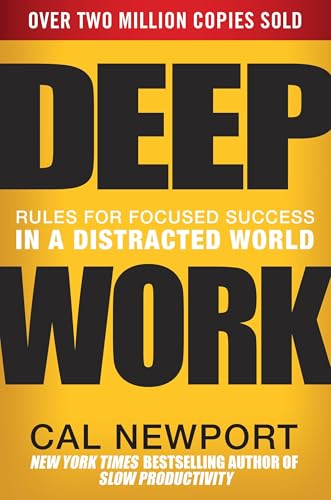
Overview: Cal Newport argues that the ability to concentrate without distraction is increasingly valuable and increasingly rare. He describes rituals, time blocks, shutdown practices, and broader rules for protecting attention.
Why it belongs on this list: The connection is strongest through focus, distraction, ritual, concentration, scheduling, digital boundaries, and producing valuable work in a noisy environment. Deep Work approaches the seed’s concerns from a different angle, adding its own evidence, examples, and limits instead of repeating a familiar list of advice. It is especially useful for readers who want disciplined attention for demanding work because it makes the underlying choice more visible: what to protect, what to question, and what may not be under personal control.
Reading experience: The book shares Make Your Bed‘s respect for a deliberate start and a repeatable practice, but applies that discipline to cognitive work. It is strongest for readers whose challenge is not motivation but an environment that constantly interrupts.
Best for: Readers who want disciplined attention for demanding work.
Keep in mind: Practical and prescriptive, with advice that needs adaptation for jobs requiring availability, collaboration, or care work.
What to notice: Readers may arrive at Deep Work because of focus, distraction, ritual, concentration, scheduling, digital boundaries, and producing valuable work in a noisy environment, yet its lasting value lies in the complications attached to that promise. The book asks what happens when a desirable change meets fatigue, unequal resources, competing duties, or an imperfect environment. That makes it a genuine next read: related enough to satisfy the original interest, but independent enough to widen it.
View available editions and reader reviews.
The Comfort Crisis

Overview: Michael Easter investigates how modern convenience can reduce exposure to manageable challenge, then combines reporting, personal experiments, and interviews to explore discomfort, risk, and resilience.
Why it belongs on this list: The connection is strongest through challenge, discomfort, outdoor effort, resilience, attention, physical limits, and questioning habits built around constant convenience. The Comfort Crisis approaches the seed’s concerns from a different angle, adding its own evidence, examples, and limits instead of repeating a familiar list of advice. It is especially useful for readers who want to examine voluntary discomfort and modern convenience because it makes the underlying choice more visible: what to protect, what to question, and what may not be under personal control.
Reading experience: The connection is the idea that a small chosen challenge can alter how a person sees a difficult day. Easter is more focused on physical and outdoor experience, while McRaven is more focused on discipline as a daily moral practice.
Best for: Readers who want to examine voluntary discomfort and modern convenience.
Keep in mind: Energetic and adventure-oriented. Voluntary discomfort should be chosen safely and should never be confused with neglect, illness, or coercion.
What to notice: The right reading pace for The Comfort Crisis depends on what the reader needs from readers who want to examine voluntary discomfort and modern convenience. Its discussion of challenge, discomfort, outdoor effort, resilience, attention, physical limits, and questioning habits built around constant convenience is clear enough to revisit, but it also benefits from pausing over examples and disagreements. Give the author room to make a case before deciding whether the ideas fit your work, health, relationships, and available freedom.
View available editions and reader reviews.
The 5 AM Club

Overview: Robin Sharma builds a productivity philosophy around an early morning routine that combines movement, reflection, learning, and planning. The book uses a fable-like structure to make the schedule memorable and emotionally persuasive.
Why it belongs on this list: The connection is strongest through early rising, morning ritual, focus, exercise, reflection, productivity, and using the first part of the day deliberately. The 5 AM Club approaches the seed’s concerns from a different angle, adding its own evidence, examples, and limits instead of repeating a familiar list of advice. It is especially useful for readers who want a highly structured morning routine because it makes the underlying choice more visible: what to protect, what to question, and what may not be under personal control.
Reading experience: This is a more elaborate and prescriptive version of the seed’s small morning action. It suits readers who enjoy a fixed routine and motivational storytelling, but the schedule should be adapted to health, work shifts, caregiving, and sleep needs.
Best for: Readers who want a highly structured morning routine.
Keep in mind: Inspirational and highly structured, with a fictional teaching format and a strong emphasis on early mornings.
What to notice: The right reading pace for The 5 AM Club depends on what the reader needs from readers who want a highly structured morning routine. Its discussion of early rising, morning ritual, focus, exercise, reflection, productivity, and using the first part of the day deliberately is clear enough to revisit, but it also benefits from pausing over examples and disagreements. Give the author room to make a case before deciding whether the ideas fit your work, health, relationships, and available freedom.
View available editions and reader reviews.
Choose by Habits, Leadership, Focus, or Resilience
Start with Atomic Habits when the reader needs a system for small actions, or The Power of Habit for a more research-based account of cues and rewards. Extreme Ownership is the leadership route; Deep Work the focus route; and The Obstacle Is the Way the philosophical route. Choose Discipline Is Destiny for historical examples, The Comfort Crisis for voluntary challenge, The Daily Stoic for daily reflection, and The 5 AM Club for a highly structured morning practice.
Who This List Is Best For
This list is for readers who respond to practical encouragement, routines, leadership stories, and the idea that character is built through repeated choices. Military examples appear in several books, but the lessons should be adapted to civilian work, disability, caregiving, mental health, and unequal resources. No routine can replace rest, treatment, safety, or structural change.
FAQ
What is the closest book to Make Your Bed?
The Obstacle Is the Way is the closest in its concise treatment of difficulty and response. Atomic Habits is the better next read if the appeal was the small daily action rather than the military leadership story.
Which book is best for building routines?
Atomic Habits and The Power of Habit explain how cues, environments, rewards, and repetition shape routine. The 5 AM Club offers a more prescriptive schedule.
Which recommendation is best for leadership?
Extreme Ownership focuses directly on accountability, team communication, and decision-making. It is more operational and demanding than Make Your Bed, so readers should adapt its language to their organization and role.
Is discomfort always useful?
No. Chosen challenge can build confidence, but pain, sleep deprivation, trauma, and unsafe work conditions are not character tests. The Comfort Crisis is best read as an argument for intentional challenge within reasonable limits, not as permission to ignore health.
Which book helps with focus?
Deep Work is the clearest choice for protecting attention and producing demanding work. Atomic Habits adds environmental design so focus is easier to repeat.
Discipline Should Create Room for the Next Good Choice
Make Your Bed succeeds when its small ritual remains a beginning rather than a test of moral worth. The companion books widen that beginning into habit design, focus, leadership, reflection, and resilience. Their shared message is modest but demanding: the day may not become easy, but a person can often choose one action that makes the next action more possible.